


Weatherproof Signs for Outdoor Festivals That Last
Planning an outdoor festival means betting on good weather and losing half the time. Your signage for festivals faces rain, direct sun, wind gusts, and humidity all in the same weekend. Weatherproof signs for outdoor festivals are not a nice-to-have. They are the difference between a professional event and one where your directional arrows are peeling off by noon Saturday. This guide covers the materials, design decisions, installation methods, and maintenance practices that keep your outdoor festival signage standing strong from setup to teardown.
Table of Contents
- Key takeaways
- Weatherproof signs for outdoor festivals: choosing the right materials
- Preparing your design and print for outdoor conditions
- Installation techniques that hold up in real weather
- Maintaining signs during multi-day festivals
- Advanced weatherproof options: digital and IP-rated displays
- My take on weatherproofing festival signage
- Get festival-ready signs that hold up
- FAQ
Key takeaways
| Point | Details |
|---|---|
| Material choice is everything | Coroplast, aluminum composite, and synthetic vinyl outperform paper-based signs in rain, wind, and UV exposure. |
| Layer your weatherproofing | Combining a weather-resistant substrate with UV lamination and proper anchoring dramatically extends sign life. |
| Installation method matters as much as material | H-stakes, fillable bases, and sandbags prevent wind damage that even the best sign material cannot survive alone. |
| Match materials to event duration | A one-day festival has different needs than a five-day event; choosing the wrong material wastes budget. |
| Digital signage fills specific gaps | IP65-rated displays work for premium festival zones but static signs remain more cost-effective for most applications. |
Weatherproof signs for outdoor festivals: choosing the right materials
The substrate you print on determines everything else. Weather impacts signs through rain, UV radiation, wind stress, and temperature swings, and no amount of lamination rescues a weak base material once conditions turn serious.
Here is how the most common options compare:
| Material | Water resistance | UV protection | Wind tolerance | Typical lifespan | Relative cost |
|---|---|---|---|---|---|
| 6mm Coroplast | High | Moderate (add lamination) | High (thick panels) | 3 to 12 months | Low |
| Aluminum composite | Very high | High | Very high | 3 to 5 years | Medium-High |
| Vinyl banner | High | High with UV inks | Moderate | 1 to 3 years | Low-Medium |
| TerraSlate synthetic | Very high | Very high | Moderate | 1 to 2 years | Medium |
| Standard foam board | None | None | Very low | Hours outdoors | Very low |
6mm Coroplast is the workhorse of outdoor event signage. It is durable, waterproof, and UV-printed, and the added thickness resists bowing on larger panels. For festivals running longer than three months or in intense sun, add lamination for UV protection. For a weekend festival, coroplast with UV-resistant inks is usually sufficient on its own.
Aluminum composite panels are the premium option for permanent or semi-permanent festival infrastructure. They handle coastal humidity, temperature cycling, and direct sun without warping. The cost is higher, but for a festival that runs annually in the same location, the panels pay for themselves.
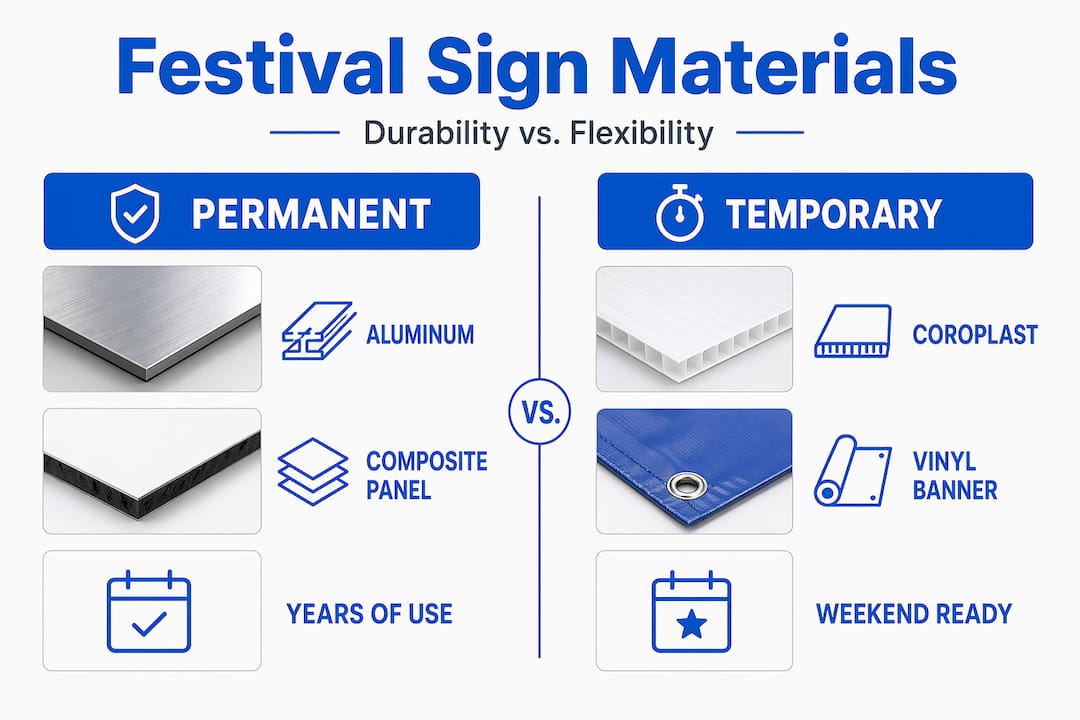
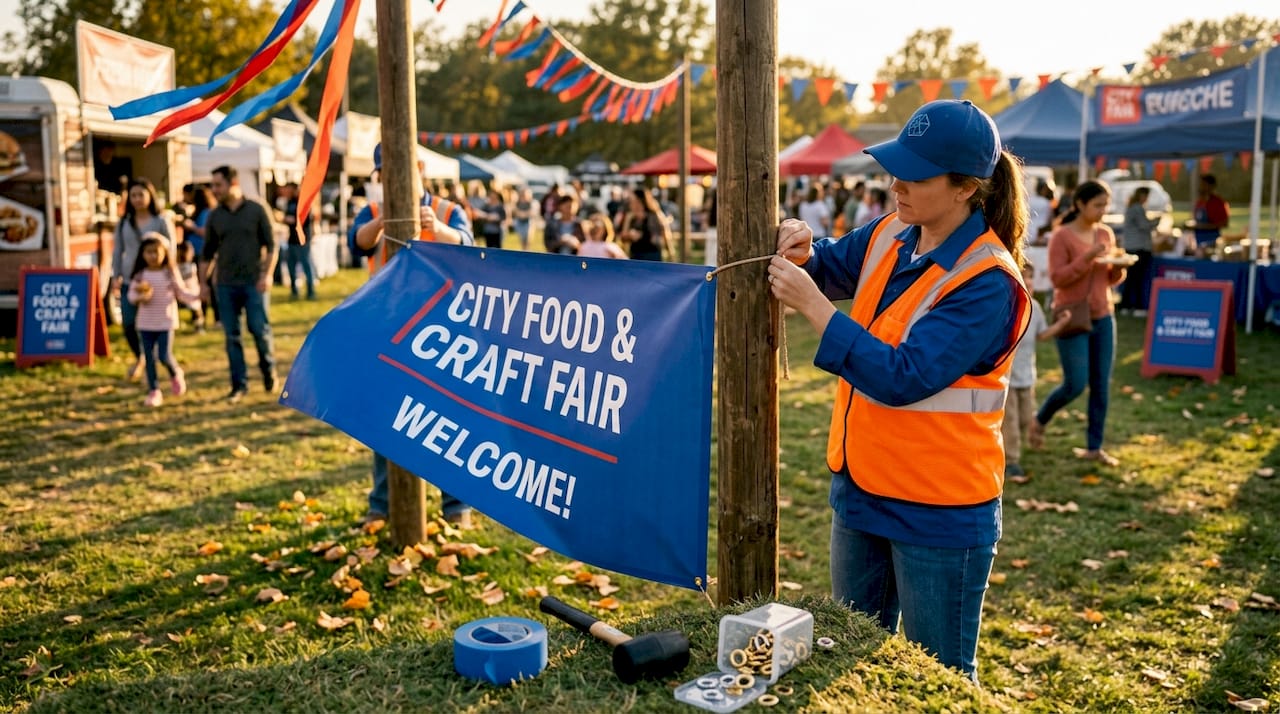
Vinyl banners give you flexibility in size and are genuinely weather-resistant when printed with UV inks. The weak point is wind. A large vinyl banner without proper grommets and tensioning becomes a sail in a 30 mph gust.
Pro Tip: Synthetic waterproof papers with built-in UV resistance outperform laminated paper signs for outdoor durability and skip the lamination step entirely, saving time and cost on bulk print runs.
Preparing your design and print for outdoor conditions
The best material for festival signs fails if the print itself is not built for outdoor exposure. UV radiation causes fading and pigment breakdown over time, which is why UV-resistant inks and coatings are non-negotiable for any sign spending more than a few hours in direct sunlight.
When designing durable event signs for a festival, keep these principles in mind:
- High contrast first. Black text on white or yellow backgrounds reads from 50 feet away. Subtle color palettes look great in a design app and disappear in bright outdoor light.
- Large, bold fonts. Minimum 2-inch letter height for signs read from 10 feet. Scale up for anything mounted above head height.
- Limit text. Festival attendees are moving. Five words beat fifteen every time.
- Avoid gloss finishes in sunny areas. Glare makes signs unreadable at certain angles. Matte or satin finishes work better for outdoor festival signage in direct sun.
- Use waterproof paper or synthetic substrates for printed inserts. If you are using a frame-based display, the media inside matters as much as the frame outside.
The choice between static printed signs and weatherproof digital displays comes down to budget and context. Static custom outdoor signs cost less, require no power, and are genuinely portable. Digital displays offer dynamic content but need power access, weatherproof enclosures, and anti-glare screens to function well outdoors.
Pro Tip: Waterproof paper (like TerraSlate synthetic sheets) beats lamination for printed inserts because lamination can peel at the edges in sustained rain, while synthetic paper stays intact as a single unit.
Installation techniques that hold up in real weather
You can have the best weather-resistant posters in the industry and still watch them fail if the installation is wrong. Waterproofing is not just materials but also installation quality and environmental fit. Even the best materials fail with poor setup.
Follow these steps when installing signs at an outdoor festival:
- Assess the site before installing. Identify wind corridors, low spots that collect water, and areas with direct afternoon sun. Place your most critical signs where they will be seen, not just where they are convenient to install.
- Choose the right anchor for the substrate. H-stakes work well for coroplast yard signs in soft ground. Fillable bases (water or sand-filled) work for freestanding signs on hard surfaces like pavement or compacted gravel.
- Add sandbags for large or tall signs. Any sign taller than four feet in an open area needs ballast. A sandbag on each leg of a frame adds meaningful stability without permanent anchoring.
- Check backing boards on large panels. Thin materials sag and bow without rigid backing. Use aluminum or PVC backing boards on panels wider than 24 inches to keep them flat.
- Angle signs slightly away from the prevailing wind. A sign angled 10 to 15 degrees off vertical catches less wind load than one mounted perfectly flat to the breeze.
- Inspect every sign after the first night. Wind and overnight moisture reveal weak points that were invisible during daytime setup. Tighten, reinforce, or reposition before the crowd arrives.
Sandwich boards deserve a specific note. Poster sidewalk signs are stable in moderate wind but are not fully weatherproof for heavy rain. They work well in covered outdoor areas like festival pavilions or under tent canopies. In open fields during rain, they allow water ingress into the frame and damage the media inside. Use waterproof paper inserts if you rely on sandwich boards in any outdoor setting.
Maintaining signs during multi-day festivals
A sign that looks perfect on Friday morning can be a warped, faded mess by Sunday afternoon. Multi-day outdoor festivals demand active sign management, not just installation and hope.
- Inspect every sign at the start of each day. Look for lifted corners, moisture bubbling under lamination, and any stakes that have shifted overnight.
- Carry replacement media. For high-traffic or high-visibility signs, print two copies. Swapping a damaged sign takes two minutes when you have a spare on hand.
- Reinforce edges with waterproof tape. The edges of coroplast and vinyl signs are where moisture enters first. A strip of clear waterproof tape along the bottom edge adds meaningful protection.
- Watch for UV fading on multi-day events. Signs in direct afternoon sun for three or more days will show color shift. Rotate signs to shaded positions overnight if possible.
- Do not ignore humidity. High humidity without rain still degrades paper-based and laminated signs faster than expected. Synthetic substrates handle humidity far better.
Pro Tip: For festivals longer than three days, lamination combined with a synthetic substrate gives you the best protection. The substrate handles moisture and UV, while lamination adds a physical barrier against abrasion from wind-blown debris.
The most common maintenance mistake is assuming that weatherproof means maintenance-free. It does not. Weatherproof means the sign tolerates conditions longer than a standard sign. Active monitoring is what actually extends the life of your outdoor festival signage through a full event.
Advanced weatherproof options: digital and IP-rated displays
Static signs handle the majority of outdoor festival signage needs. But for premium zones, sponsor activations, or main stage areas, digital signage with proper weatherproofing becomes worth the investment.
The key specification to understand is the IP rating system. IP65 protects against water jets from all directions but does not guarantee protection against immersion. IP66 offers resistance to higher water pressure, which matters in driving rain or pressure washing scenarios. For most outdoor festivals, IP65 is sufficient. Coastal locations or festivals with extreme weather exposure should look at IP66 or higher.
Outdoor digital signage with IP65-rated enclosures provides full dust-tight and water jet resistance, with high-brightness 4K displays designed for continuous outdoor advertising. The practical considerations for festival use include:
- Power access. Digital displays need reliable power. Generator dependency adds risk at outdoor events.
- Glare management. Standard screens wash out in direct sunlight. Look for displays with minimum 2,500 nits brightness for outdoor readability.
- Condensation inside enclosures. Digital signs require addressing condensation alongside water resistance. Quality IP-rated units include internal heating elements to prevent moisture buildup.
- Cost vs. flexibility. A quality outdoor digital display costs 10 to 50 times more than a comparable static sign. The value is in dynamic content updates, not raw durability.
For most festival organizers, the practical answer is a hybrid approach. Use static custom outdoor signs for directional signage, sponsor logos, and general information. Reserve digital displays for main stages, ticket booths, or interactive sponsor experiences where dynamic content justifies the cost.
My take on weatherproofing festival signage
By YardSignGuy
I’ve watched event planners make the same mistake repeatedly: they spend the budget on great graphic design and then print on the cheapest substrate available. The sign looks stunning in the proof and embarrassing by Saturday afternoon.
What I’ve learned from working with festival organizers is that layered weatherproofing consistently outperforms any single solution. A synthetic substrate with UV lamination and proper anchoring beats an expensive material with poor installation every time. The layers work together. Remove one and the system weakens.
The other thing planners consistently underestimate is wind. Rain gets all the attention, but a 25 mph wind gust does more damage to outdoor festival signage in 30 seconds than a full day of moderate rain. I always recommend testing your installation method before the event, ideally in actual outdoor conditions for at least one overnight.
Budget is real. I understand you cannot put aluminum composite panels on every directional sign at a three-day music festival. What you can do is prioritize. Spend on weatherproof materials for your highest-visibility signs, your entry points, and your sponsor displays. Use cost-effective coroplast for secondary directional signs that are easier to replace. Match the material investment to the sign’s visibility and replacement cost.
Test before you commit. Set up your proposed sign system a week before the event and leave it outside for 48 hours. What you learn will save you from a very stressful Saturday morning.
— YardSignGuy
Get festival-ready signs that hold up
When you need custom outdoor signs that actually survive the weekend, Yardsigns delivers. Their weatherproof yard signs are printed with UV-resistant inks on durable substrates, and orders under 50 pieces ship within 24 hours, so you are not scrambling the week before your event.

Whether you need bulk custom signs for a large festival footprint or a handful of specialty signs for your VIP areas, Yardsigns makes the ordering process straightforward. You can even add personality to your event with options like custom funny signs that keep attendees engaged and smiling. If you are starting from scratch and want maximum flexibility, blank signs in bulk let you customize on-site or add your own printing. Fast turnaround, durable materials, and a design process that does not require a graphic design degree. That is what Yardsigns brings to your next outdoor event.
FAQ
What is the best material for weatherproof festival signs?
6mm Coroplast and aluminum composite panels are the top choices for most outdoor festival applications. Coroplast offers an affordable, waterproof option for short to medium-term use, while aluminum composite handles long-term or permanent outdoor installations.
How do I keep signs from blowing over at an outdoor festival?
Use H-stakes for ground-mounted signs, fillable bases for hard surfaces, and sandbags for tall or freestanding frames. Angling signs slightly away from the prevailing wind also reduces the load on your anchoring system.
Do I need lamination on weatherproof signs?
Not always. Synthetic waterproof substrates like TerraSlate provide built-in UV and water resistance without lamination. For standard coroplast or vinyl, UV lamination adds meaningful protection for events lasting more than two days.
What does IP65 mean for outdoor digital signage?
IP65 means the enclosure is fully dust-tight and protected against water jets from any direction. It is sufficient for most outdoor festival environments, though coastal or extreme weather locations may require IP66 or higher.
Can sandwich boards be used outdoors at festivals?
Sandwich boards work well in sheltered outdoor areas like covered pavilions. In open areas with rain or strong wind, they allow water ingress and can tip over. Use waterproof paper inserts and place them in covered spots to get reliable performance.
