


What Is Coroplast? The Twin-Wall Plastic Behind Yard Signs
Coroplast® is a brand of corrugated, twin-wall polypropylene sheet. The name has become the everyday term for corrugated plastic generally. It’s lightweight, waterproof, and easy to cut, which is exactly why it’s become the standard material for yard signs, political campaigns, real estate listings, and short-term outdoor displays.
TL;DR:
- Thicker gauges like 6mm or 10mm extend the outdoor lifespan of Coroplast signs compared to standard 4mm sheets.
- Recyclability depends on local regulations, and many programs accept polypropylene, but not all landfills handle Coroplast.
- UV exposure and high wind loads are the main factors limiting the durability of Coroplast signs, affecting their service life.
- Coroplast signs are most cost-effective for campaigns lasting several months, with options for double-sided printing and included mounting stakes.
- The material resists water, chemicals, and cold temperatures but is not fire-resistant, biodegradable, or suited for long-term outdoor use.
Table of Contents
- What Coroplast Is Made Of (Composition and Structure)
- Coroplast Material Properties: Strengths and Trade-Offs
- Where Coroplast Signs Show Up Most
- Printing, Finishing, and Mounting Coroplast Signs
- How Long Coroplast Signs Actually Last Outdoors
- Is Coroplast Recyclable? Environmental Considerations
- How Yardsigns Builds Fast, Durable Coroplast Signs
- Choosing Coroplast vs. Aluminum, PVC, or Foamboard
- Sources
What Coroplast Is Made Of (Composition and Structure)
Coroplast is an extruded twin-wall sheet made from a polypropylene copolymer, a plastic resin chosen because it holds up to impact and stays flexible even in cold weather. Manufacturers push melted polypropylene through a die that forms two flat outer walls connected by a row of internal ribs, called flutes. Those flutes create hollow channels running the length of the sheet, similar in concept to cardboard but built from plastic that won’t turn to mush in the rain.
The flute direction matters more than most buyers realize. A sheet bends easily across the flutes but resists bending along them, which is why sign makers pay attention to which way the channels run before cutting a large panel for outdoor use.
You’ll see this material sold under several names depending on where you’re shopping:
- Coroplast® — the original registered trademark, now used generically in North America
- Correx — the common name in the United Kingdom and parts of Europe
- Corflute — the standard term in Australia and New Zealand
- Corrugated plastic — the generic, material-based name used across the sign industry
All of these refer to essentially the same twin-wall polypropylene product, just marketed under regional trade names.
Coroplast Material Properties: Strengths and Trade-Offs
Coroplast earns its popularity because it does a lot with very little weight. A 4mm sheet, the most common gauge for yard signs, weighs a fraction of what a comparable piece of wood or metal would, yet it stands up to wind, rain, and repeated handling without warping.

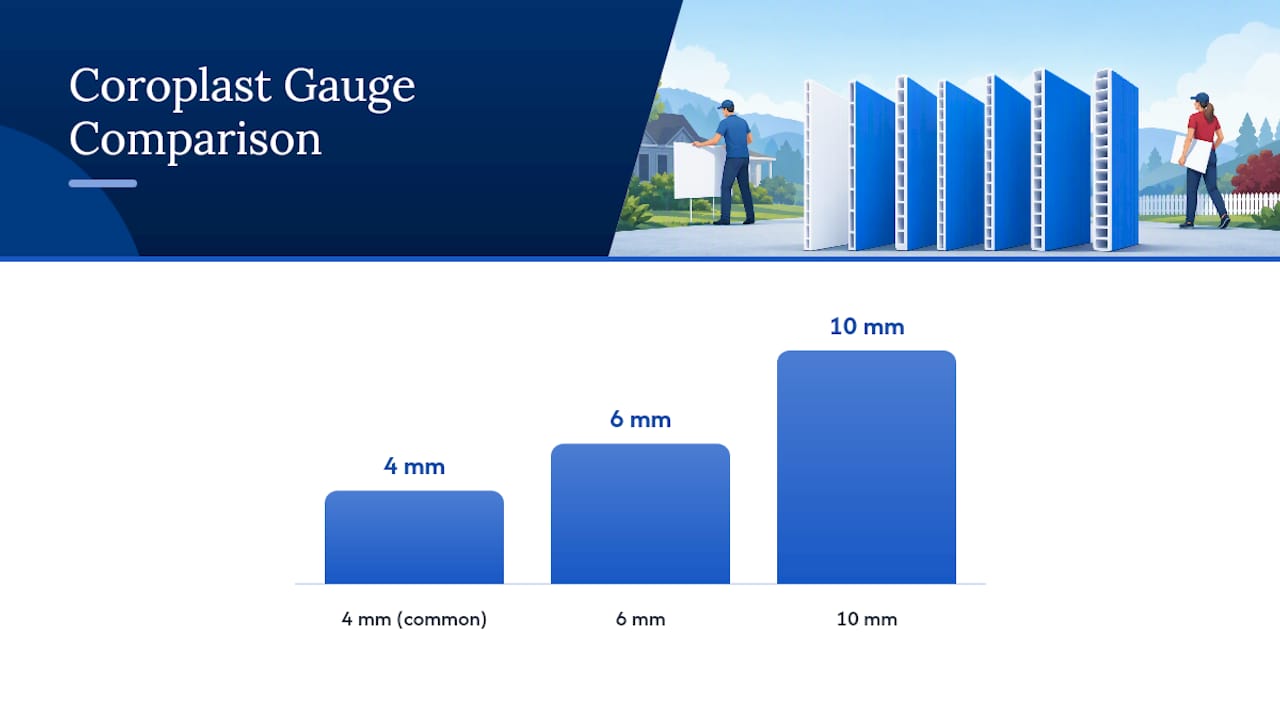
Thickness options typically include several gauges such as 4mm, 6mm and 10mm, and the choice comes down to a simple trade-off: thinner sheets are cheaper and easier to ship, while thicker stock resists bending and holds up better against wind gusts and rough handling. The material is naturally water-resistant and shrugs off most common chemicals, and its copolymer resin keeps it from cracking in cold temperatures the way a more brittle plastic might.
One property that surprises first-time buyers is the living hinge. Coroplast can be scored and folded repeatedly along a crease without breaking, which is why it works so well for hinged displays, tri-fold packaging, and pop-up signage that needs to fold flat for storage.
That flexibility comes with real limits, though:
- Untreated Coroplast fades under prolonged UV exposure, which is why outdoor signs have a practical service life rather than a permanent one
- It’s combustible and shouldn’t be treated as fire-resistant near heat sources
- It is not biodegradable, so it persists in landfills if thrown away instead of recycled
Pro Tip: If your sign will sit in direct summer sun for months, ask about UV-resistant inks and a thicker gauge upfront. It costs less than reprinting a faded sign halfway through a campaign.
Where Coroplast Signs Show Up Most
Coroplast dominates a specific category of signage: anything that needs to look sharp, go up fast, and survive the elements without a big budget. Here’s where it earns its keep:
- Yard and lawn signs for local promotions, garage sales, and service announcements
- Political campaign signs, where candidates need hundreds of identical signs printed and distributed on tight timelines
- Real estate signage, including directional arrows and open-house markers that get moved from property to property
- Event and directional signage for festivals, races, and community gatherings
- Trade-show displays and point-of-purchase signage, where light weight makes setup and teardown faster
- Temporary construction and safety signage on job sites
- Packaging containers and hobby projects, thanks to that cuttable, foldable structure
Corrugated plastic works well for short- to medium-term outdoor signage specifically because it balances low cost against real weather resistance. You’re not paying for a material engineered to last a decade. You’re paying for something that looks great for the length of your campaign or event and won’t buckle under a rainstorm the week before your grand opening.
Printing, Finishing, and Mounting Coroplast Signs
Most Coroplast signs get printed one of two ways: UV digital printing, which cures ink instantly and holds up well outdoors, or screen printing, which is cost-effective for large runs of a single design. Opaque sheet stock is worth requesting if you want double-sided printing, since it prevents the image on one side from showing through the other.
Finishing options extend what you can do with a basic printed panel:
- Die-cutting for custom shapes beyond a standard rectangle
- Hole punching and grommets for hanging or zip-tying to fences
- H-stake slots for the classic yard-sign mounting method
- Frame-mounting for trade-show and retail display use
Cleaning is simple. Wipe the surface with mild soap and water, and store signs flat or upright out of direct sun between uses to slow fading. If you’re planning to reuse the same signs season after season, ask for a thicker gauge or a laminate layer. It adds durability without changing how the sign looks.
How Long Coroplast Signs Actually Last Outdoors
Lifespan depends heavily on gauge and location. A standard 4mm sign in moderate weather typically holds its color and shape for several months to a year, while heavier 6mm and 10mm stock can stretch that timeline further, especially in sites protected from constant wind.
The biggest factors working against longevity are sustained UV exposure, high wind loads that flex or crack the panel over time, and lower-quality print methods that fade faster than UV-cured ink. If you need a sign to survive a full season outdoors, placement in a less sun-exposed spot, a thicker sheet, and lamination all extend service life more reliably than switching ink types alone.
Is Coroplast Recyclable? Environmental Considerations
Coroplast is not biodegradable. Left outdoors or in a landfill, it will persist for a very long time. The better news is that it’s recyclable through polypropylene recycling streams where those programs accept rigid plastics, though acceptance varies by municipality.
Before tossing a used sign, check with your local recycling program to see if polypropylene is on their accepted list. Many aren’t set up for it curbside, which means specialty drop-off or a plastics recycler may be the better route. Reusing signs for a second event, cutting them down for smaller projects, or donating extras to community groups all stretch the material’s life before it needs disposal. If sustainability is a priority for your project, ask your printer about recycled-content stock or consider textile-based alternatives for longer-term event signage needs.
How Yardsigns Builds Fast, Durable Coroplast Signs
Yardsigns runs on the same fundamentals covered above, applied at production speed. Orders under 50 pieces typically ship within 24 hours, and larger runs move within one to three days, which matters when a campaign launch or event date isn’t moving to accommodate a slow print shop.
Every sign is printed with UV-resistant inks and finished to hold up against sun and rain, not just look good in a proof photo. A few production details that show up in how these signs perform once they’re planted in a yard:
- Double-sided printing on opaque stock, so messaging reads clearly from both directions
- Included metal H-stakes, so there’s no scramble to find mounting hardware separately
- Free design proofs with unlimited revisions before anything goes to print
- Ready-made templates for real estate, political, contractor, school, and event use
The combination of fast turnaround and weatherproof materials is what customers consistently point to when describing why their signs held up through an entire campaign season.
Choosing Coroplast vs. Aluminum, PVC, or Foamboard
Coroplast makes sense when your project is temporary, budget-conscious, or needs to move fast: campaign signs, real estate markers, event directions, fundraisers. If a sign needs to survive multiple years outdoors, aluminum or PVC will outlast it. Foamboard, by contrast, belongs indoors only. Match the material to how long the sign actually needs to work, not to what’s cheapest today.
— YardSignGuy
Sources
For technical specifications straight from the source, Coroplast’s own product properties page covers copolymer resin details and living-hinge behavior in depth. The Wikipedia entry on Coroplast traces the brand’s history and its regional alternate names. For printing and finishing standards used across the sign industry, 4OVER4’s Coroplast printing guide covers UV printing practices in more detail. Readers planning a purchase can also browse custom event signage options built specifically for Coroplast’s strengths.
