


Can You Reuse Yard Signs? Save, Repaint, or Donate
Yes, most yard signs can be reused, upcycled, or responsibly disposed of. The single best first step: set the sign aside and separate the metal H-stake before doing anything else. From there, your next move depends on the sign’s condition.
If the sign is in good shape:
- Save it for your next campaign, event, or yard sale
- Contact the original campaign or organization — many run take-back programs and will collect signs for reuse
If the sign is faded or has old graphics:
- Repaint it with exterior spray paint or chalkboard paint for a fresh use
- Donate it to a school, maker space, or community group
If the sign is cracked, brittle, or delaminating:
- Check your local transfer station for drop-off options
- Place it in the trash as a last resort — but always separate the metal stake first for scrap recycling
Key Takeaways
Most yard signs can be reused, upcycled, or responsibly disposed of when you identify the material first and separate metal stakes before any recycling attempt.
| Point | Details |
|---|---|
| Reuse is the best first step | Save clean, undamaged corrugated plastic or aluminum signs for future campaigns or events. |
| Material determines your options | Corrugated polypropylene is most reusable; plastic-coated paper is neither repaintable nor recyclable. |
| Metal stakes go to scrap | Always separate H-stakes and bring them to a scrap yard or transfer station. |
| Curbside recycling rarely works | Use Earth911, county drop-off programs, or post-election collection drives instead. |
| Buy for reuse from the start | Choose UV-resistant inks, durable materials, and designs without dates to extend sign life across multiple cycles. |
Table of Contents
- How can you tell what your yard sign is made of?
- Can yard signs be reused for future campaigns or events?
- What are the best upcycling projects for old yard signs?
- When can yard signs be recycled, and how do you dispose of them responsibly?
- Where can you donate or return used yard signs?
- How should you buy yard signs if reuse is a priority?
- How do you store and maintain yard signs between uses?
- What local rules should you know before removing or reusing yard signs?
- A supplier’s perspective on making signs worth keeping
- Ready to order signs built to last?
- Sources
How can you tell what your yard sign is made of?
Material identification is the fastest way to know which reuse or disposal route makes sense. Most yard signs fall into one of four categories.
Corrugated polypropylene (Coroplast): This is the most common material. It feels rigid but slightly flexible, has a fluted interior you can see at the cut edges, and is lightweight. It’s the most reusable and upcyclable option.
Plastic-coated paper: Thinner and heavier than corrugated plastic, this type has a glossy or semi-gloss surface that feels like a laminated sheet. Bend it and it creases rather than springs back. Plastic-coated paper signs are typically not recyclable because the coating prevents mills from pulping the paper underneath.
Aluminum: Rigid, heavy, and metallic. Aluminum signs are the most durable and weather-resistant, and they’re recyclable at most scrap yards.
Metal H-stakes: Almost always steel wire. Always separate these from the sign panel before recycling or disposal — mixed materials create hazards at sorting facilities.
| Material | Durability | Reusability / Paintability | Curbside Recyclable | Typical Use |
|---|---|---|---|---|
| Corrugated polypropylene | High | Excellent with prep | Rarely | Political, event, real estate |
| Plastic-coated paper | Low | Poor | No | Budget political signs |
| Aluminum | Very high | Good (spray paint) | Often (scrap yard) | Long-term outdoor signage |
| Steel H-stakes | High | Repurpose as garden stakes | Scrap yard only | Sign support |
Can yard signs be reused for future campaigns or events?
Corrugated plastic and aluminum signs hold up well across multiple seasons when stored properly. Before you pack them away, run through these steps.
- Clean the sign. Wipe both faces with a damp cloth and mild dish soap. Rinse with a hose and let it air dry completely before stacking.
- Inspect for damage. Check edges for brittleness or delamination. If the flutes are crushed or the surface is cracked, the sign won’t survive another season outdoors.
- Remove or flatten the H-stakes. Pull stakes free and bundle them separately with zip ties or rubber bands. Bent stakes can puncture other signs in storage.
- Stack flat or stand vertically. Lay signs flat with a sheet of cardboard between each one, or stand them upright in a dry corner. Avoid leaning them against a wall at a sharp angle — that warps the panels over time.
- Label each bundle. A strip of masking tape on the edge with the event name and year saves confusion later.
- Contact the original campaign. Many political campaigns and nonprofits collect signs after elections for reuse in future cycles. A quick email or call to the campaign office is worth the two minutes it takes.
What are the best upcycling projects for old yard signs?
Wall murals vs signage explain why corrugated polypropylene is such a practical, reusable material for signs and art alike. It’s waterproof, lightweight, and easy to cut with a utility knife. Here are projects that range from a five-minute fix to a weekend build.
Fast repurpose ideas:
- Yard sale directional signs (repaint with exterior spray paint)
- Temporary address markers for events or construction sites
- Erasable chalkboard signs for home or garden use (apply chalkboard spray paint)
Longer builds worth the effort:
- Storage boxes and wall organizers: Instructables has a detailed tutorial for building strong Coroplast wall storage from panels cut to size
- Small animal shelters or plant frost covers for the garden
- Garden trellises using H-stakes lashed together with wire or zip ties
- Temporary privacy screens or windbreaks for outdoor events
Community groups, maker spaces, and artists have repurposed corrugated plastic into animal shelters, craft projects, and durable event signage — so donating panels to a local group is a real option if you’d rather not build yourself.
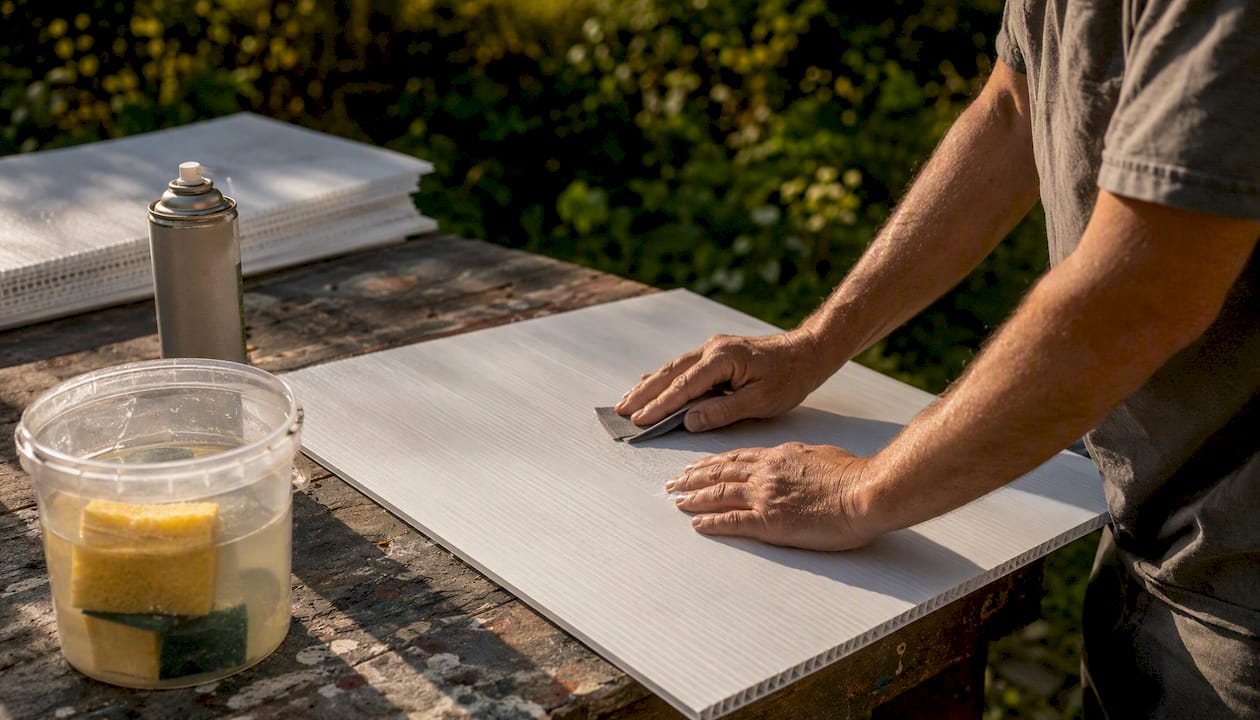
Pro Tip: Before painting corrugated polypropylene, clean the surface with mild detergent, let it dry fully, then scuff it lightly with 220-grit sandpaper. That light abrasion gives exterior spray paint something to grip, so it won’t peel after the first rain.
When can yard signs be recycled, and how do you dispose of them responsibly?
Curbside recycling is usually not an option for yard signs. Mixed-material signs and metal stands can jam sorting equipment and are excluded from most standard programs. That leaves a few better routes.
- Separate the metal H-stakes. Bundle them and bring them to a local scrap metal yard or transfer station. Hennepin County’s disposal guide recommends exactly this approach, and most counties follow similar logic.
- Attend post-election or seasonal collection drives. Many municipalities and haulers run short-term collection events after major elections specifically for yard signs.
- Prepare signs for drop-off. Flatten panels, remove any tape or hardware, and bundle stakes separately. Facilities that accept corrugated plastic prefer clean, uncontaminated material.
- Trash as a last resort. If no drop-off or reuse option exists, placing the sign panel in the trash is acceptable. The stakes still go to scrap.
Regional haulers like Rumpke advise against placing plastic-coated paper signs in curbside bins and recommend separating all mixed materials before any drop-off attempt.
Where can you donate or return used yard signs?
Before assuming disposal is the only path, check these options in order.
- Contact the original campaign or organization first. Many political campaigns collect signs after elections and store them for the next cycle, which significantly reduces the need for new production.
- Local transfer stations and county programs. Montgomery County, Pennsylvania runs a formal campaign sign recycling program — a model that other counties replicate. Check your county’s solid waste or recycling page for similar initiatives.
- Maker spaces and community workshops. These groups actively seek corrugated plastic for projects and are often happy to arrange a pickup or drop-off.
- Schools and art programs. Teachers and art instructors use corrugated plastic for student projects, displays, and temporary structures.
- Scrap yards for metal stakes. Steel H-stakes are accepted as scrap metal at most local yards. Collect a full bundle before making the trip to make it worthwhile.
- Nonprofit and community shelters. Animal rescues and community gardens have used corrugated panels for low-cost shelters and plant protection.
How should you buy yard signs if reuse is a priority?
The most sustainable sign is one built to last from the start. A few design and material decisions made at purchase time can double or triple a sign’s useful life.
Material checklist:
- Choose 4mm corrugated polypropylene or aluminum over plastic-coated paper
- Specify UV-resistant inks so graphics don’t fade after one season outdoors
- Request double-sided printing to get more value from each panel
Design choices that enable reuse:
- Avoid printing specific dates or years — a sign without a date works for multiple election cycles or event seasons
- Stick to consistent brand colors and logos so signs remain recognizable across campaigns
- Keep the layout simple enough that a repaint or overlay can update the message without replacing the whole sign
Campaigns that skip dates and use consistent visual identities can reuse signage across multiple cycles, making design choices a direct factor in long-term waste reduction. For buyers who want to understand the full ROI of investing in durable signs, yard sign marketing analysis shows why quality materials pay off over time.
How do you store and maintain yard signs between uses?
Good storage is what separates a sign that lasts one season from one that lasts five.
- Clean before storing. Mild dish soap and a rinse remove dirt, adhesive residue, and mildew that degrade the surface over time. Air dry completely — storing damp panels invites mold between the flutes.
- Stack flat with spacers. A sheet of cardboard or foam between each panel prevents surface scratches and keeps graphics intact.
- Store away from UV exposure. A garage, basement, or shed is ideal. Direct sunlight degrades polypropylene and fades ink even when the sign isn’t in use.
- Keep stakes together. Bundle H-stakes with zip ties and store them alongside the panels so nothing gets separated before the next deployment.
- Refurbish when needed. Edge-binding tape (available at hardware stores) seals split or chipped edges and extends panel life. Touch-up spray paint covers minor scuffs. Replace stakes that have been bent more than two or three times — steel wire fatigues and eventually snaps. For longer-term signage strategy, commercial property sign guidance covers storage and rotation practices worth adapting for any repeat-use context.
What local rules should you know before removing or reusing yard signs?
Sign rules vary more than most people expect, and ignoring them can result in fines or forced removal.
- Check removal deadlines. Many municipalities require political signs to come down within 10–30 days after an election. Your county or city website is the authoritative source.
- Confirm permitted locations. Right-of-way placement, setback distances, and sign size limits differ by jurisdiction. What’s allowed in one county may be prohibited in the next.
- Ask permission before placing signs on private property. Even for reuse, always get the property owner’s consent before staking a sign in someone else’s yard.
- Coordinate with campaigns for collection. If you’re organizing a neighborhood cleanup of leftover signs, contact the campaign office first — they may want the signs back and can arrange pickup.
- Contact your local solid waste authority when in doubt. They can confirm whether corrugated plastic is accepted at your transfer station and point you to any seasonal collection events.
A supplier’s perspective on making signs worth keeping
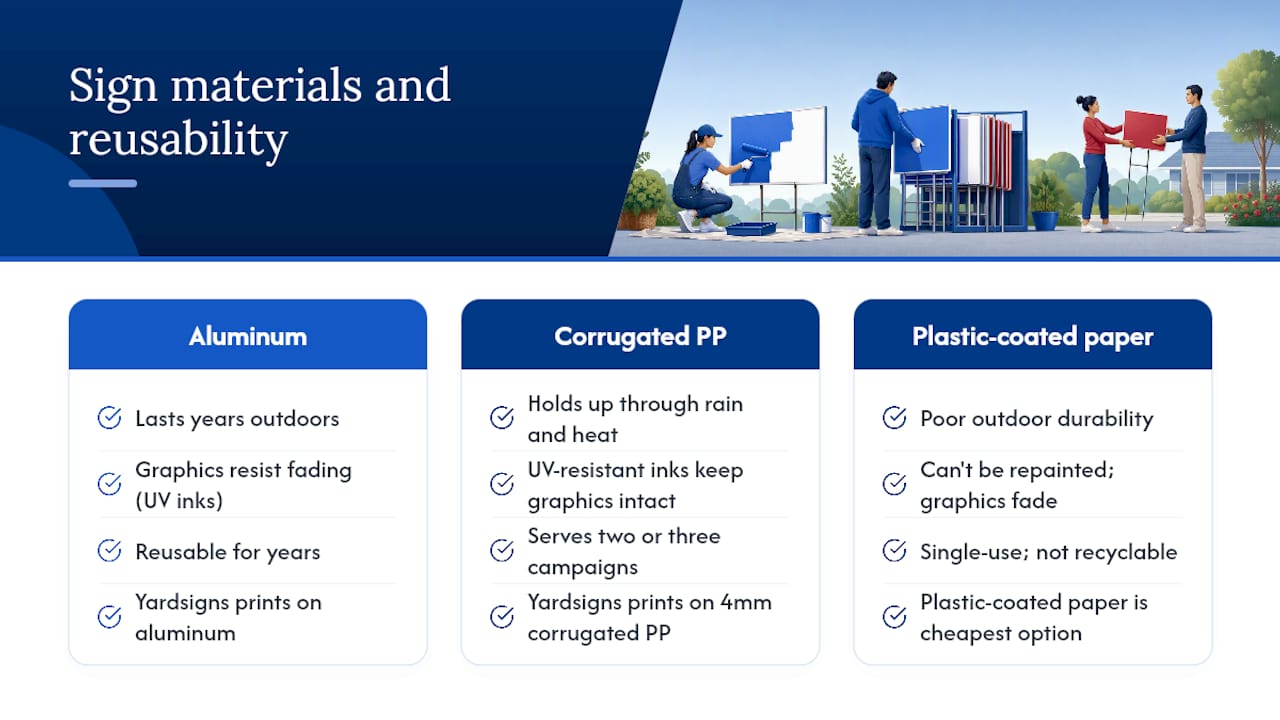
What I see consistently from customers who get the most value from their signs is straightforward: they buy the right material the first time. Corrugated polypropylene with UV-resistant inks holds up through rain, heat, and a full outdoor season without the graphics washing out or the panel warping. Aluminum signs go even further, often lasting years with minimal care.
The customers who struggle with reuse are usually the ones who chose the cheapest option upfront — plastic-coated paper signs that can’t be repainted and aren’t recyclable. That’s a false economy. A slightly higher investment in a durable corrugated or aluminum sign, designed without a specific date, can serve two or three campaigns before it ever needs replacing.
At Yardsigns, we print on 4mm corrugated polypropylene and aluminum with UV-resistant inks, include metal H-stakes, and ship most orders under 50 pieces within 24 hours. If you’re planning for reuse from the start, those material and turnaround specs matter. Design tips that support reusability are worth reviewing before you place your next order.
Ready to order signs built to last?

When your next campaign or event calls for signage that holds up season after season, Yardsigns delivers. Choose from corrugated polypropylene or aluminum, get UV-resistant double-sided printing, and receive your order in as little as 24 hours. Browse reusable event yard signs or start with the Yardsigns homepage to find the right format for your next project.
Sources
- Campaign Clutter? Tips to Dispose of Yard Signs - ecomaine
- Eco-tip: Reuse campaign signs, but don’t recycle
- Montcopa
- Yard signs - Hennepin County green disposal guide
