


Custom Sign Order Checklist: Your Complete 2026 Guide
A custom sign order checklist is a structured tool that guides you through every decision required to produce compliant, effective signage. Most sign orders that go wrong fail at the same three points: skipped compliance checks, vague design briefs, and underestimated lead times. This guide walks you through each step, from verifying municipal sign ordinances to confirming your final proof, so your sign arrives on time, on budget, and ready to work.
1. Your custom sign order checklist starts with compliance
Compliance is the first item on any sign order guide because a non-compliant sign can be removed, fined, or require expensive rework before it ever reaches your audience. Municipal codes dictate specifics for illuminated signs, including permitted lighting types and required electrical connections. Getting this wrong costs more than the sign itself.
Before you place any order, verify the following with your local planning or zoning office:
- Maximum sign dimensions: Most municipalities cap width, height, and total square footage.
- Setback and placement rules: How far the sign must sit from the road, property line, or building face.
- Illumination restrictions: Whether lit signs are allowed, and which lighting types are permitted.
- Permit requirements: Whether you need a building or sign permit before installation.
- HOA or landlord approval: Private properties often carry additional restrictions beyond municipal codes.
Poorly planned sign orders that ignore compliance risk legal removal or expensive modifications later. That outcome is entirely avoidable with a 30-minute call to your local zoning office before you finalize specs.
Pro Tip: Request a written summary of applicable sign codes from your municipality. A paper trail protects you if a code officer questions your installation later.
2. Define your sign’s purpose and design requirements
Every effective sign starts with a clear purpose. A sign meant to identify your business entrance needs different design choices than one promoting a weekend sale or directing foot traffic inside a venue. Locking in your purpose before touching any design tool saves revision cycles and money.
Work through these design requirements before briefing a sign shop or uploading artwork:
- Primary message: What is the single most important thing the sign must communicate?
- Audience and viewing distance: A roadside sign read at 45 mph needs larger type than a lobby sign read at 10 feet.
- Brand alignment: Colors, fonts, and logo usage should match your existing brand standards.
- Image or graphic use: High-resolution files (300 DPI minimum for print) prevent blurry output.
- Call to action: Phone number, URL, or QR code placement if the sign needs to drive a response.
Effective signage is visually appealing, readable from a distance, and memorable. That standard requires deliberate choices, not defaults. For practical design principles, the Yardsigns guide on designing a business sign covers contrast, font sizing, and layout in plain terms.
Pro Tip: Print a scaled mock-up of your design on paper and view it from the intended reading distance before approving the proof. What looks clear on screen often reads poorly at 20 feet.

3. Choose the right materials and construction
Material selection determines how long your sign lasts, how it looks, and what it costs. The right choice depends on where the sign lives, how long you need it, and what your budget allows.
| Material | Best use | Durability | Cost range |
|---|---|---|---|
| Corrugated plastic | Short-term outdoor, events, campaigns | 1–3 years | Low |
| Aluminum | Long-term outdoor, business identification | 5+ years | Medium |
| Acrylic | Indoor displays, retail, lobby signage | 3–5 years indoors | Medium to high |
| Vinyl banner | Temporary outdoor, trade shows | 1–2 years | Low to medium |
Metal is durable and weather-resistant, acrylic offers a sleek appearance, and vinyl is cost-effective and versatile. Each material suits a different scenario, and mixing them up leads to signs that fade, warp, or fail before their time.
Key material considerations for your checklist:
- UV resistance: Outdoor signs need UV-stable inks and substrates to prevent fading.
- Wind load rating: Larger signs in open areas need materials and mounting hardware rated for local wind conditions.
- Surface finish: Matte finishes reduce glare outdoors; gloss finishes work better indoors under controlled lighting.
- Maintenance requirements: Regular cleaning and timely repairs prolong sign life and keep messaging sharp.
For a detailed breakdown of corrugated plastic options, the Yardsigns resource on custom corrugated plastic signs is worth reviewing before you finalize your material choice.
4. Plan your production and installation timeline
Sign fabrication and installation typically take about 2–3 weeks depending on complexity and permit delays. That window does not include the time needed to gather artwork, get approvals, or pull permits. Plan backward from your target install date, not forward from when you start.
A realistic timeline for a standard commercial sign order looks like this:
- Week 1: Finalize design, submit permit application, and approve proof with sign shop.
- Week 2–3: Permit review period (varies by municipality; some take longer).
- Week 3–4: Production begins after permit approval.
- Week 4–5: Delivery and site preparation.
- Week 5–6: Installation, inspection, and sign-off.
Installation safety requires proper site inspection and adherence to mounting standards to protect pedestrians and reduce liability. Never skip a site inspection, even for a simple post-mounted sign. Underground utilities, soil conditions, and overhead clearances all affect installation safety.
Yardsigns ships orders under 50 pieces within 24 hours, which compresses the production phase significantly for smaller runs. That speed matters when a campaign launch date is fixed and there is no room for delays.
Pro Tip: Build a two-day buffer into every milestone on your timeline. Permit offices, freight carriers, and installation crews all run on their own schedules.
5. Budget for all cost components before ordering
Budgeting surprises derail more sign projects than design errors do. Clear budgets improve project management and vendor communication, so account for every line item before you commit to a vendor.
The full cost of a custom sign order includes more than the sign itself. Design fees apply when you need professional artwork created or modified. Permit fees vary by municipality and sign type, and some jurisdictions charge both an application fee and an inspection fee. Material and production costs depend on substrate, size, and quantity. Installation charges cover labor, hardware, and any equipment like lifts or post-hole diggers. Factor in shipping or delivery if the sign shop is not local.
Ordering in bulk reduces per-unit cost significantly. Yardsigns offers bulk custom yard signs starting at quantities of 25, which works well for campaigns, events, or multi-location businesses that need consistent branding across sites.
6. Review and finalize your order before production
Errors caught before production begins cost nothing to fix. Errors caught after production begins cost time, money, and sometimes the entire order. A final review checklist is the last line of defense before your sign goes to press.
Run through every item on this list before you confirm production:
- Design proof: Verify text spelling, phone numbers, URLs, and logo placement on the actual proof file, not a thumbnail.
- Dimensions: Confirm the sign size matches your permit approval and the physical space available.
- Color accuracy: Request a color match confirmation, especially for brand colors with specific Pantone or CMYK values.
- Material confirmation: Verify the substrate, finish, and any mounting hardware match what you specified.
- Compliance documentation: Confirm your permit number or approval letter is on file with the sign shop before production starts.
- Delivery address and contact: Double-check shipping details and provide a direct phone number for the delivery driver.
- Installation scheduling: Confirm your installer is booked and has the sign dimensions and mounting specs in advance.
Sign shops can assist with design expertise and regulatory compliance navigation, but the final accuracy check is your responsibility. A good sign shop will welcome your thoroughness. It protects both sides from costly mistakes.
Key takeaways
A successful custom sign order requires compliance verification, clear design intent, the right materials, and a realistic timeline before a single file goes to production.
| Point | Details |
|---|---|
| Compliance comes first | Verify municipal sign codes and permit requirements before finalizing any design specs. |
| Design clarity saves money | Define your sign’s purpose, audience, and brand requirements before briefing a sign shop. |
| Material choice drives lifespan | Match substrate and finish to your sign’s location, exposure, and expected service life. |
| Build timeline buffers | Plan for 2–3 weeks of production plus permit review time; order early to avoid delays. |
| Final review prevents rework | Check every proof detail, including dimensions, colors, and compliance docs, before approving production. |
What I’ve learned from watching sign orders go sideways
The most common mistake I see is treating compliance as an afterthought. A business owner gets excited about the design, approves a beautiful proof, orders the sign, and then discovers the local zoning code prohibits that size or that type of illumination. The sign sits in a warehouse while permits get sorted, or worse, it gets installed and then removed by a code officer. That sequence is painful and completely preventable.
The second pattern I see constantly is underestimating lead time. People assume ordering a sign is like ordering a product off a shelf. It is not. Even a straightforward corrugated plastic sign for a lawn campaign needs design approval, proof sign-off, and production time. When you add a permit requirement, the timeline stretches fast. I always tell people to start the compliance research the same day they start the design conversation, not after the proof is approved.
The third thing worth saying plainly: your relationship with your sign shop matters. A shop that knows your brand, your typical materials, and your compliance history will catch errors you miss. Treat them as a partner, not just a vendor. Share your permit documentation upfront. Ask them to flag anything that looks out of spec. That collaboration is worth more than any checklist item.
For beginners working through their first order, the Yardsigns lawn sign ordering checklist is a solid starting point before you get into the more complex commercial requirements.
— YardSignGuy
Yardsigns makes custom sign ordering straightforward
Pulling together a complete sign order, from compliance checks to final proof approval, takes real coordination. Yardsigns simplifies that process with a user-friendly online ordering system, premium weatherproof materials, and turnaround times that keep your campaigns on schedule.
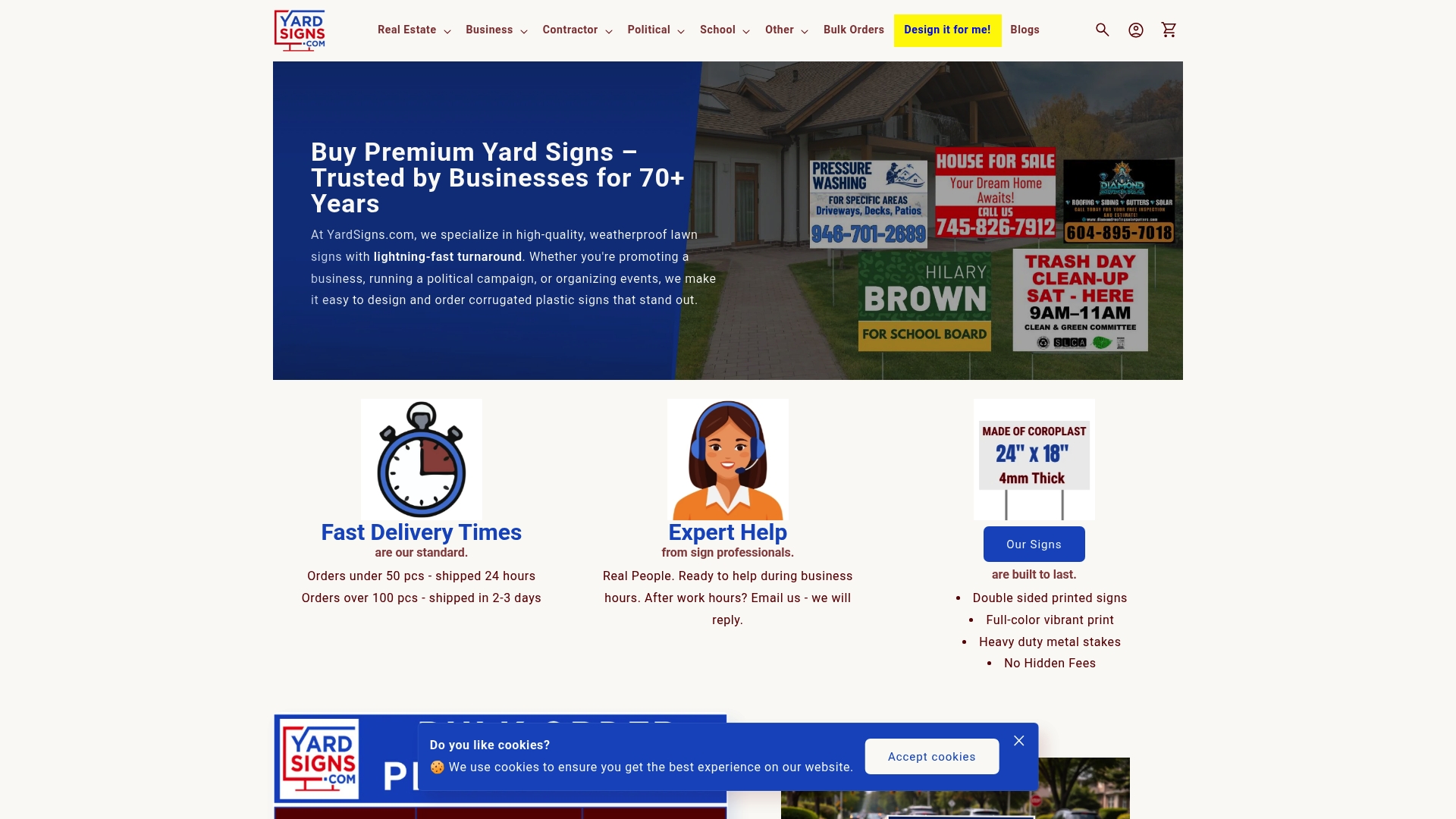
Whether you need restaurant signs with logo branding or handyman signs for immediate home repair services, Yardsigns offers ready-to-customize templates built for visibility and durability. Orders under 50 pieces ship within 24 hours. Visit yardsigns.com to start your order, browse sign categories, and get your signage working for you faster.
FAQ
What is a custom sign order checklist?
A custom sign order checklist is a structured list of steps covering compliance, design, materials, timeline, and final review that you complete before placing a sign order. It prevents costly errors and keeps your project on schedule.
How long does a custom sign order take to produce?
Standard sign fabrication and installation take about 2–3 weeks, not counting permit review time. Smaller runs from providers like Yardsigns can ship within 24 hours for orders under 50 pieces.
Do I need a permit for a custom sign?
Most commercial signs require a municipal permit, particularly for illuminated signs, large-format signs, or signs mounted on public-facing structures. Check your local zoning office before finalizing your sign design or dimensions.
What materials work best for outdoor custom signs?
Aluminum is the most durable choice for long-term outdoor use, while corrugated plastic suits short-term campaigns and events. Vinyl banners work well for temporary outdoor displays where flexibility and low cost matter most.
What should I check on a sign proof before approving it?
Verify all text for spelling and accuracy, confirm dimensions match your permit approval, check color values against your brand standards, and confirm material and finish selections before approving production.
