


Real Estate Branding Sign Examples That Win Listings
Real estate branding signs are physical marketing tools designed to enhance property visibility and reinforce an agent’s identity at the exact moment a buyer drives past. The best real estate branding sign examples share three traits: consistent visual identity, durable materials, and features that prompt immediate buyer action. Consistent branding across signs increases brand recognition by up to 80%. That number means buyers remember your name, your colors, and your face before they ever call you. Agents who apply these principles win more listings, build stronger community presence, and reduce the cost of every lead they generate.
1. What makes real estate branding sign examples effective?
The most recognized real estate signs use a limited, consistent color palette. Color psychology in signage shows that blue signals trust, purple signals luxury, and green signals growth. Choosing the right color for your market positions your brand before a buyer reads a single word.
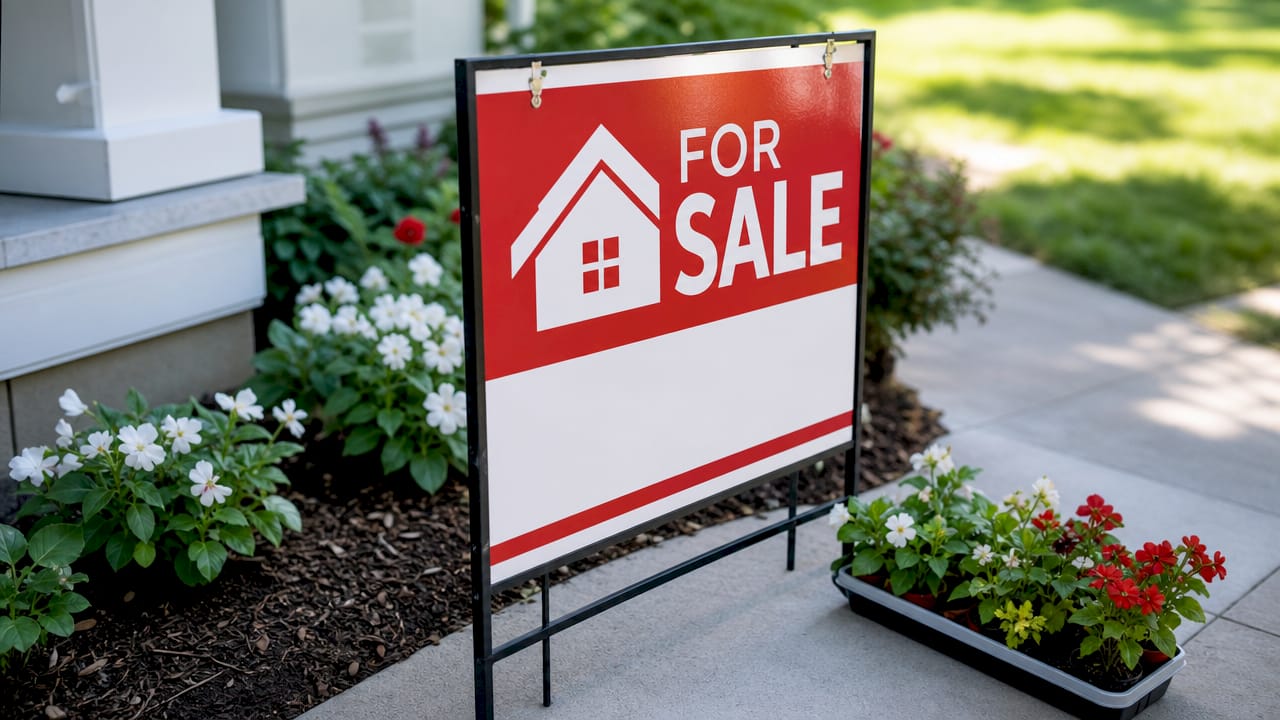
Typography matters just as much as color. A logo that reads clearly at 60 miles per hour on a yard sign must also look sharp on a business card. Agents who use one or two typefaces across all materials build faster recognition than those who mix fonts by campaign.
Simplified logos outperform complex ones on outdoor signs. A mark with too many details loses legibility at small sizes. The best real estate brand logo examples use bold shapes, high contrast, and minimal text so the sign reads in under two seconds.
- Consistent color palette: Use two to three brand colors across every sign, flyer, and digital asset.
- High-contrast typography: Choose sans-serif fonts that read clearly from a moving vehicle.
- Simplified logo mark: Reduce your logo to its core shape before placing it on a yard sign.
- Professional agent photo: A clear headshot builds personal trust and makes your brand human.
- Branded templates: Use the same layout across listing signs, open house signs, and directional signs.
Pro Tip: Test your sign design by photographing it from 30 feet away on your phone. If the logo and phone number are not immediately readable in the photo, simplify before you print.
2. Durable materials that protect your brand investment
Durability is not a bonus feature in real estate signage. It is the baseline. A faded or warped sign tells buyers your brand is unreliable before they ever meet you. Builder-grade signage using UV-stable paints and marine-grade substrates maintains appearance across multiple sales seasons with zero maintenance required. That longevity translates directly into lower cost per impression over time.
Engineered mounting systems are equally critical. Signs that lean, spin, or collapse in wind damage your credibility and your brand. High-performance mounting hardware, sized for regional climate conditions, keeps your sign upright and visible through rain, heat, and wind.
- Corrugated plastic (coroplast): Lightweight and affordable for short-term listings. Best for open house signs and directional arrows.
- Aluminum composite panels: Rigid, weather-resistant, and ideal for long-term yard sign installations in high-traffic areas.
- Marine-grade substrates: Used in premium community monument signs. Resist moisture, salt air, and UV degradation.
- UV-stable inks: Prevent color fading over months of sun exposure, keeping your brand colors accurate and vibrant.
- H-frame wire stakes: Standard mounting for coroplast yard signs. Choose heavy-gauge wire for windy markets.
- Engineered post systems: Used for monument and community entry signs. Anchored for regional wind and frost conditions.
Stat to know: Branded community monument signage reduces signage-related complaints by 90% compared to generic signs and increases approach conversions by 22%.
That result comes from signs that look intentional, professional, and permanent. Generic signs signal a temporary presence. Branded, durable signs signal a committed, trustworthy agent.
3. Technology integration that turns signs into lead tools
A yard sign with a QR code is no longer a novelty. It is a standard feature in effective real estate marketing signs. QR code-enabled signs provide instant neighborhood data, seller information, and property details, increasing active buyer interaction and enabling timely agent follow-up. A buyer who scans your sign at 9 PM becomes a trackable lead before your office opens the next morning.
The data from QR scans also tells you which listings generate the most street-level interest. That information helps you allocate sign placements more effectively across your farm area.
- QR codes linking to property pages: Give buyers instant access to photos, pricing, and virtual tours without a phone call.
- Neighborhood lifestyle data: Link to walkability scores, school ratings, and local amenity maps to answer buyer questions before they ask.
- Scan tracking dashboards: Monitor which signs generate the most scans and adjust placement or design accordingly.
- Text-to-info shortcodes: An alternative to QR codes for buyers who prefer SMS over scanning.
- Video landing pages: Link signs to a short agent introduction video that builds trust before the first showing.
Pro Tip: Place your QR code in the lower third of the sign, sized at least 1.5 inches square. Smaller codes fail to scan reliably from a few feet away, and buyers will not stop their car to get closer.
4. Human-centric sign concepts that build neighborhood trust
The most memorable examples of real estate signs do more than display a phone number. They tell a story about the neighborhood and the agent behind the listing. Authentic, human-centric signage that reflects local character consistently outperforms generic, logo-only designs in building buyer trust and community interest.
“The shift in real estate signage is away from loud marketing and toward useful, authentic local storytelling. Signs that reflect the neighborhood’s identity attract buyers who already want to live there.”
Agents who build their brand around a specific neighborhood or lifestyle niche create signs that feel like a natural part of the community rather than an intrusion into it. That distinction is what separates forgettable signs from ones that generate referrals.
- Neighborhood taglines: Add a short phrase that captures the area’s character, such as “Your Westside Neighbor” or “Serving Oak Park Since 2010.”
- Agent personality elements: A candid photo or a brief personal statement makes your sign feel approachable rather than corporate.
- Community milestone callouts: “50 Homes Sold in This Zip Code” is a trust signal that no generic sign can replicate.
- Lifestyle imagery: A subtle background image of a local park or landmark connects your brand to the place buyers want to call home.
- Referral prompts: “Ask Me About Your Neighbor’s Sale” invites conversation and positions you as the local expert.
Signage that reflects the entire client experience must match your online presence and professional tone. A buyer who sees your yard sign and then visits your website expects the same colors, fonts, and voice. Inconsistency at that moment breaks trust before the relationship begins.
5. Signage types compared: which format fits your marketing goal?
Different sign formats serve different marketing purposes. Choosing the wrong type wastes budget and reduces visibility. The table below compares the three most common formats used in effective real estate promotional signage.
| Sign type | Best use case | Durability | Branding impact | Buyer reach |
|---|---|---|---|---|
| Yard sign (coroplast) | Active listings, open houses | Short to medium term | Moderate | High (street traffic) |
| Monument sign | Community entry, new developments | Long term | Very high | High (vehicle and foot traffic) |
| Directional sign | Open house traffic routing | Short term | Low to moderate | Targeted (event day) |
Yard signs deliver the highest volume of impressions per dollar for individual listings. Monument signs build brand equity across a community and create a coherent brand journey from the entry point to the sales center. Directional signs serve a single purpose on a single day, so durability matters less than clarity and placement.
Agents working a defined geographic farm area benefit most from combining all three formats. Yard signs generate daily impressions on active listings. Monument or post signs at neighborhood entries reinforce your name as the local authority. Directional signs convert open house visitors into leads on event day.
You can also apply visual identity principles from retail signage to real estate formats. Retail sign design research confirms that consistent color and layout across multiple sign types in the same area creates a multiplier effect on brand recall.
6. Branded presentations and signage working together
Signage does not operate in isolation. Agents using branded listing presentations and signs win 30% more listings than those using generic materials. That statistic reflects a simple truth: sellers choose agents who look like professionals, and consistent signage is the most visible proof of that professionalism.
Your sign is often the first physical touchpoint a potential seller sees. If it matches your website, your social media graphics, and your listing presentation folder, you communicate that every detail of your service is intentional. If it does not match, you signal that your brand is an afterthought.
In luxury real estate, signage functions as a curation of lifestyle. Premium typography, restrained color palettes, and high-quality materials attract discerning buyers who judge the property by the sign before they ever schedule a showing. That principle applies at every price point: the sign sets the expectation for the experience that follows.
Key takeaways
The most effective real estate branding signs combine consistent visual identity, durable materials, and technology features that convert street-level interest into trackable leads.
| Point | Details |
|---|---|
| Consistency drives recognition | Uniform colors, fonts, and logos across all sign types increase brand recognition by up to 80%. |
| Durability protects brand value | UV-stable materials and engineered mounts eliminate maintenance and keep signs looking professional. |
| QR codes generate leads | Technology-enabled signs turn passive viewers into active, trackable leads around the clock. |
| Human-centric design builds trust | Neighborhood storytelling and agent personality on signs outperform generic logo-only designs. |
| Format choice determines reach | Match sign type to marketing goal: yard signs for listings, monuments for community branding, directionals for events. |
What I’ve learned about real estate signs after years in the field
Most agents treat signage as a commodity purchase. They order the cheapest option, slap a logo on it, and move on. That approach costs more in the long run than investing in quality from the start.
The agents I see winning consistently are the ones who treat every sign as a brand touchpoint. They use the same two colors on every sign, every flyer, and every social post. Their yard signs match their Instagram profile. Their open house signs use the same font as their business cards. That level of consistency is not obsessive. It is professional, and buyers notice it even when they cannot articulate why.
The technology piece is where most agents leave money on the table. A QR code that links to a well-built property page costs almost nothing to add to a sign order. Yet the majority of yard signs I see in the field still carry only a phone number. That is a missed opportunity every single day the sign is in the ground.
My honest advice: start with your colors and your logo. Get those right and consistent before you add any other feature. Then add a QR code on your next order. Then test a neighborhood tagline. Build your signage brand the same way you build any brand: one deliberate decision at a time.
— YardSignGuy
Custom real estate signs from Yardsigns
Yardsigns produces custom real estate yard signs built for agents who need professional results fast. Orders under 50 pieces ship within 24 hours, so you can respond to a new listing without waiting a week for materials. Every sign is printed on weatherproof substrates with vibrant, UV-stable inks that hold color through full sales seasons.
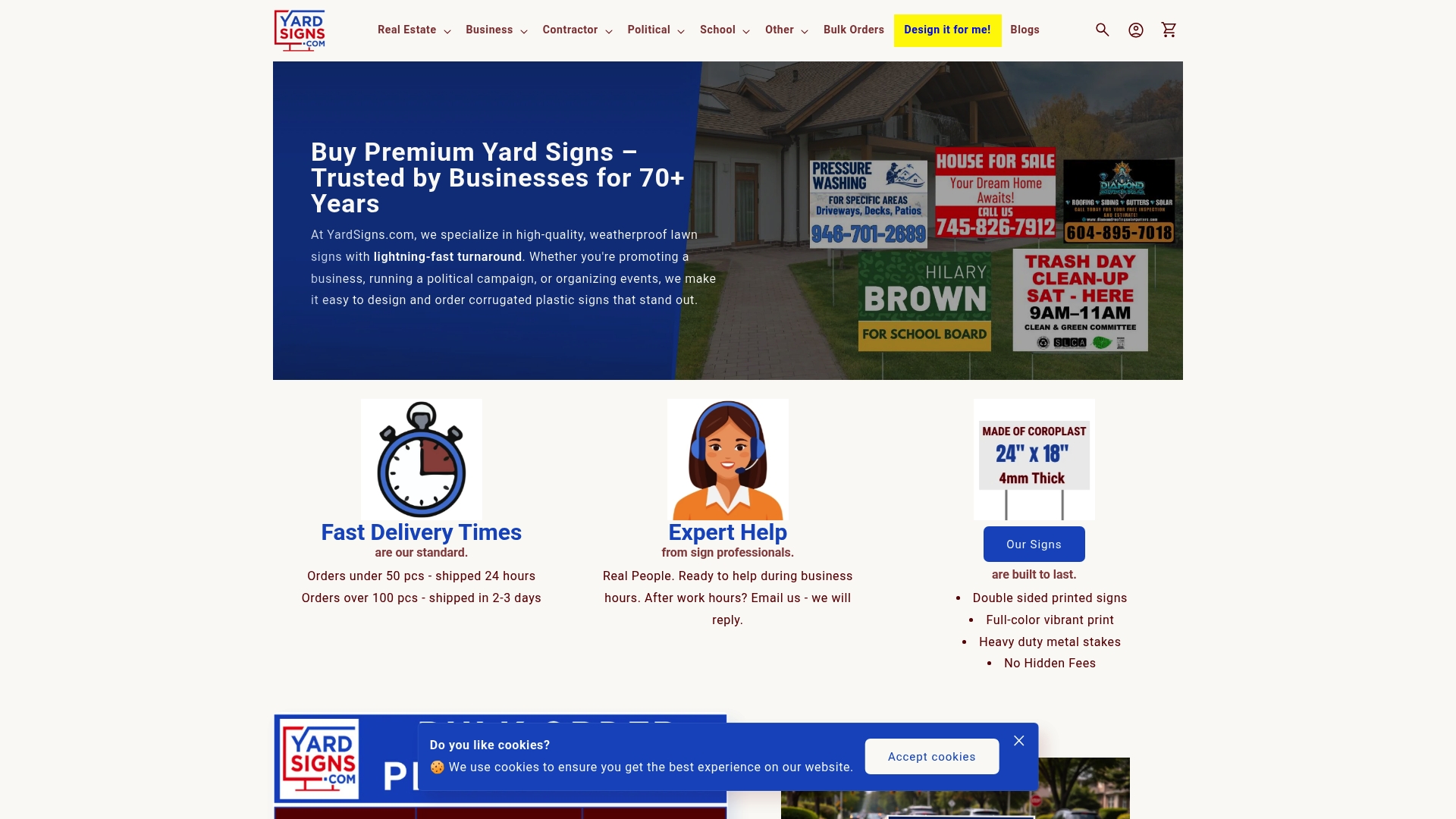
You can upload your existing brand assets, match your colors exactly, and add agent photos, QR codes, or neighborhood taglines directly through the online design tool. Whether you need a single listing sign or a full open house kit, Yardsigns makes it straightforward to order signs that look like your brand and last through the elements. Browse the full range of real estate sign options and place your order today.
FAQ
What are the most effective real estate branding sign examples?
The most effective examples combine a consistent color palette, a simplified logo, an agent photo, and a QR code on a durable substrate. Consistent visual identity across all sign types increases brand recognition by up to 80%.
How do I choose the right material for outdoor real estate signs?
Corrugated plastic works for short-term listings, while aluminum composite and marine-grade panels suit long-term or high-traffic placements. UV-stable inks on any substrate prevent color fading across multiple sales seasons.
Do QR codes on real estate signs actually work?
Yes. QR code-enabled signs increase active buyer interaction by providing instant property and neighborhood data, and they allow agents to track scan activity for timely follow-up.
How many sign types should a real estate agent use?
Agents working a defined farm area benefit from combining yard signs for active listings, monument or post signs for neighborhood entry branding, and directional signs for open house events. Each format serves a distinct marketing goal.
Does branded signage actually help agents win more listings?
Agents using branded signs and listing presentations win 30% more listings than those using generic materials. Sellers choose agents who present a professional, consistent brand across every touchpoint.
