Wire Stakes in Sign Display: Your 2026 Practical Guide
Wire stakes are the unsung workhorses of yard sign display. Their job is straightforward: anchor a corrugated plastic sign firmly into the ground so it stays upright, faces the right direction, and keeps your message visible. Made from 9-gauge galvanized steel, standard H-shaped wire stakes are lightweight and come in common sizes suitable for various sign dimensions. That lightweight build is exactly what makes them practical for campaigns, open houses, fundraisers, and events where you need dozens of signs up fast.
Here is what wire stakes actually do for your sign display:
- Anchor the sign by sliding their top prongs into the vertical channels (called flutes) of a corrugated plastic sign
- Stabilize the panel so it stands upright without leaning or tipping in wind or rain
- Lift the sign off the ground to keep it above grass, landscaping, or light snow
- Enable fast, tool-free installation that takes seconds per sign
- Allow reuse across multiple campaigns without losing structural integrity
What types of wire stakes work best for yard signs?
Not all wire stakes are built the same, and choosing the right type affects how well your sign holds up outdoors.
H-shaped wire stakes are the most common option for corrugated plastic signs. The top prongs slide into the sign’s flutes while the bottom legs push into the ground. A standard H stake runs about 30 inches tall and is made from 9-gauge galvanized steel, giving it a solid balance of strength and rust resistance without adding bulk.

Heavy-duty goal post stakes step in when conditions get tougher. These use thicker galvanized steel wire that resists bending in hard ground, and they are the go-to choice for larger sign panels or locations with persistent wind. Using two of them on a single wide sign adds a meaningful amount of stability.
Key differences to know:
- Galvanized steel stakes resist rust and hold up through rain and temperature swings, making them the better pick for long-term outdoor use
- Plastic stakes are lighter and easier to push into soft soil, but they sacrifice strength in hard ground or high-wind situations
- Gauge thickness matters: thicker wire (lower gauge number) bends less under pressure and lasts longer in challenging weather
- Size matching: a 10x15-inch stake works best with signs up to 24x18 inches; a 10x30-inch stake handles signs up to 36x24 inches
Pro Tip: For signs wider than 36 inches, use two heavy-duty stakes spaced evenly across the bottom. A single stake on a large panel creates a pivot point that wind can exploit.
How to install wire stakes correctly, step by step
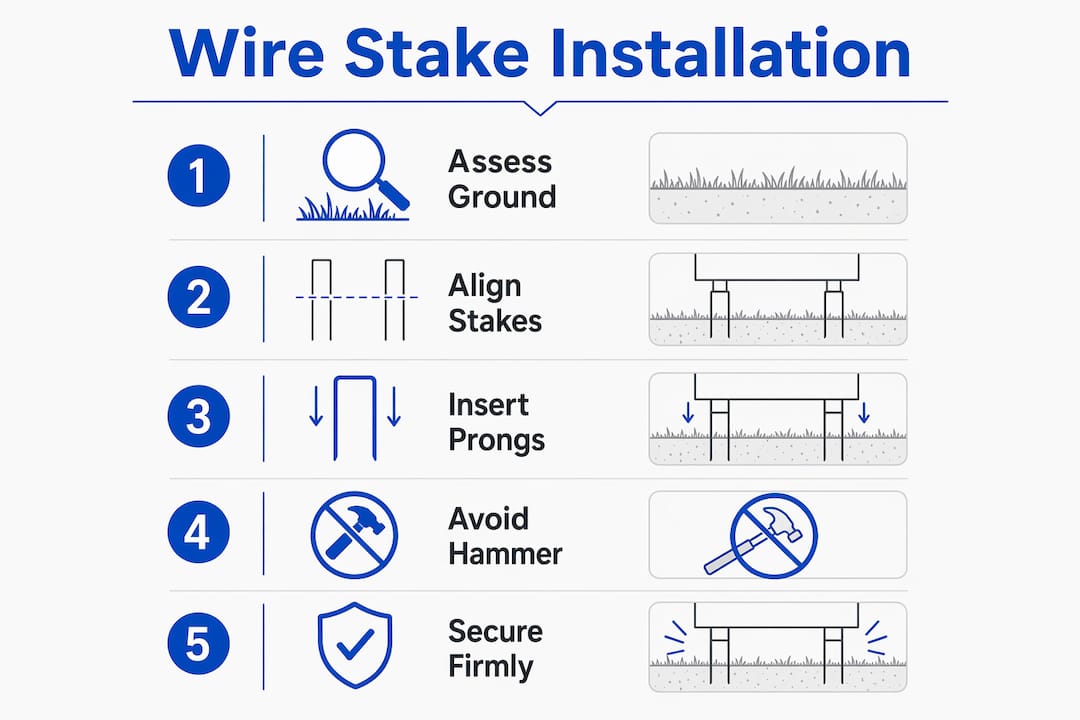
Getting the installation right the first time saves you from returning to fix a leaning or fallen sign. The process is simple, but a few details make a real difference.
- Slide the stake prongs into the sign flutes. Hold the sign face-up and align the top prongs of the H stake with the open flute channels along the bottom edge. Push them in until the stake frame sits flush against the sign back.
- Choose your ground spot. Look for soft, moist soil with no rocks or roots directly beneath. Avoid spots where the ground is visibly cracked or compacted.
- Push the stake into the ground. Apply steady, even downward pressure on both legs simultaneously. If the stake has a crossbar or step peg, place your foot on it and use your body weight rather than pushing by hand.
- Drive it 10–12 inches deep. That depth is the threshold for a secure hold. Anything shallower and the sign becomes vulnerable to tipping in moderate wind.
- Check for level. Step back and look at the sign from the front. If it leans, pull the stake out slightly on the high side and re-drive it straight.
- Add secondary anchoring if needed. In windy locations, loop a zip tie through the sign’s flutes and around the stake frame to prevent the sign from lifting off the prongs.
Useful items to have on hand:
- Work gloves to protect your hands when pushing metal stakes
- A rubber mallet for frozen or very firm ground (tap gently to avoid bending the wire)
- Zip ties for wind-prone locations
- A small screwdriver to pre-punch starter holes in hard soil
Pro Tip: Never hammer directly on the top of a wire stake. The force bends the prongs and makes it harder to insert the sign. Use a mallet on the crossbar instead, or pre-soften the soil with a little water.
How ground conditions affect your wire stake installation
The ground beneath your sign determines how well the stake holds, and it varies more than most people expect.
- Soft, moist soil is ideal. Stakes go in easily, seat deeply, and grip well without extra effort.
- Dry, compacted soil resists insertion and causes uneven pressure, which leads to leaning. Pre-drill a pilot hole with a screwdriver or soak the spot with water before driving the stake.
- Clay-heavy soil can grip stakes tightly when wet but crack and release them when dry. Check signs after a dry spell.
- Sandy soil lets stakes go in easily but provides less grip. Drive stakes deeper than usual, or use two stakes per sign.
- Frozen ground requires a rubber mallet and patience. Tap the stake in gradually rather than forcing it, and avoid bending the frame.
- Pavement or hardscape makes staking impossible. Use a freestanding base or a weighted sign stand instead.
Poor soil conditions are the leading cause of sign instability in the field. Assessing the ground before you commit to a location takes thirty seconds and prevents a lot of wasted effort. If the soil at your preferred spot is too hard or too loose, moving the sign two feet in any direction often solves the problem entirely.
Best practices for visibility, durability, and maintenance
Getting the stake in the ground is only part of the job. How you position and maintain the sign determines whether it actually works.

Orientation is the single biggest visibility factor. Research on sign detectability shows that perpendicular signs are both more detectable and more legible than parallel ones, with detection distances increasing dramatically when signs face oncoming traffic directly. Place your sign so drivers approach it head-on, not at an angle.
Keep the surface clean. A dirty sign surface reduces fixation distance by 15%, meaning drivers register your sign later and have less time to act on it. Wipe the face down with a damp cloth after rain or dusty conditions. Traffic engineering research also confirms that sunlight glare and rain can significantly reduce sign visibility distances, so retroreflective materials help significantly in low-light or wet conditions.
Additional best practices:
- Check stakes after every storm. Wind and rain loosen even well-driven stakes. Push any that have shifted back to full depth.
- Use stake height to your advantage. A 30-inch stake lifts a standard yard sign above most grass and low landscaping, keeping it in the driver’s sightline.
- Avoid shallow placement. Stakes driven less than 6 inches into the ground are the most common cause of signs falling over. The 10–12 inch target is not arbitrary.
- Secure large signs with two heavy-duty stakes. A single stake on a wide panel creates a lever arm that wind pressure exploits quickly.
- Add zip ties or small weights in windy areas. Attaching the sign to the stake frame with a zip tie prevents the panel from lifting off the prongs when wind hits it like a sail.
- Rotate sign locations periodically for long campaigns. Soil around a stake compresses over time, reducing grip. Moving the sign a few inches refreshes the hold.
- Follow local ordinances. Many municipalities regulate sign placement near roads, sidewalks, and intersections. Check local rules before installation to avoid removal or fines.
For long-term outdoor use, maintaining steel stakes the same way you would any galvanized steel product extends their lifespan across multiple campaigns. Rinse off mud and debris after each use, store them flat and dry, and inspect for bent prongs before redeployment.
Key Takeaways
Wire stakes anchor yard signs by inserting galvanized steel prongs into corrugated flutes, and driving them 10–12 inches deep into suitable soil is the single most reliable way to keep signs stable and visible.
| Point | Details |
|---|---|
| Standard stake specs | 9-gauge galvanized steel, sizes from 10x15 to 10x30 inches |
| Correct installation depth | Drive stakes 10–12 inches into the ground for a secure, stable hold |
| Orientation for visibility | Perpendicular placement dramatically increases detection distance over parallel |
| Dirt reduces effectiveness | A dirty sign surface reduces first-fixation distance by around 15%; clean signs regularly |
| Wind resistance | Use two heavy-duty stakes on large signs; add zip ties to prevent panel lift-off |
Ready to put wire stakes to work? Yardsigns carries realtor yard signs and a full range of event and promotional signs built for exactly this kind of fast, reliable outdoor display. Orders under 50 pieces ship within 24 hours, so you can get your message in the ground without delay.