


Why Yard Signs Sell Homes Faster: Explained
Yard signs are defined as physical real estate marketing tools that generate direct buyer leads by placing your listing in front of the most qualified audience possible: people already in the neighborhood. The phrase “why yard signs sell homes faster explained” gets searched thousands of times monthly because agents and homeowners sense the signs work but want the data to back it up. According to NAR, 4% of homebuyers in 2024 first discovered their purchased property through a yard or open house sign. That number is small but highly significant. A buyer who notices your sign while driving past is already pre-qualified by geography, and geography is one of the top three factors in every home purchase decision.
Why yard signs sell homes faster than digital ads alone
The core reason yard signs outperform digital advertising in local reach is context. A Facebook ad interrupts someone scrolling through vacation photos. A yard sign appears exactly where a buyer is already evaluating the neighborhood, the street, and the commute. That difference in context is not trivial. Yard signs are perceived as trusted local endorsements rather than intrusive ads, which produces better organic recall and a stronger emotional response.
Neighborhood foot and vehicle traffic represent raw, unfiltered lead opportunity. Every person who drives or walks past your listing is a potential buyer who has already self-selected into the area. Digital channels cannot replicate that physical proximity. Research confirms that drivers need at least 1.5 seconds to process signage while moving, which means bold typography, high contrast, and a single clear call to action are not optional design choices. They are the minimum requirement for a sign that actually works.
Here is where yard signs hold a structural advantage over digital ads:
- Persistent visibility. A yard sign works 24 hours a day, seven days a week, without a daily budget cap or an algorithm deciding who sees it.
- Zero competition. Your sign on that lawn is the only message at that location. Digital ads compete with dozens of other listings in the same feed.
- Local trust signal. Neighbors who see a sign often tell friends and family who are looking to move into the area.
- No ad fatigue. Buyers do not develop banner blindness toward physical signs the way they do toward digital display ads.
- Cost efficiency. At roughly $6 to $7 per sign, the cost per impression in a high-traffic neighborhood is extremely low.
Pro Tip: Place your sign at the property’s most visible corner, not just at the front door. A sign visible from two directions captures twice the traffic with zero additional cost.
Design and placement strategies that maximize effectiveness
Sign design is where most agents leave money on the table. Poorly designed or faded signs deter over half of potential inquiries because buyers associate sign quality with agent professionalism and property condition. If your sign looks cheap, buyers assume the listing is too. High-contrast color combinations, a font size legible from 30 feet, and a single phone number or QR code are the three non-negotiable design elements.

Placement strategy matters as much as design. Directional “breadcrumb” trails at key intersections reduce buyer confusion and increase open house attendance by guiding people from arterial roads directly to the property. Think of it as a physical navigation system. A buyer who gets confused and turns around is a lost lead. A buyer who follows three well-placed directional signs arrives at your open house already oriented and engaged.
Technology integration has transformed what a yard sign can do. Unique QR codes and SMS shortcodes on signs generate trackable leads and convert a passive marker into a performance-based marketing asset. NFC tags take this further, allowing smartphone users to tap the sign and instantly access a property listing page, virtual tour, or contact form. These features do not replace the sign’s core function. They extend it.
| Feature | Material/Technology | Best Use Case | Durability |
|---|---|---|---|
| Standard coroplast | Corrugated plastic | Short-term listings, open houses | 3 to 6 months outdoors |
| Aluminum composite | Rigid aluminum | Long-term listings, agent branding | 2 to 5 years |
| QR code integration | Printed or laminated | Lead capture, digital property tours | Matches base material |
| NFC tag | Embedded chip | Tech-savvy buyer markets | 1 to 3 years |
| Double-sided printing | Any base material | Corner lots, high-traffic intersections | Same as base |
Pro Tip: Order double-sided signs for any property on a corner lot or near an intersection. A single-sided sign at a corner captures only half the available traffic.
The measurable impact of yard signs on home sales and agent branding
The effectiveness of yard signs is no longer purely anecdotal. Agents who use unique QR codes per sign location can track exactly which placement generates calls, scans, and form submissions. This turns yard signs into a measurable channel with a calculable cost per lead, which is the same standard applied to Google Ads or Meta campaigns.
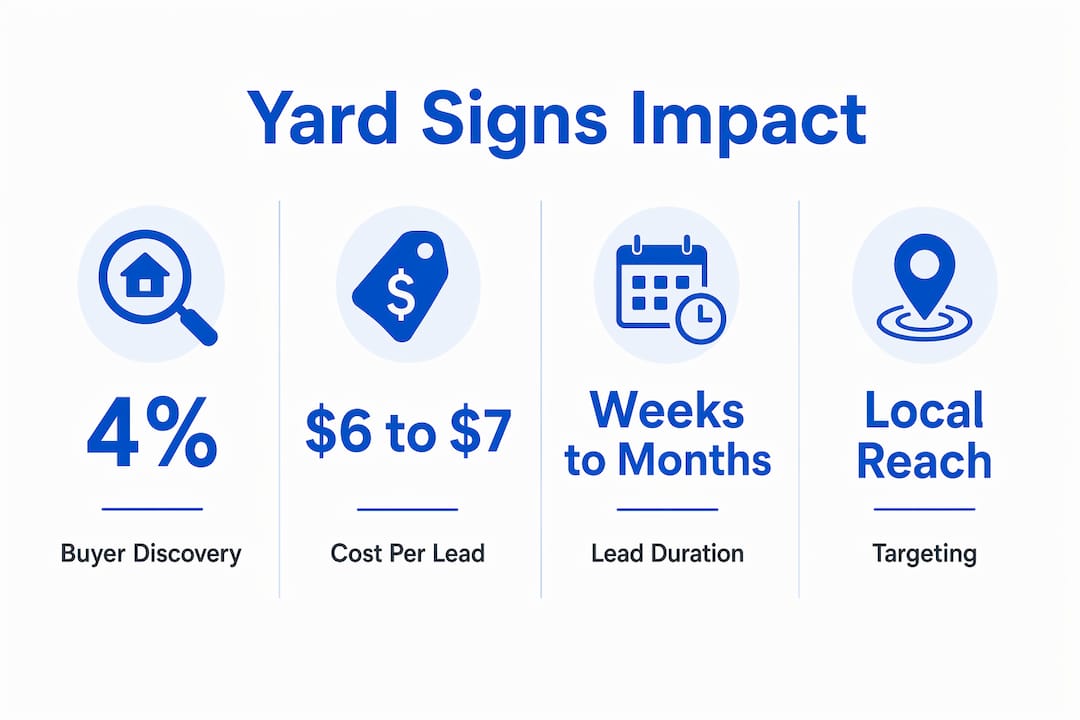
The ROI comparison is striking. Digital lead acquisition costs have risen sharply, with average cost-per-click reaching $6.55 or more in competitive real estate markets. A single yard sign costs roughly the same amount and can generate multiple leads over weeks or months. That math favors physical signage for hyper-local campaigns, especially in neighborhoods where the target buyer already lives nearby.
| Channel | Average Cost Per Lead | Visibility Duration | Geographic Targeting |
|---|---|---|---|
| Yard sign | $6 to $7 per sign | Weeks to months | Exact neighborhood |
| Google Ads (real estate) | $6.55+ per click | Only while budget runs | Broad or zip-code level |
| Social media ads | Variable, often $10+ per lead | Days to weeks | Interest-based, less precise |
Consistent yard sign branding across a neighborhood creates cumulative recognition and trust that generates new seller prospects for agents. When a homeowner sees the same agent’s sign on three properties within two blocks, that agent becomes the perceived authority for the area. This is the clustering effect in practice, and it works because clustering signs within a 1 to 3 block radius creates a powerful social proof signal that the neighborhood is active and the agent is dominant. Sellers notice this and call.
You can explore how FSBO sellers use yard signs to generate direct buyer interest without an agent, which illustrates just how much independent marketing power a well-placed sign carries.
Common misconceptions about yard sign marketing
Yard signs do not sell homes by themselves. This is the most important clarification for any agent or homeowner who expects a sign to replace a full marketing strategy. Signs drive high-quality local traffic to a listing. Converting that traffic into a sale still requires competitive pricing, strong photography, and a responsive follow-up process. The sign opens the door. Everything else closes it.
HOA restrictions are a real constraint that agents frequently overlook. Many communities limit sign size, placement duration, or the number of directional signs permitted. The best practice is to review HOA rules before ordering and to get written permission where required. A sign that gets removed on day two generates zero leads.
Measurement limitations remain a challenge for agents who do not use technology-enabled signs. A standard sign with only a phone number provides no data on how many people saw it versus how many called. This gap is closing fast as QR code tracking and NFC analytics become standard features on professionally printed signs.
Common pitfalls to avoid with yard sign marketing:
- Using a phone number that goes to voicemail without a callback system in place
- Placing signs too far from the property with no directional continuity
- Choosing low-contrast color combinations that are unreadable from a moving vehicle
- Leaving faded or damaged signs up, which signals neglect rather than availability
- Ignoring HOA rules and losing sign placement mid-campaign
Key takeaways
Yard signs sell homes faster because they place a trusted, persistent marketing message directly in front of buyers who are already physically present in the target neighborhood.
| Point | Details |
|---|---|
| Local buyer capture | Signs reach neighborhood traffic that digital ads cannot target with the same geographic precision. |
| Design drives results | High-contrast design and legible typography at 30 feet are the minimum standard for an effective sign. |
| Technology extends reach | QR codes and NFC tags convert passive signs into trackable lead sources with measurable ROI. |
| Clustering builds authority | Multiple signs within a 1 to 3 block radius signal market momentum and establish agent credibility. |
| Integration is required | Signs work best as part of a broader marketing plan, not as a standalone strategy. |
What I’ve learned from watching signs work in the field
I’ve watched agents spend thousands on digital campaigns while a single well-placed yard sign with a QR code quietly generated more qualified calls than their entire Google Ads budget for the month. The pattern repeats itself in neighborhood after neighborhood. The buyers who call from a yard sign are different from the ones who click an ad. They’ve already driven the street, seen the house from the outside, and made a preliminary judgment. They’re calling because they’re interested, not just browsing.
The clustering strategy is underused and underestimated. When I see an agent with three or four signs within a two-block radius, I know that agent understands how neighborhood perception works. Sellers see those signs and think, “This agent moves homes here.” That perception alone generates listing appointments that no digital ad can replicate.
The one mistake I see most often is treating sign quality as a cost to minimize. A faded, bent, or generic sign communicates exactly the wrong message at the most critical moment. The buyer’s first impression of your professionalism comes from that sign, before they ever see the interior photos or read the listing description. Invest in a sign that looks as good on day 45 as it did on day one. The materials exist, and the price difference is negligible compared to the commission at stake.
Combine physical signage with a retargeting campaign targeting the zip code, and you create a feedback loop where buyers see your sign in person and then see your listing again online. That combination shortens the decision cycle more than either channel does alone.
— YardSignGuy
Get your listing noticed with Yardsigns
If you’re ready to put the yard signs impact on sales to work for your next listing, Yardsigns has the tools to do it right. Every sign is printed on weatherproof materials with vibrant, fade-resistant ink that holds up through weeks of outdoor exposure. Orders under 50 pieces ship within 24 hours, so you can have professional signage in place before your first open house.
Yardsigns offers customizable home sale signs with directional arrow designs built for high-traffic visibility, along with realtor yard signs that include space for your photo, logo, and contact details. You can add QR codes to any design for lead tracking. Visit yardsigns.com to configure your signs and get them shipped before your competition even schedules a photographer.
FAQ
Do yard signs actually help sell homes faster?
Yes. NAR 2024 data confirms that 4% of homebuyers first discovered their purchased property through a yard or open house sign, making signs a direct and measurable lead source for local buyers.
What makes a yard sign effective for real estate?
An effective real estate sign uses high-contrast colors, bold typography legible from 30 feet, and a single clear call to action such as a phone number or QR code. Sign quality directly affects buyer perception of both the property and the agent’s professionalism.
How do QR codes on yard signs improve lead generation?
QR codes on signs create trackable, unique lead sources that tell you exactly which sign location generated interest. This transforms a passive marker into a performance-based marketing asset with measurable cost-per-lead data.
Are yard signs worth it compared to digital advertising?
Yard signs cost roughly $6 to $7 each and generate leads over weeks or months. Digital clicks in real estate average $6.55 or more per click with no guarantee of a lead, making yard signs a cost-competitive channel for hyper-local buyer targeting.
How many yard signs should an agent use per listing?
Agents who cluster signs within a 1 to 3 block radius create a social proof signal that increases buyer interest and establishes neighborhood authority. Use one primary sign at the property plus two to four directional signs at nearby intersections for maximum coverage.
