


Do Yard Signs Fade? Lifespans, Causes, and Fixes
Yes, yard signs fade. Every outdoor sign loses color eventually, but how fast depends on the material, the ink, and the environment you put it in. A basic 4mm corrugated plastic sign printed with UV-cured inks typically holds sharp color for 6 to 12 months outdoors, while a 6mm version stretches that closer to a year and a half. Aluminum signs push well past that, often lasting several years without visible color breakdown.
Here’s the quick breakdown by material and use case:
- Standard 4mm Coroplast: Best for short campaigns, expect 6 to 12 months of solid color before noticeable fading.
- Heavy-duty 6mm Coroplast with UV inhibitors: Good for real estate or seasonal business use, often lasts 2 to 5 years in mild or shaded conditions.
- Aluminum: The long-haul option for permanent business signage, resistant to warping and rust with minimal fading for years.
- PVC board: Rigid and durable, a strong middle ground between Coroplast and aluminum for medium-term installs.
Three forces do most of the damage: UV radiation breaks down pigment molecules and the polymer chains holding your substrate together, ink chemistry determines whether color loss happens in months or years, and exposure conditions like full southern sun, coastal salt air, or constant wind accelerate everything. A sign baking in direct Florida sun near the coast can fail in a fraction of the time it would last in a shaded northern yard.
Key Takeaways
Yard signs fade because UV radiation breaks down pigment and polymer bonds, but the right material, ink, and maintenance routine can extend usable life from months to years.
| Point | Details |
|---|---|
| Fading is universal but variable | Every outdoor sign fades eventually, but lifespan ranges from 6 months to several years depending on material and climate. |
| Match material to timeline | Use 4mm Coroplast for short campaigns, 6mm or PVC for real estate, and aluminum for permanent business signage. |
| Ink chemistry drives durability | UV-cured inks resist fading far better than standard dye-based or water-based inks. |
| Maintenance extends life | Clean gently, store flat and dry between seasons, and use stainless hardware in coastal areas. |
| Yardsigns builds for longevity | Yardsigns includes UV-resistant inks, 6mm Coroplast, and aluminum options with fast turnaround on every order. |
Table of Contents
- How Long Do Yard Signs Last by Material and Use Case?
- What Causes Yard Signs to Fade?
- Which Materials and Inks Resist Fading Best?
- How Do Color and Design Choices Affect Fading?
- How Can You Protect a Yard Sign From Fading?
- When Should You Replace a Yard Sign?
- What Should You Ask a Printer for the Longest-Lasting Sign?
- What Do Lab Tests Miss About Real-World Fading?
- Why I Push Clients Toward Thicker Material Every Time
- Ready for a Sign That Actually Holds Up Outside?
- Sources
How Long Do Yard Signs Last by Material and Use Case?
The honest answer depends on what you’re printing on and how long you actually need the sign to work. A campaign sign has different needs than a “For Sale” post that might sit in a yard for four months. Both differ wildly from a permanent business sign meant to greet customers for years.
Corrugated plastic, often called Coroplast, is the workhorse of the yard sign world. At standard 4mm thickness, it’s built for short-term jobs: political races, weekend garage sales, single-event promotions. Bump the gauge up to 6mm and you get noticeably better rigidity and a longer color life, since thicker board resists warping and reduces fading over time. Some suppliers go even heavier, to 10mm, for multi-season commercial use where the sign needs to survive repeated summers without buckling.
Here’s how the common materials stack up across use cases:
| Material | Short-Term Use (Campaign) | Medium-Term Use (Real Estate) | Long-Term Use (Permanent Business) |
|---|---|---|---|
| 4mm Coroplast | 6-12 months, ideal fit | Marginal, may show fading by month 4-5 | Not recommended |
| 6mm Coroplast | Overkill but durable | 12-18 months, strong fit | 1-2 years, needs replacement |
| PVC board | Rarely used, cost prohibitive | 2-3 years, excellent fit | 3-5 years with care |
| Aluminum | Not typical for short jobs | Multi-year lifespan, strong fit | Multi-year, best long-term choice |
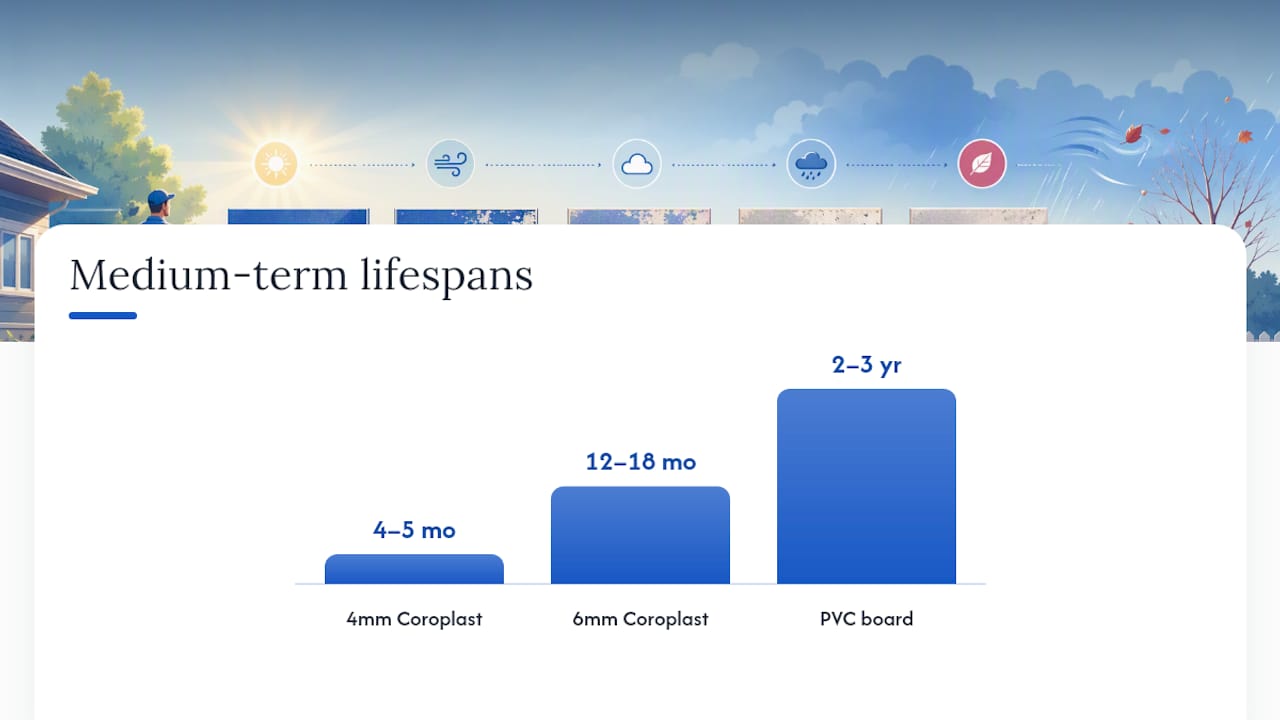
Real estate signs sit in a tricky middle zone. A listing might stay active for weeks, but agents often reuse the same sign across multiple properties, which means it needs to survive far longer than a single campaign cycle. That’s why many agents choose thicker Coroplast or step up to aluminum for their frequently reused directional and listing signs.
Permanent business signage is where material choice matters most. A thin, budget sign might look sharp for a season, then turn chalky and dull by the following summer. Businesses that treat yard signs as part of their storefront identity generally get better long-term value out of aluminum panels or heavy-gauge PVC, even though the upfront cost runs higher than Coroplast.
What Causes Yard Signs to Fade?
Fading isn’t random deterioration. It’s a predictable chemical process, and understanding it helps you make smarter decisions about materials and placement.
Ultraviolet radiation is the primary culprit. UV light carries enough energy to break the chemical bonds holding pigment molecules together, a process called photodegradation. As those bonds break, pigments lose their ability to reflect color the way they did on day one, and you see the color shift toward gray or wash out entirely. The same UV energy also attacks the polymer chains in the plastic substrate itself, which is why an old sign doesn’t just look faded, it often turns brittle and starts to crack at the corners.
Heat compounds the problem. Direct sun doesn’t just deliver UV rays, it also raises surface temperature significantly, and that thermal cycling (hot days, cool nights) causes the substrate to expand and contract repeatedly. Over time, that stress works micro-cracks into the surface, which lets moisture in and speeds up everything else.
A few other factors accelerate fading in ways people often overlook:
- Trapped condensation: Moisture that gets behind laminate or into surface cracks can cause localized discoloration and mildew growth.
- Abrasion: Road spray from passing cars, contact with landscaping equipment, or wind-driven grit sanding the surface all wear down the print layer faster than sunlight alone.
- Salt air corrosion: Coastal environments combine UV exposure with airborne salt, which attacks both ink and hardware simultaneously.
Pro Tip: If you notice your reds and blacks fading faster than your blues or greens, that’s not your imagination. Red and black pigments tend to have less UV stability in standard inks, so they’re often the first colors to visibly shift on a sign that’s been outside for a while.
A combination of relentless UV exposure, humidity, and salt air can shrink a sign’s working life dramatically. Field examples from South Florida show signs that would last 18 months in a drier inland climate failing in as little as six months when humidity and coastal salt compound the UV damage.
Which Materials and Inks Resist Fading Best?
Not all yard signs are built the same way, and the differences show up fast once they’re outside. Three variables drive fade resistance more than anything else: the substrate, the ink chemistry, and any protective coating applied on top.
Substrate options break down into three main categories. Corrugated polypropylene, or Coroplast, is lightweight and affordable, available in 4mm, 6mm, and heavier gauges, with UV inhibitors sometimes built into the resin itself to slow breakdown. Aluminum composite panels cost more but essentially don’t degrade the way plastic does; they resist warping, rust, and UV damage simultaneously, making them the choice for signs meant to last years rather than months. PVC board splits the difference: more rigid than Coroplast, more affordable than aluminum, and a solid option for signs that need two to three years of service.
Ink chemistry matters just as much as the substrate underneath it. UV-cured inks are hardened using ultraviolet light during the printing process itself, which creates a durable, scratch-resistant finish that resists fading far better than dye-based or standard water-based inks. Eco-solvent inks fall somewhere in the middle, offering decent outdoor durability at a lower cost than full UV-cured systems. Latex printing, common on larger format signage, provides good color vibrancy and reasonable weather resistance, though it typically doesn’t match UV-cured performance in direct, prolonged sun.
Protective finishes add another layer of insurance. Lamination creates a barrier between the ink and the elements, blocking moisture and reducing surface abrasion. A clear coat does something similar on rigid substrates, sealing the print layer against UV and physical wear. UV inhibitors mixed directly into the plastic resin during manufacturing slow the breakdown process from the inside out, rather than just protecting the surface.
Here’s how these choices typically translate to real-world durability:
| Option | Relative Cost | Fade Resistance | Best Fit |
|---|---|---|---|
| 4mm Coroplast, standard ink | Low | Fair | Single-event or campaign use |
| 6mm Coroplast, UV-cured ink | Moderate | Good | Real estate, seasonal business |
| PVC board, UV-cured ink + coating | Moderate-High | Very good | Multi-year outdoor signage |
| Aluminum, UV-cured ink | High | Excellent | Permanent business, high-traffic locations |
Reviewers frequently point to ink choice as the deciding factor when a sign fades faster than expected, with water-based or dye inks called out repeatedly as a common root cause of premature fading.
How Do Color and Design Choices Affect Fading?
Two identical signs, same material, same ink, same location, can look completely different after a year outside if the design itself wasn’t built with longevity in mind. Fading is physical, but how noticeable it looks depends heavily on your color and contrast choices.
Saturated reds fade fastest, followed closely by some black formulations, particularly rich, deep blacks that rely on complex pigment blends. Blues and greens tend to hold their vibrancy longer under UV exposure. That doesn’t mean you should avoid red entirely, plenty of effective signs use it for emphasis, but it does mean red text or backgrounds will likely show wear before the rest of your design does.
Design choices that hold up better over time:
- High contrast combinations (dark text on light background, or vice versa) stay readable even after moderate color drift.
- Bold, thick fonts maintain legibility longer than thin, delicate strokes, which blur and lose definition as edges soften with wear.
- Outlined text or shapes provide a visual anchor that remains identifiable even when interior color fades.
- Avoiding fine detail in critical elements like phone numbers or addresses, since small text is the first thing to become unreadable as ink degrades.
Pro Tip: Ask your printer for a physical proof, not just a digital mockup, before running a full order. Screen colors and printed colors don’t always match, and a proof lets you catch contrast problems before they become a field problem six months down the road.
How Can You Protect a Yard Sign From Fading?
Good maintenance habits can meaningfully extend how long a sign holds its color, and most of them take just a few minutes.
Installation is your first line of defense. Orientation matters: a sign facing south or west catches the most direct, intense sun throughout the day, so if you have flexibility in placement, angling toward north or east exposure reduces cumulative UV load. Use sturdy H-stakes or mounts rated for the wind conditions in your area, since a sign that flexes or vibrates in the wind wears down faster at stress points. For wall-mounted signs, a small air gap or standoff mount allows airflow behind the panel, which helps prevent trapped moisture and condensation.
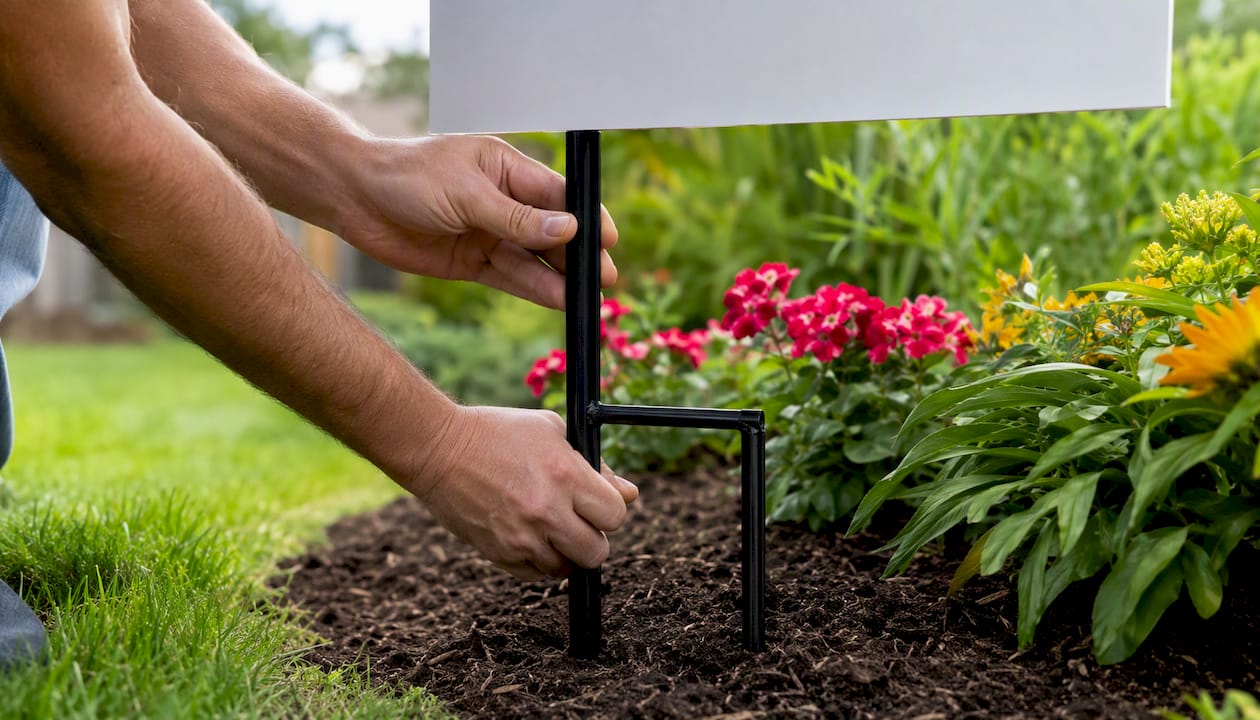
Cleaning should be simple and gentle. A soft cloth with mild soap and water handles most dirt and grime buildup without damaging the print surface. Avoid pressure washers and harsh abrasive cleaners, both can strip protective coatings and accelerate the exact fading you’re trying to prevent. Clean every few weeks during active use, more often if the sign sits near a road with heavy dust or spray exposure.
Storage and seasonal care matter more than most people realize. When a sign isn’t actively in use, store it flat and dry, away from direct sunlight, rather than leaning it against a wall outside where UV exposure continues even when the sign isn’t doing its job. Remove signs ahead of severe weather warnings, including hurricanes and high wind events, since storm conditions combine several accelerating factors (wind stress, moisture, flying debris) at once.
Pro Tip: If your sign is mounted with screws rather than stakes, use stainless steel hardware instead of standard steel, especially near the coast. Regular steel screws rust quickly in salt air, and the rust stains that bleed down the face of a sign are often more visually damaging than the fading itself.
When Should You Replace a Yard Sign?
Not every faded sign needs to go straight to the trash, but there’s a point where patching stops making sense. Here’s how to tell which side of that line you’re on.
Signs it’s time to replace:
- Color loss has reduced contrast enough that text or logos are hard to read from a normal viewing distance.
- The material has become brittle or is visibly cracking, especially at corners or stake holes.
- The panel has warped or curled significantly, which affects both appearance and structural stability in wind.
- Fastener corrosion has left rust streaks that stain the printed surface.
- The message itself is outdated, a listing has sold, a campaign has ended, or contact information has changed.
For a quick decision framework: if the substrate is still structurally sound and only the color has dulled slightly, a clean and possibly a fresh laminate layer can buy you more time. If you’re seeing cracking, warping, or heavy rust staining, replacement is almost always more cost-effective than trying to salvage the sign.
Context matters too. A business sign represents your brand every single day, so even moderate fading can quietly undercut how professional you look to potential customers. Political and directional signs carry a different kind of urgency, since outdated messaging isn’t just an aesthetic problem, it can actively mislead people or violate local regulations tied to campaign timing.
What Should You Ask a Printer for the Longest-Lasting Sign?
Getting a durable sign starts with asking the right questions before you place an order, not after the fading starts.
Bring this checklist to any printer or supplier conversation:
- What substrate gauge do you recommend for my use case, and is it available in 4mm, 6mm, or heavier options?
- Does the substrate include UV inhibitors, or is that only in the ink?
- What ink type do you use, UV-cured, eco-solvent, or latex, and what’s the expected outdoor lifespan for that combination?
- Can you provide a physical proof before running the full order?
- Do you offer lamination or a clear coat option, and what does it add in terms of expected lifespan?
- What’s your turnaround time, and does a faster turnaround involve any trade-off in material or ink quality?
Vague answers are a red flag. If a supplier just says their signs are “weather resistant” without specifics on ink type, substrate gauge, or UV protection, push for details. A credible printer should be able to tell you exactly what’s in the sign you’re buying. Some reviewers have noted that quick turnarounds from online printers sometimes come with quality trade-offs, so it’s worth confirming specs even when speed is a priority.
What Do Lab Tests Miss About Real-World Fading?
Printers often cite accelerated-weathering test results, numbers generated by exposing materials to intensified UV lamps and controlled humidity to simulate months or years of outdoor exposure in a matter of days. These tests are useful for comparing materials against each other, but they’re directional, not a guarantee of how a sign performs in your specific yard.
Real-world results vary more than most buyers expect. The exact same sign, same material, same ink, same print run, can perform dramatically differently depending on where it ends up. A sign in a shaded, dry inland yard might look nearly new after a year. The same sign installed in full coastal sun, with salt air and high humidity working against it, can show significant fading in a fraction of that time.
That gap between lab conditions and field performance is exactly why location-specific advice matters more than a single blanket lifespan number. Consider these variables before assuming a stated lifespan applies to your situation:
- Regional sun intensity: Southern and desert climates deliver more cumulative UV exposure than northern regions with more cloud cover.
- Humidity and salt exposure: Coastal areas combine multiple accelerating factors at once, cutting expected lifespan significantly.
- Local wind patterns: Consistently windy areas add mechanical stress on top of UV and heat damage.
If you’re unsure how your climate will treat a given material, ask your supplier for any accelerated-weathering data they have on file, and treat it as a useful benchmark rather than a promise.
— YardSignGuy
Why I Push Clients Toward Thicker Material Every Time
The most common mistake I see is someone choosing the thinnest, cheapest Coroplast option because it’s a few dollars less, then being surprised when their sign looks tired after just a few months in full sun. Nine times out of ten, the fix isn’t a different ink or a magic coating, it’s simply moving from 4mm to 6mm, or from Coroplast to aluminum if the sign needs to last years instead of weeks.
I also see people patch signs that should have been replaced already. A little fading on a business sign that’s otherwise structurally sound? Sure, clean it, maybe add a laminate layer. But once you’re seeing cracking at the stake holes or warping across the panel, patching just delays an inevitable full replacement, and in the meantime, a beat-up sign is actively working against your brand every day it stays up.
One shortcut I favor: for anything meant to survive more than one season, stainless hardware over standard steel, every time. It’s a small cost difference that prevents the ugly rust streaking that ruins an otherwise good sign. For a deeper look at how weather specifically interacts with different materials, our guide on weather effects and lifespan breaks down the regional variables in more detail.
Ready for a Sign That Actually Holds Up Outside?
If everything above tells you one thing, it’s that material and ink choice make the difference between a sign that fades in one summer and one that still looks sharp two years later. Yardsigns builds around that reality: every order uses UV-resistant inks, with 6mm Coroplast and aluminum options available for anyone who needs a sign to outlast a single season.
Three things worth knowing before you order:
- UV-resistant inks on every sign, not an upgrade you have to hunt for or pay extra to unlock.
- Thicker Coroplast options, including 6mm, for real estate and business signs that need to survive multiple seasons.
- Aluminum panels for permanent signage where color retention and rigidity matter most.
Orders under 50 pieces typically ship within 24 hours, and every sign comes with free design proofs, unlimited revisions, and included metal H-stakes, so you’re not scrambling to find hardware separately. If you’re weighing material options for your next order, browse yard sign options and request a proof before you commit.
Sources
- Yard Sign Printing Guide 2026: Sizes, Materials, Stakes & Design Tips That Get Results | EDDM Printing Insights
- Yard Signs Lifespan | Blog
