


How to Refresh Outdated Real Estate Yard Signs
Refreshing outdated real estate yard signs means updating their design, materials, and placement to restore visibility and attract buyers at the curb. Physical signage still matters: 7% of buyers discover listings through yard signs, making them a direct line to foot traffic that no digital channel fully replaces. Industry readability standards call for a 70% light reflectance contrast between text and background, a threshold most faded or poorly designed signs fail to meet. Agents who treat sign refreshes as a routine part of listing prep consistently outperform those who leave worn signs in the ground and hope for the best.
How to refresh outdated real estate yard signs: tools, materials, and design principles
The right materials form the foundation of any effective sign refresh. Standard listing signs measure 18x24 inches using 4mm corrugated polypropylene, commonly called coroplast. Directional arrow signs run 12x18 inches. UV-cured inks on coroplast extend outdoor durability to 6–12 months, though coastal or high-humidity environments shorten that window.
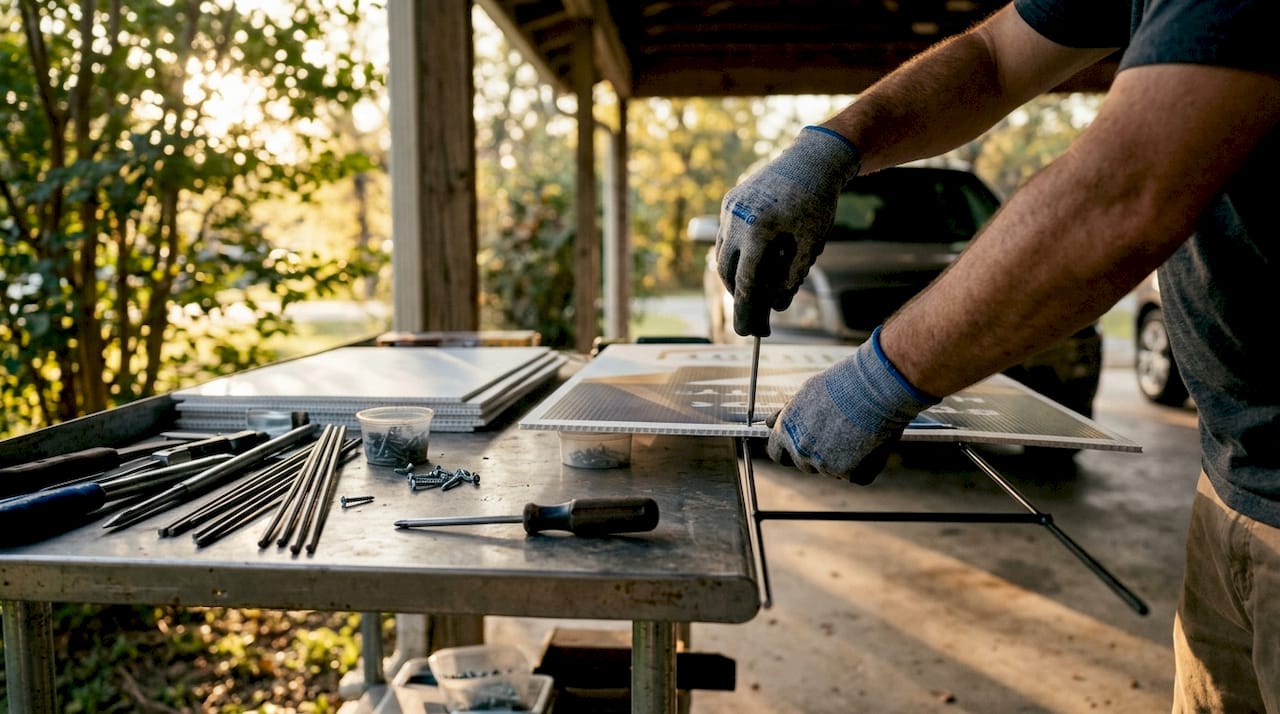
Aluminum is the stronger choice for long-term or permanent markers. Aluminum signs resist cracking and peeling far better than plastic in harsh weather. For most listing cycles, coroplast with UV-resistant inks hits the right balance of cost and durability.
Design principles separate signs that get noticed from signs that get ignored. The core rules are:
- Contrast first. Black on yellow is the industry gold standard for distance visibility. White on dark blue and black on white also perform well. Avoid red on blue, which causes visual blurring at speed.
- Limit information. Signs should carry four to five elements maximum: a headline, a single call to action, a phone number, and your branding.
- Size your text for drivers. Headline text must be readable from 50 feet. Phone numbers need to be legible from 30 feet. Sans-serif fonts like Arial or Helvetica work best at those distances.
- Use directional arrows. Place 12x18-inch arrow signs at every intersection a driver faces on the route to your property. These decision-corner signs are the single most underused tool in real estate signage.
- Double-sided printing. Corner lots benefit from double-sided signs so drivers approaching from either direction see your message.
Pro Tip: Use black text on a yellow background for your phone number panel. That single color swap can make your contact information readable from a moving car without any other design changes.
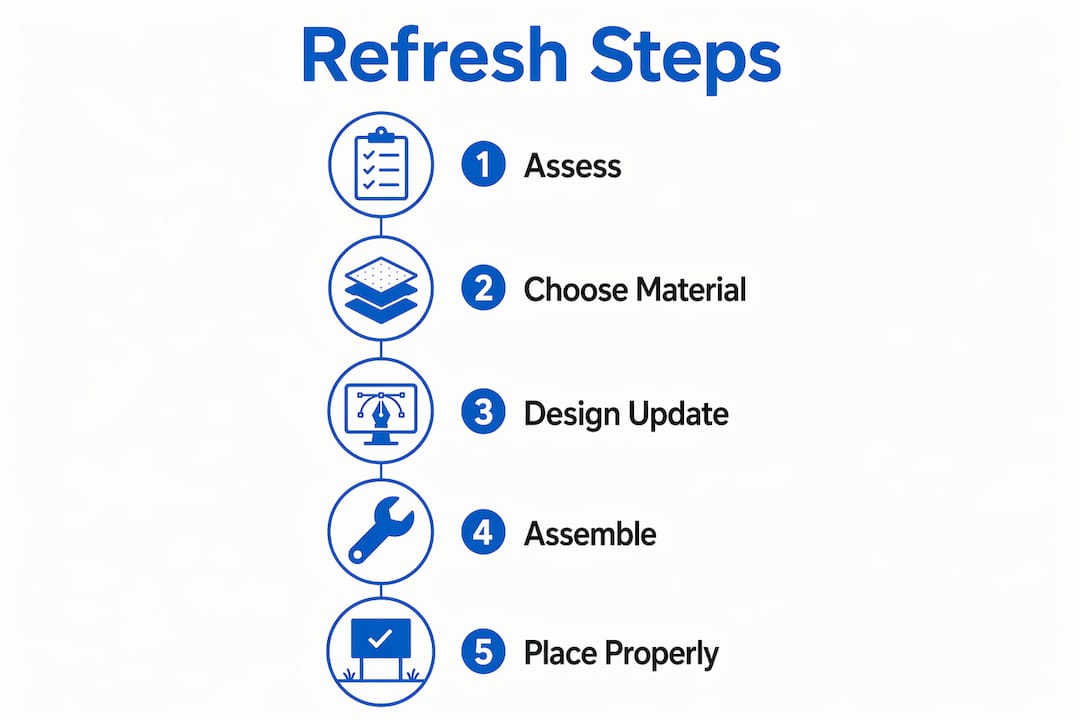
Step-by-step guide to updating your current yard signs
A structured refresh process prevents wasted effort and keeps your signage consistent across every listing.
- Audit your current signs. Walk each sign location and check for fading, cracking, bent stakes, and illegible text. Photograph each sign so you have a before record.
- Map your approach routes. Drive the three or four most likely routes buyers take to reach the property. Note every intersection where a driver must choose a direction. Those are your decision corners.
- Order refreshed panels. Update your design files with current branding, corrected phone numbers, and any new color scheme. Order replacement coroplast panels for worn signs and new arrow signs for each decision corner.
- Replace damaged hardware. Bent or rusted wire stakes undermine even a perfect sign. Replace them when you swap panels.
- Install and test visibility. After installation, drive each approach route yourself. Check that headline text is readable at 50 feet and that arrow signs are visible before each turn.
- Log your sign locations. Record each sign’s GPS location or street address. Mapping sign locations and monitoring them daily leads to measurable improvements in visitor traffic.
The table below shows recommended sign specifications at a glance.
| Sign type | Size | Material | Key design rule |
|---|---|---|---|
| Primary listing sign | 18x24 inches | 4mm coroplast or aluminum | Max 5 elements, high-contrast colors |
| Directional arrow | 12x18 inches | 4mm coroplast | Single arrow, address or “Open House” only |
| Corner lot sign | 18x24 inches, double-sided | 4mm coroplast | Readable from both approach directions |
| Permanent marker | 18x24 inches | Aluminum | UV-resistant ink, long-term weather exposure |
Common mistakes that kill yard sign effectiveness
Faded signs are obvious, but the subtler mistakes cost agents just as much traffic. Knowing what to avoid saves you from reprinting signs twice.
- Low-contrast color pairs. Red on blue is the most common offender. Drivers process sign colors in under three seconds. Poor contrast means your sign registers as visual noise, not information.
- Too much text. Agent headshots, taglines, website URLs, social handles, and phone numbers on one panel create clutter. Cluttered signs lose effectiveness rapidly. Pick one call to action and one contact method.
- Font sizes that fail at speed. A 1-inch font height is readable from roughly 10 feet. A driver passing at 25 mph needs your headline at 3 inches or taller.
- Inconsistent branding. Mixing old and new sign designs across a single listing confuses buyers and weakens your brand recognition.
- Missing decision-corner arrows. Placing a sign only at the property and skipping intersections is the most costly placement error. Adding directional signage at decision corners increased open house visitors by 18 and showings by 25% in documented cases.
- Ignoring local regulations. Many municipalities restrict sign size, placement distance from the road, and the number of signs per listing. Check local ordinances before you order.
“The sign at the property only captures buyers who already found it. The signs at the intersections are what bring them there in the first place.”
Weather damage is a separate category of risk. Coroplast warps in sustained heat above 120°F. Stakes loosen in saturated soil after heavy rain. Check signs within 24 hours of any major weather event and replace anything that has shifted or bent.
How to maintain refreshed signs throughout the listing period
A fresh sign on day one means nothing if it looks worn by week three. Maintenance is what keeps your signage working for the full listing cycle.
- Weekly visual checks. Drive past each sign location once a week. Look for fading, tilting, graffiti, or missing panels.
- Clean signs after rain. Mud splash from passing vehicles dulls print colors quickly. A damp cloth removes most road grime without damaging UV-cured ink.
- Reinforce stakes after wet weather. Push stakes back to vertical after rain softens the soil. A tilted sign loses visibility from the intended sightline.
- Use Velcro for date updates. Velcro strips on open house signs let you swap date panels without reprinting the full sign. This cuts reprint costs and keeps your open house dates current.
- Time refreshes with listing updates. If you drop the price or change the open house schedule, refresh the sign at the same time. Buyers notice when sign information contradicts what they see online.
- Match materials to your climate. Standard coroplast lasts 6–12 months in moderate climates. Coastal agents should plan for shorter cycles and consider aluminum for primary listing signs.
For agents working in markets with frequent weather events, pairing durable weather-resistant materials with a weekly maintenance routine is the most reliable way to keep signage sharp from listing day to close.
Pro Tip: Keep two spare arrow signs and a set of replacement stakes in your car during active listings. You can fix a downed sign in under five minutes without a second trip to the print shop.
Key takeaways
Refreshing real estate yard signs requires updated design, durable materials, and decision-corner placement working together to convert passing drivers into active buyers.
| Point | Details |
|---|---|
| Contrast drives readability | Use black on yellow or white on dark blue; avoid red on blue at all costs. |
| Size and material matter | 18x24-inch coroplast for listings, 12x18-inch for arrows; UV inks extend life to 6–12 months. |
| Decision corners are critical | Place directional arrows at every intersection on the buyer’s approach route, not just at the property. |
| Limit sign elements | Cap each sign at four to five elements to prevent clutter and keep the message clear. |
| Maintenance extends value | Weekly checks, post-weather inspections, and Velcro date panels keep refreshed signs effective longer. |
What I’ve learned from years of watching agents get signage wrong
I’ve watched agents spend thousands on photography and zero minutes on their yard signs. The result is a listing that looks polished online and invisible on the street.
The decision-corner strategy is the single most overlooked tactic in real estate signage. Agents place one sign at the property and call it done. But a buyer driving an unfamiliar neighborhood needs guidance at every turn. When I started mapping approach routes and placing arrows at each intersection, the difference in open house foot traffic was immediate and obvious.
The other thing agents consistently underestimate is how fast signs degrade. A sign that looks fine from your car at 30 mph can be nearly unreadable to a buyer walking up to it. Getting out and standing at the sign, reading it from the distance a driver would, changes how you evaluate your own signage.
Technology has made the design side easier. Online ordering platforms let you proof a refreshed design and have new panels in hand within 24 hours for small orders. That speed matters when a listing update or a price change needs to be reflected on the street the same week it happens. Agents who treat sign refreshes as a fast, low-cost tactic rather than a major production get more done and keep their signage current throughout the listing period.
The agents I’ve seen sell fastest are not always the ones with the biggest marketing budgets. They are the ones who show up, check their signs, fix what is broken, and place arrows where buyers actually need them.
— YardSignGuy
Real estate sign refreshes made easy with Yardsigns
When you are ready to put better signage on the ground, Yardsigns makes the ordering process straightforward. You can upload your branding, choose your size and material, and get a proof back fast. Orders under 50 pieces ship within 24 hours, so a listing update does not have to wait a week for new signs to arrive.
Yardsigns offers coroplast and aluminum options in the standard real estate sizes, with UV-resistant printing built for outdoor exposure. Whether you need a full set of custom real estate signs or a fresh run of directional arrows for your next open house, the design tools and material choices are there to match your brand and your market. Visit Yardsigns to place your next order.
FAQ
How often should I refresh my real estate yard signs?
Refresh signs whenever you notice fading, cracking, or illegible text. Standard coroplast signs last 6–12 months in moderate climates, but coastal or high-heat environments shorten that cycle.
What are the best colors for real estate yard signs?
Black on yellow delivers the strongest contrast and distance visibility. White on dark blue and black on white are also effective. Avoid red on blue, which causes visual blurring for drivers.
How many signs do I need for one listing?
Place one primary 18x24-inch listing sign at the property and one 12x18-inch directional arrow at every intersection on each approach route. Most listings need four to eight signs total for full coverage.
Can I update just part of a sign instead of replacing the whole panel?
Yes. Velcro strips let you swap date or time panels on open house signs without reprinting the full panel. This works well for recurring open houses where only the date changes.
What font size should I use on a real estate yard sign?
Headline text needs to be readable from 50 feet, which requires a minimum 3-inch font height for primary information. Phone numbers must be legible from 30 feet. Use a clean sans-serif font like Arial for best results at speed.
