


Budget $70–$145 for Real Estate Yard Signs, Agents' Pricing and 24 Hour Shipping
Expect $70 to $145 for a complete 18×24 inch sign system, which is the panel, a basic H-stake, and a simple rider. That covers the most common setup agents order for a single listing. Material, quantity, and whether you add installation push the number up or down from there.
TL;DR:
- Sign panel costs range from $25 to $45 depending on material, with aluminum lasting longer and costing more upfront but saving over multiple listings.
- Installation labor can add $60 to $180 or more per sign, often exceeding the panel’s price, especially for hard-to-access or multi-site setups.
- Ordering in bulk reduces per-unit costs to as low as $14 to $24 for large quantities, significantly lowering total expenses.
- Extra features like rider panels, QR codes, or brochure boxes can quickly increase costs, with labor and hardware often being the biggest hidden expenses.
- Ordering from vendors that provide itemized quotes, free proofs, and fast turnaround times helps control costs and avoid unexpected fees.
Table of Contents
- How Much Does a Real Estate Yard Sign Cost?
- What Drives the Cost of a Yard Sign?
- Which Size and Material Should You Choose?
- Sample Budgets for Every Tier
- How Long Does a Yard Sign Order Take?
- How Can You Lower Your Sign Costs?
- Why Most Sign-Cost Advice Undersells the Real Number
- Where to Order Custom Yard Signs That Match This Budget
- Sources
How Much Does a Real Estate Yard Sign Cost?
Most agents fall into one of three budget tiers, and knowing which one fits your listing saves you from overpaying or underbuilding.
Agents generally choose among three budget tiers: a basic tier with a single coroplast panel on a wire H-frame and no rider or installation; a mid-range tier adding a rider such as “Open House” or a logo and possibly a metal frame; and a premium tier offering aluminum or PVC panels, professional installation, and extras like a QR code plate or brochure box.
| Component | Price Range | Notes |
|---|---|---|
| Corrugated plastic panel | $25–$60 | Starts around $25 for a basic single-sided print |
| Aluminum panel | $35–$45 and up | Better for long-running or repeat listings |
| Post/H-stake system | $30–$75 | Wire stakes are cheapest; metal frames cost more |
| Rider panel | $15–$30 | “Open House,” “Sold,” or agent branding |
| Installation | $60–$180+ | Labor is billed hourly or per-visit |
| Shipping | $0–$25 | Often free above a minimum order |
Quantity changes everything. One sign might run around $34 per unit at low volume, while an order of 50 signs can bring that per-unit price closer to $14 to $24 depending on size and vendor. If you’re outfitting a brokerage rather than a single listing, that gap is where the real savings live.
What Drives the Cost of a Yard Sign?
Every quote breaks down into the same handful of line items. Once you know what each one actually covers, you can spot which part of a vendor’s price is fair and which part is padding.
Material sets your floor price. Corrugated plastic (coroplast) is the industry default because it’s light, cheap, and weatherproof enough for a 60 to 90 day listing cycle. Aluminum costs more, typically $35 to $45, but survives seasons of wind and rain without warping. PVC sits between the two on both price and durability.
Mounting hardware is where quotes quietly diverge. A basic wire H-stake is often bundled free with the panel. A step-up metal frame or double-sided sleeve runs $30 to $75 and takes minutes to install yourself. Concrete-set bases, needed for rocky or frozen soil, can double or triple your hardware and labor cost per sign.
Add-ons stack quickly if you’re not tracking them:
- Rider panels: $15 to $30 each
- Solar LED sign lights: $25 to $75
- QR code plates: $20 to $35
- Brochure boxes: $15 to $40
Installation labor is the line item most agents underestimate. Simple single-sign installs run 30 to 90 minutes; multi-site or hard-access jobs (sloped yards, HOA-restricted placement, frozen ground) can take two to four hours.
Statistic callout: Labor alone can add $60 to $180 or more per sign to a premium install, often outpacing the cost of the panel itself.
HOA rules and local permit requirements are worth a phone call before you order. Some communities restrict sign placement to specific zones or require removal within a set number of days after closing, and a missed rule can mean a fine that costs more than the sign did.
Which Size and Material Should You Choose?
The 18×24 inch panel is the standard for a reason: it’s large enough to read from a car at 25 miles per hour but small enough to avoid most municipal size caps. Bump up to 24×36 or larger for corner lots, busy roads, or listings where visibility from a distance matters more than subtlety, and expect the price per panel to climb accordingly since larger sheets use more material and cost more to ship.
Material choice should match how long the sign needs to survive:
- Coroplast works best for standard 30 to 90 day listing cycles, where cost matters more than longevity.
- Aluminum makes sense for agents who reuse the same directional or branded sign across dozens of listings a year.
- PVC splits the difference, holding up through a season of harsh weather without the aluminum price tag.
A luxury listing usually justifies the aluminum upgrade, since the sign sits on the property longer and represents a higher price point. A quick flip or rental listing rarely needs more than coroplast. For agents building a personal brand, checking standard sign dimensions before ordering avoids paying rush fees to fix an undersized proof later.
Sample Budgets for Every Tier
Here’s how the numbers actually add up once you assemble a full system rather than pricing components one at a time.
- Basic setup: $25 panel + $30 wire stake + $0 design (template) + $0 shipping (bulk minimum) = $55 to $70 per sign
- Mid-range setup: $40 panel + $50 metal frame + $20 rider + $15 shipping = $115 to $135 per sign
- Premium setup: $45 aluminum panel + $75 concrete-set install + $30 rider + $35 QR plate + install labor $120 = $260 to $305 per sign
These numbers assume a template design (no custom art fee) and standard ground conditions. Rocky soil, HOA-mandated hardware, or a rush turnaround will shift the premium column higher. If you’re outfitting a whole office, ask your vendor for a quote that separates the fixed setup cost (artwork, proofing) from the per-unit print cost. That’s the only way to know where your 10th or 50th sign actually starts saving money.
How Long Does a Yard Sign Order Take?
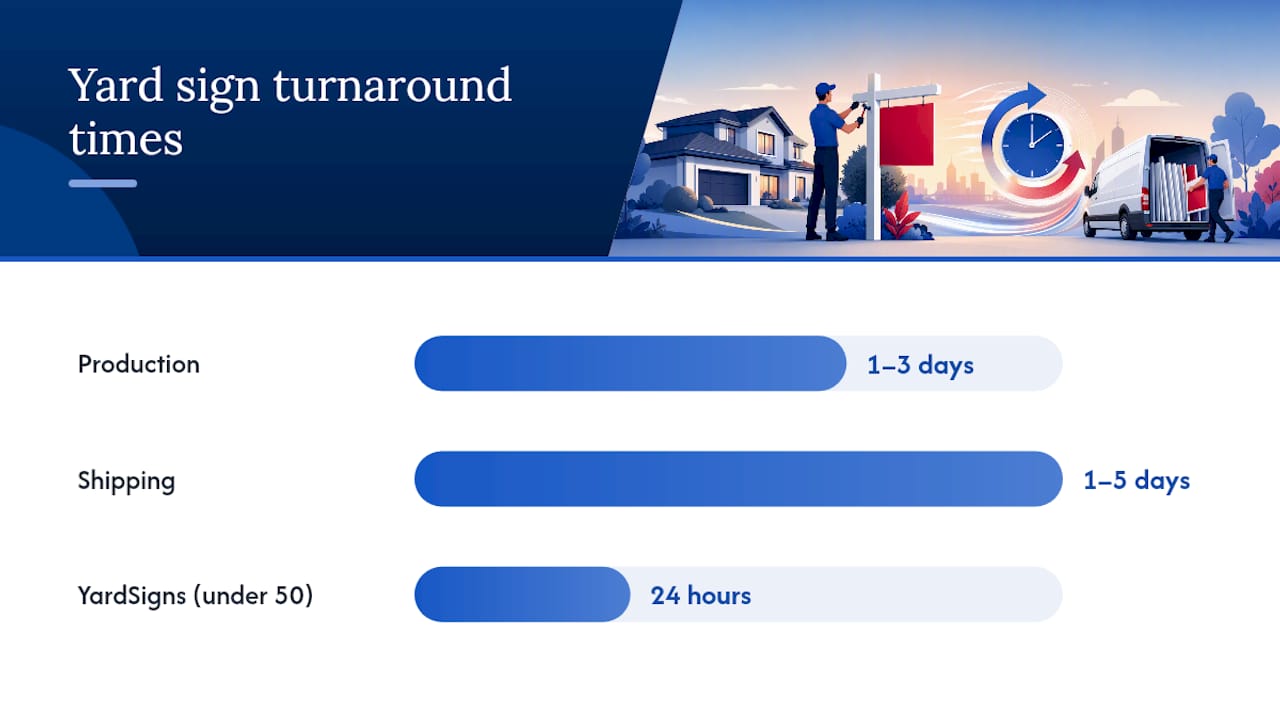
Standard production runs 1 to 3 days for most orders, with some vendors offering same-day printing for rush requests placed before a cutoff time. Shipping adds another 1 to 5 days depending on your location and the carrier.
Before you approve a quote, confirm these four things in writing:
- A free digital proof with unlimited revisions before printing starts
- Whether hardware is included in the quoted price or billed separately
- Double-sided printing availability if the sign faces two directions of traffic
- The vendor’s return or reprint policy if a panel arrives damaged
YardSigns.com ships orders under 50 pieces within 24 hours, a turnaround window that matters most when you’ve got a Saturday open house and a Thursday order.
Pro Tip: Order your rider panels (“Open House,” “Sold”) in the same batch as your main sign. Splitting orders across two shipments almost always costs more in shipping than it saves in flexibility.
How Can You Lower Your Sign Costs?
- Use vendor-provided templates instead of custom artwork. Design fees range from $20 to $75 per proof, and a standard size like 18×24 avoids the surcharge that non-standard dimensions trigger.
- Order ahead of your listing date. Rush fees typically add 15 to 30% to a base price, and consolidating a brokerage’s orders into one shipment cuts per-unit freight costs.
- Reuse hardware across listings. A metal H-stake or frame can survive a dozen listing cycles if you store it properly between uses.
- Skip double-sided printing unless the sign genuinely faces two-way traffic. It’s an easy $10 to $20 saved per panel when one side would never be seen anyway.
Pro Tip: Keep a small inventory of blank riders on hand. Reordering just the rider when a listing status changes is far cheaper than reprinting the whole panel.
Why Most Sign-Cost Advice Undersells the Real Number
Most pricing guides quote the panel cost and stop there, which is why so many agents get blindsided by a $200 invoice when they budgeted for $40. The panel is rarely the expense that surprises you. Installation labor, rider add-ons, and rush fees are what actually swing a project from “basic” to “premium,” and those line items barely get mentioned in most vendor marketing.
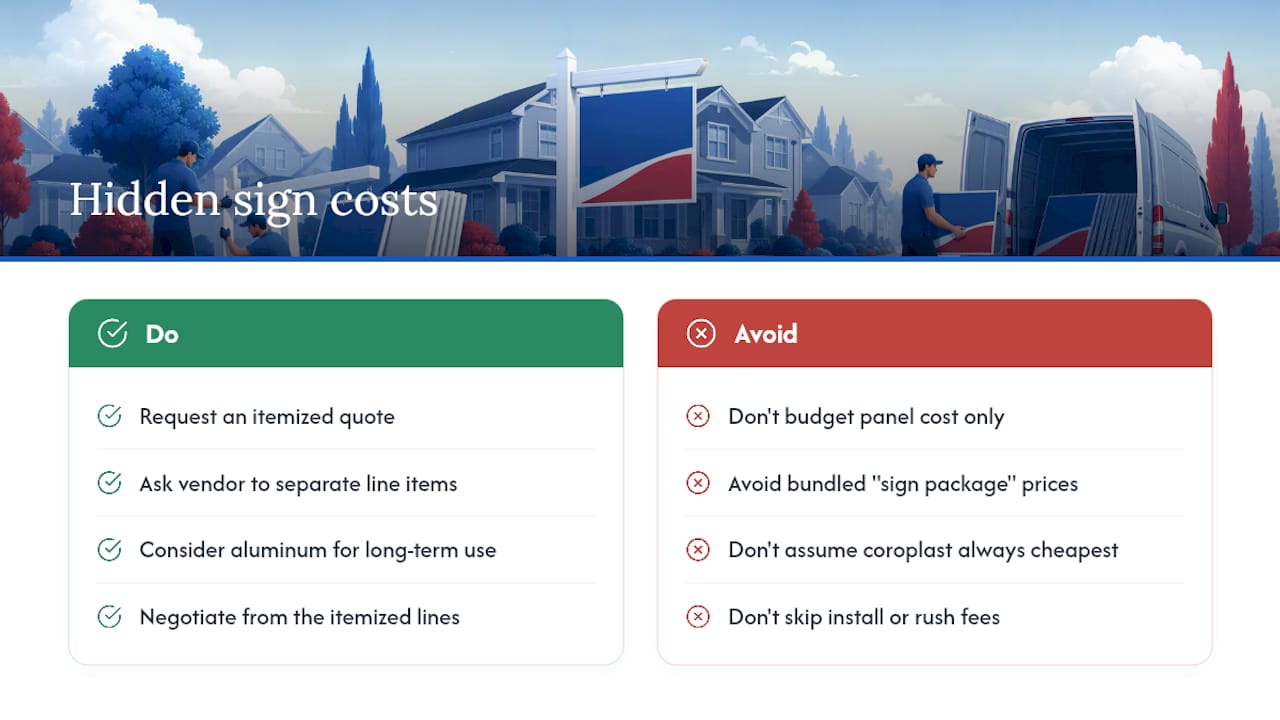
The conventional wisdom, that cheaper coroplast always wins, also deserves pushback. For a 30-day resale listing, sure. For an agent running the same directional signs at every open house for a year, the aluminum upgrade pays for itself in avoided reorders.
If there’s one thing to prioritize, it’s requesting an itemized quote before you commit. A vendor that separates panel, hardware, rider, and install into distinct lines is giving you the tool to negotiate. One that bundles everything into a flat “sign package” price is usually hiding where your money actually goes.
— YardSignGuy
Where to Order Custom Yard Signs That Match This Budget
If the numbers above sound reasonable but the idea of coordinating a vendor, a proof, and a rush deadline sounds like a hassle, that’s exactly the gap Yardsigns closes. Orders under 50 pieces ship within 24 hours, which means a Thursday order can realistically be staked in a yard before Saturday’s open house.
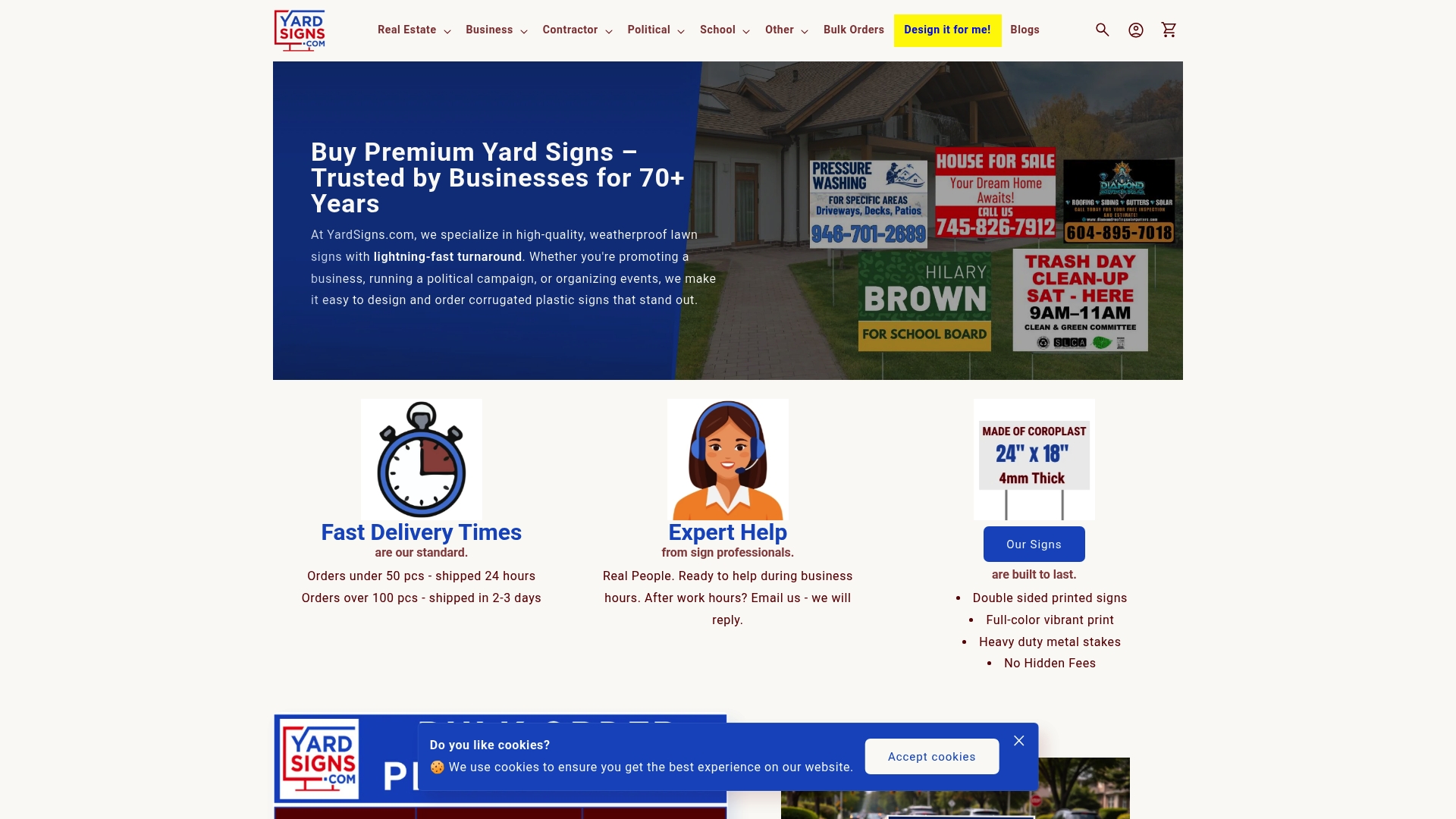
Our signs are made with weatherproof corrugated plastic or aluminum, UV-resistant inks, and include metal H-stakes in the price. Free design proofs with unlimited revisions mean you’re never guessing what the final print will look like, and template options for realtor branding let you skip the custom design fee entirely. Bulk discounts are available, so larger orders reduce the per-unit price without sacrificing print quality.
Start a quote at Yardsigns and get a proof back before you commit to a print run.
