


How to Recycle Yard Signs the Right Way
Remove the metal stake first, separate it from the corrugated plastic panel, and take each piece to the right drop-off. Corrugated plastic panels (labeled PP #5) go to a specialty recycler or your county solid-waste district. Metal H-stakes go to a scrap metal recycler. Neither belongs in your curbside bin.
- Corrugated plastic (PP #5): Specialty drop-off, county collection event, or transfer station
- Metal H-stakes: Scrap metal yard or steel recycler
- Cardboard signs (uncoated): Curbside recycling after removing any staples or stakes
- Plastic film signs: Clean retail film-drop bins at grocery or box stores
Do not place assembled signs, stakes attached, into curbside single-stream recycling. Metal stakes can damage sorting belts at materials recovery facilities and cause entire loads to be rejected.
Pro Tip: Search Earth911.com with your ZIP code and the term “polypropylene” to find the nearest PP #5 drop-off location before you load the car.
Key Takeaways
Properly recycling yard signs means separating materials first: corrugated PP #5 panels to specialty drop-offs, steel stakes to scrap yards, and nothing assembled into curbside bins.
| Point | Details |
|---|---|
| Separate before recycling | Remove metal stakes and all hardware before taking panels to any drop-off. |
| Know your material codes | Corrugated plastic is PP #5; specialty processors require it clean, dry, and free of adhesives. |
| Skip curbside bins | Assembled signs with stakes damage MRF sorting equipment and cause load rejections. |
| Time your drop-off | Post-election collection windows are common; consolidate volume with neighbors for best results. |
| Reuse beats recycling | Returning signs to campaigns or donating them extends sign life and avoids new material extraction. |
Table of Contents
- Which sign materials can you actually recycle?
- How to prepare signs for drop-off
- Where do you take yard signs for recycling?
- Mistakes that get your signs sent to the landfill
- Reuse comes before recycling
- Why most collections happen after elections
- How to find your local rules and drop-off sites
- A note from Yardsigns on reuse and responsible disposal
- Useful resources for finding collection sites
- Sources
Which sign materials can you actually recycle?
Not all yard sign materials follow the same path. Sorting them correctly before you leave home prevents facility rejections.
- Corrugated plastic (Coroplast or generic PP #5): Accepted by specialty recyclers and some county programs when clean, dry, and free of stickers or adhesive. Laminated signs and those with heavy adhesives contaminate single-polymer streams and are typically rejected.
- Uncoated cardboard signs: Usually curbside-acceptable once stakes, staples, and plastic coatings are removed. Laminated or heavily coated cardboard goes to landfill in most programs.
- Plastic film signs: Thin flexible panels may qualify for retail film-drop bins if clean and dry. Corrugated sheets do not belong in those bins.
- Steel H-stakes: Recyclable as scrap metal but must be separated from panels. Mixed hardware damages MRF equipment.
- Wood stakes: Check local green-waste or wood-waste rules; many counties accept untreated wood at transfer stations.
- Plastic posts: Require specialty handling; call your solid-waste district for guidance.
Pro Tip: Flip the sign over and look for the recycling symbol with a “5” inside. That confirms PP #5 polypropylene, the material specialty processors want.
How to prepare signs for drop-off
Getting your signs ready takes about five minutes and prevents a wasted trip.
- Pull out all metal H-stakes and set them aside for scrap metal drop-off.
- Remove grommets, zip ties, tape, and adhesive strips from every panel.
- Peel off stickers and as much adhesive residue as possible.
- Sort panels by material: corrugated PP in one stack, cardboard in another, plastic film in a third.
- Stack corrugated PP panels flat and band or box them. Dense, flat stacks reduce shipping air and make processors far more likely to accept your load.
- Bag small hardware (screws, ties) separately and add them to your scrap metal pile.
Keep everything clean and dry. Wet or dirty panels are a primary reason facilities turn material away.
Pro Tip: If you have more than 20 signs, coordinate with neighbors or a local community group to consolidate. Larger volumes are easier for specialty processors to handle and more likely to be accepted.
Where do you take yard signs for recycling?
Your options depend on volume, material, and timing.
- County solid-waste districts and transfer stations: Many run post-election collection events and accept corrugated plastic and metal stakes when properly separated. Some accept signs year-round; others are seasonal. Call ahead.
- Volunteer-run drop-offs: Common after major elections. Some charge modest gate fees, so confirm costs before hauling.
- Scrap metal yards: Take all steel H-stakes here. Most accept walk-in drop-offs at no charge and may pay by weight.
- Retail film-drop bins: Grocery and box stores host bins for clean plastic film. Thin film-style sign panels qualify; corrugated sheets do not.
- Specialty recyclers: Handle larger volumes of corrugated PP, typically as baled or palletized loads. Best for campaigns or community groups with dozens of signs.
Mistakes that get your signs sent to the landfill
A few common errors undo all the effort of sorting and hauling.
- Putting assembled signs with stakes into curbside bins is the most damaging mistake. Stakes jam and tear sorting belts, and facilities often reject the entire load.
- Assuming all plastic recycles the same way leads to contamination. Laminated cardboard and adhesive-heavy panels ruin otherwise clean PP streams.
- Dropping off wet or dirty signs triggers automatic rejection at most facilities.
- Bundling metal and plastic together signals “trash” to facility workers, and mixed-material loads are usually handled as such.
Pro Tip: When in doubt, call the facility before you go. A two-minute phone call saves a wasted trip and keeps good material out of the landfill.
Reuse comes before recycling
Returning a sign to the campaign or cause that printed it is the highest-value option. Reuse delays new material extraction entirely and saves campaigns real money on future orders. Durable corrugated PP signs can run multiple election cycles if stored flat and kept dry.
- Return to the campaign: Ask if they want signs back. Many campaigns actively collect them for reuse.
- Donate: Local makerspaces, schools, community theaters, and non-profits often welcome clean corrugated panels for craft or event projects.
- Upcycle: Paint over the old message for garden markers, workshop signage, or storage labels. Stakes work well as plant supports.
- Signs without printed years or specific dates have the highest reuse value across multiple campaigns or events.
Why most collections happen after elections
Yard signs are lightweight and bulky, which makes individual trips to processors economically impractical. Municipalities aggregate material at centralized post-election drop-offs so they can ship in bulk to specialty processors. Volume is what makes transport cost-effective.
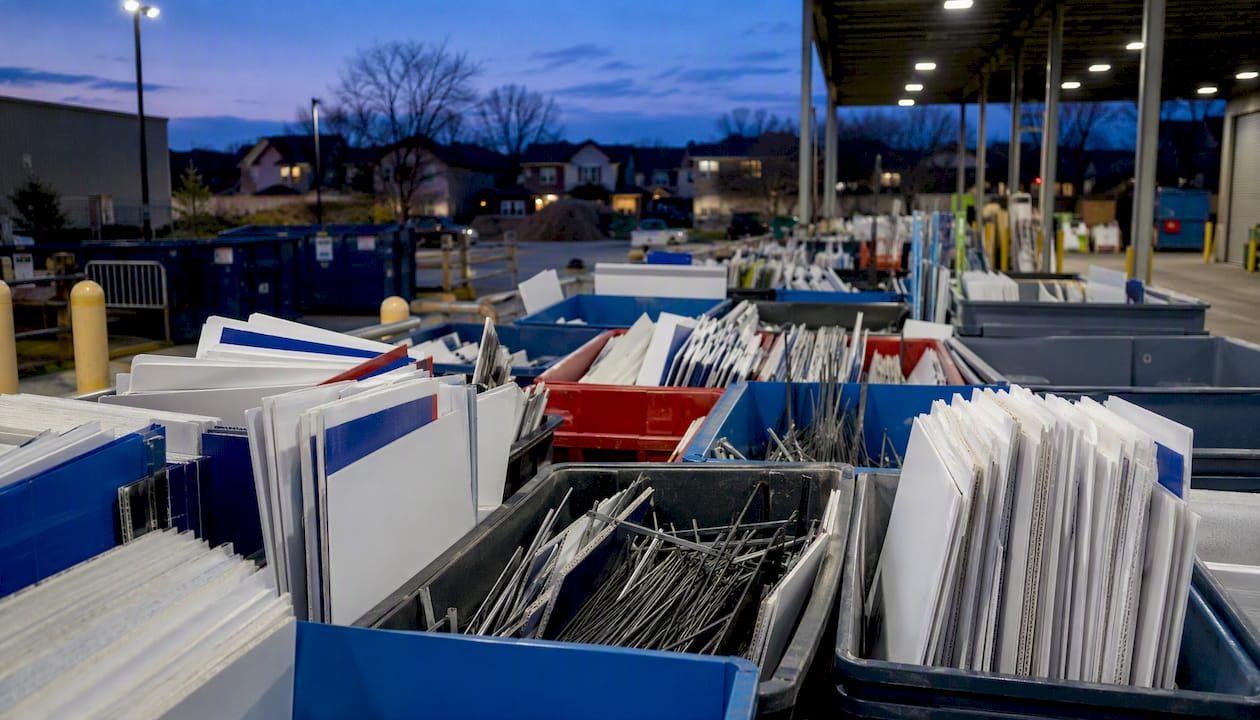
Typical windows: many counties open drop-offs one to two weeks before a major election and keep them running for three to four weeks after. Some transfer stations accept signs year-round. Check your county calendar around local, state, and federal election dates.
Consolidate with neighbors when you can. A single trip with 30 signs beats 30 separate trips and gives processors a meaningful quantity to work with.
How to find your local rules and drop-off sites
- Go to your county or municipal solid-waste website and search “campaign signs” or “yard signs” plus your ZIP code.
- Use the Earth911 locator and search “polypropylene” or “PP #5” to find specialty processors near you.
- Visit bagandfilmrecycling.org to locate retail film-drop bins for plastic film panels.
- Check your municipal calendar for temporary collection events tied to election dates.
- Before hauling, confirm whether the site requires an appointment, charges a gate fee, or restricts accepted materials.
Pro Tip: Hennepin County’s online disposal guide lists local processors that accept corrugated plastic and confirms stake-removal requirements. Many counties publish similar guides. Search “[your county] yard sign recycling” to find yours.
A note from Yardsigns on reuse and responsible disposal
Yardsigns builds corrugated PP signs to last through multiple seasons, and that durability is the point. A sign that survives two or three campaigns never needs to be recycled at all. Choosing weatherproof, double-sided corrugated signs with evergreen designs (no year printed) gives you the most flexibility at end of life: return it, donate it, or eventually recycle the PP #5 panel and the steel stake separately.
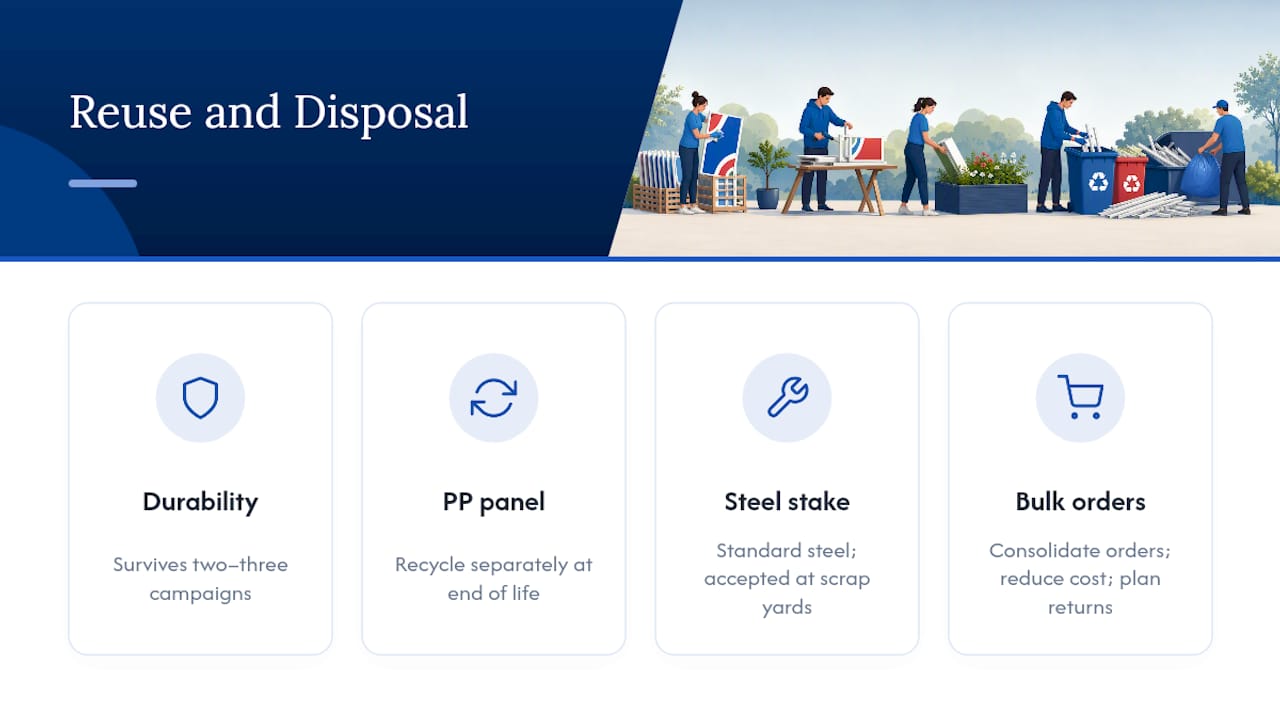
The metal H-stakes Yardsigns includes with orders are standard steel, accepted at scrap yards nationwide. Removing them takes seconds and keeps the panel clean for its next use.
If you need to replace worn signs, choose materials and designs with reuse in mind. Yardsigns offers bulk ordering options that help campaigns consolidate orders, reduce per-sign cost, and plan for sign return and reuse at the end of a cycle.

Order durable, weatherproof corrugated signs built for reuse at Yardsigns.com.
Useful resources for finding collection sites
- Earth911: ZIP-based locator for PP #5 specialty processors and political sign recycling guidance
- Austin Resource Recovery: Example of a municipal program with seasonal collection events and accepted-materials lists
- Montgomery County, PA: County program detail including stake-removal requirements and possible gate fees
- Bagandfilmrecycling: Retail film-drop bin locator for plastic film panels
- Waste Optima: Industrial prep and shipping guidance for corrugated PP #5
- Your county solid-waste website: Search “[your county] yard sign recycling” for local drop-off hours, fees, and appointment requirements
- Local scrap metal yards: Accept steel H-stakes; search “scrap metal recycler near me” for walk-in locations
Sources
- Recycling Mystery: Political Yard Signs - Earth911
- Corrugated plastic recycling (Carlin Waste Recycling)
- Coroplast resources
- Corrugated Plastic Recycling (PP #5): Industrial Prep, Sorting & Shipping - Waste Optima
- Austintexas
- Campaign Yard Signs (Cardboard & Plastic) | Montgomery County, PA - Official Website
