


Why Durable Signs Matter for Outdoor Events
Outdoor event signage goes by many names in the industry: event graphics, temporary wayfinding, or field signage. Whatever you call it, the principle stays the same. Weak signs fail when you need them most. Understanding why durable signs matter for outdoor events is not just an academic exercise. It directly affects how your crowd moves, how your brand looks, and how much you spend before the day is over. This guide covers the materials, methods, and planning decisions that separate signage that lasts from signage that becomes a problem.
Table of Contents
- Key takeaways
- What outdoor signs actually face in the field
- Best materials for outdoor event signs
- Design and placement that protect your investment
- The financial case for quality signage
- Multi-day and rainy event signage best practices
- My take on why signage is always the last thing planned and the first thing to fail
- Get event-ready signs that hold up outdoors
- FAQ
Key takeaways
| Point | Details |
|---|---|
| Environment is the real test | Outdoor signs face wind, UV rays, rain, and foot traffic that indoor signs never encounter. |
| Material choice drives longevity | Coroplast, reinforced vinyl, and UV-stabilized acrylic outperform paper and foam board for outdoor use. |
| Durability saves money | Replacing failed signs mid-event costs more than investing in quality materials upfront. |
| Design and mounting matter equally | Lamination, UV-resistant inks, and secure hardware extend sign life beyond just choosing the right substrate. |
| Multi-day events need a plan | Heavier materials, structural supports, and scheduled inspections protect signage across extended outdoor programs. |
What outdoor signs actually face in the field
Most event organizers think about how a sign looks. Far fewer think about what it has to survive. Outdoor signs work harder than indoor signs by a wide margin, exposed to environmental stresses that can destroy lesser materials within hours.
Here is what your signage is up against at a typical outdoor event:
- Wind: Even moderate gusts of 15 to 20 mph can bow a lightweight coroplast sign, snap a stake, or send a banner flapping loose from its grommets. Sustained wind over the course of a full day is a different beast from a brief gust during setup.
- Rain: Water infiltrates laminate edges, warps paper-based substrates, and washes out water-soluble inks. A morning rain shower can make a cheaply printed sign unreadable by noon.
- UV radiation: Prolonged sun exposure causes color fading and material degradation. Without UV-stabilized inks or coatings, a bright red banner can look washed out by day two of a weekend festival.
- Temperature swings: Materials expand and contract with heat and cold. Thin PVC and foam board are particularly prone to warping when temperatures shift significantly from morning to afternoon.
- Physical contact: Crowds brush against signs at entry points, directional posts get bumped by foot traffic, and stake signs near walkways get kicked, leaned on, or stepped over.
The combination of these factors is what catches event organizers off guard. A sign that survives a calm Tuesday afternoon installation looks completely different after a Saturday with 5,000 attendees, afternoon heat, and an unexpected rainstorm. Replacing damaged signs during events creates operational disruptions, adds unexpected costs, and leaves attendees confused at critical moments.
Best materials for outdoor event signs
Choosing the right substrate is the single most impactful decision you make in outdoor signage planning. Here is a direct comparison of the most common options.
| Material | Weather resistance | Typical lifespan | Best for | Relative cost |
|---|---|---|---|---|
| Coroplast (fluted plastic) | Good: waterproof, moderate wind | 1 to 3 years outdoors | Yard signs, directional stake signs | Low |
| Reinforced vinyl banner | Excellent: waterproof, high wind resistance | 3 to 5 years | Banners, large format event signage | Low to mid |
| UV-stabilized cast acrylic | Outstanding: lasts 10 to 15 years outdoors with minimal yellowing | 10 to 15 years | Permanent or high-budget event branding | High |
| Marine-grade acrylic | Best in class: 15+ years with UV and moisture resistance | 15+ years | Premium, repeated-use event infrastructure | High |
| PVC foam board | Moderate: not waterproof without coating | 6 to 12 months | Short-duration events in dry conditions | Low to mid |
| Heavy-duty polyester fabric | Excellent: handles sustained wind and multiple days | 2 to 4 years | Multi-day festivals, banners, overhead signage | Mid |
Coroplast’s waterproof, fluted construction makes it a reliable and economical option for stake signs and directional markers. It handles rain well and is easy to transport. Its weakness is heavy sustained wind, where the fluted panels can flex and eventually crack at the stake connection.
Reinforced vinyl remains the workhorse of the outdoor event industry. It is affordable, highly customizable, and accepts full-color printing without sacrificing water resistance. For multi-day events where budget matters, vinyl banners with welded edges and brass grommets are hard to beat.
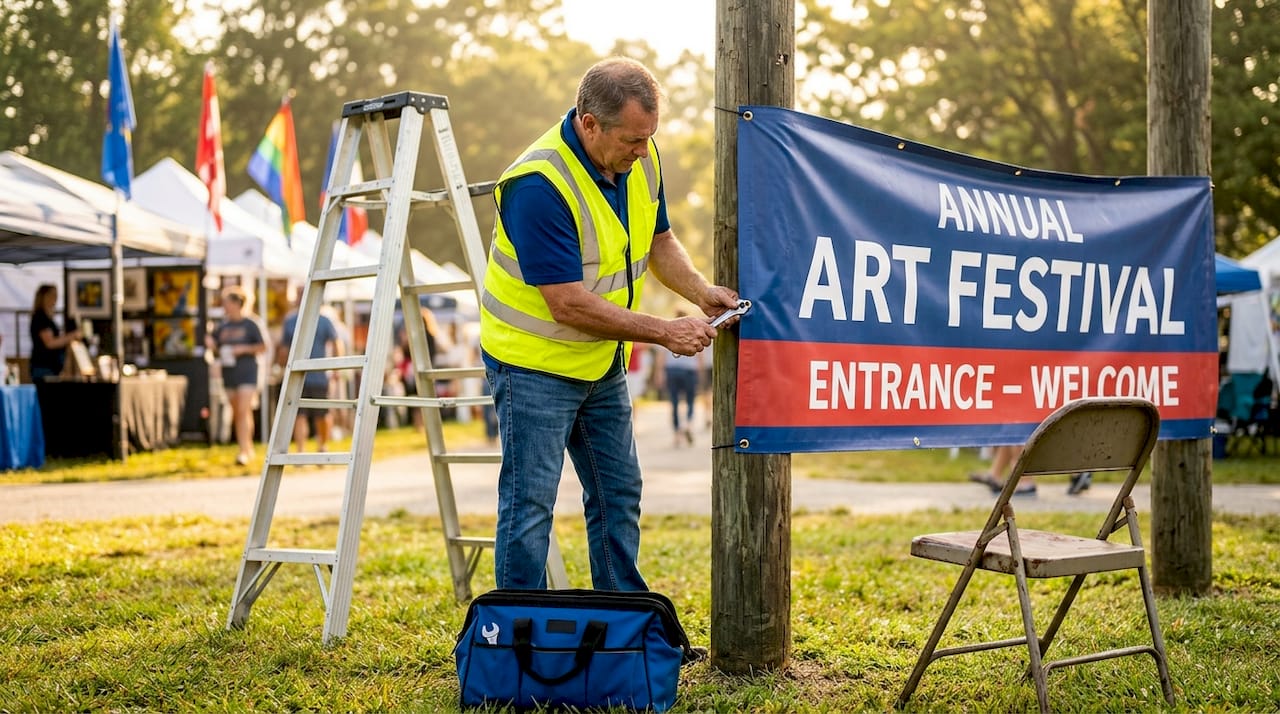
Print method matters too, not just the substrate. Dye sublimation printing bonds color into fabric at the molecular level, making those signs far more resistant to fading from sunlight than surface-applied ink. If your event runs multiple days in direct sun, dye sublimation fabric signs are worth the modest price increase.
Pro Tip: For any event lasting more than one day in an exposed location, look specifically for marine-grade materials or acrylic sheets with UV stabilizers. These materials cost more upfront but eliminate the mid-event scramble when a cheaper sign gives out.
Design and placement that protect your investment
Material selection is half the equation. How you design, coat, and install your signage determines whether it performs through day one or survives to day three. The good news is that these practices are not complicated. They just require intentional planning before the event starts.
Lamination, UV-resistant inks, and secure mounting are the three pillars that extend outdoor sign lifespan and maintain visibility in changing conditions.
Here are the placement and design practices that make the most difference:
- Use lamination on all printed signs. A gloss or matte laminate layer creates a physical barrier against rain, UV rays, and surface abrasion. Thermal lamination is adequate for single-day events. Cold laminate with sealed edges holds up better for multi-day use.
- Specify UV-resistant inks at the print stage. Standard inks can fade noticeably within 6 to 8 hours of direct sun exposure. UV-resistant or solvent-based inks are not a premium add-on. They are a baseline requirement for outdoor printing.
- Mount signs with hardware rated for wind load. Zip ties stretch and break. Rope loosens under tension. Use adjustable bungee clips or dedicated banner hardware rated for the wind speed typical in your venue.
- Stake signs into firm ground at a slight angle into the prevailing wind. This reduces the surface area catching the gust and prevents the stake from rocking loose over a long event day.
- Place directional signs at decision points, not just entry gates. Strategic signage placement reduces crowd congestion and improves safety by guiding movement effectively before confusion builds up.
- Repeat critical information on multiple signs. If your parking lot entrance sign fails, a secondary sign 50 feet away prevents the traffic backup that follows. Redundancy is not waste in outdoor event signage. It is a safety net.
The size of your signs matters here too. Larger signs fare better in wind if they are properly supported because they distribute pressure across a wider frame. Undersized signs on flimsy stakes get toppled faster than well-mounted larger formats.
The financial case for quality signage
Organizers frequently underestimate what poor outdoor signage durability actually costs. The sticker price of cheap signs looks attractive in the planning phase. The true cost reveals itself on event day.
Consider a realistic scenario:
- You order 40 budget paper-laminate signs for a two-day community festival.
- Rain hits Saturday afternoon. Twelve signs are unreadable by 3 PM.
- You send a staff member to a print shop for emergency replacements. That costs time and rush print fees.
- In the meantime, confused attendees clog the wrong entrance, creating a 20-minute backup that frustrates vendors and guests alike.
- Your sponsor logos are no longer visible on four of the damaged signs, which the sponsor notices during their walkthrough.
That chain of events is not hypothetical. It is a pattern that repeats at outdoor events every season.
“Investing in durable signage is not a line item to trim. It is infrastructure. When your signs work, everything else runs more smoothly.”
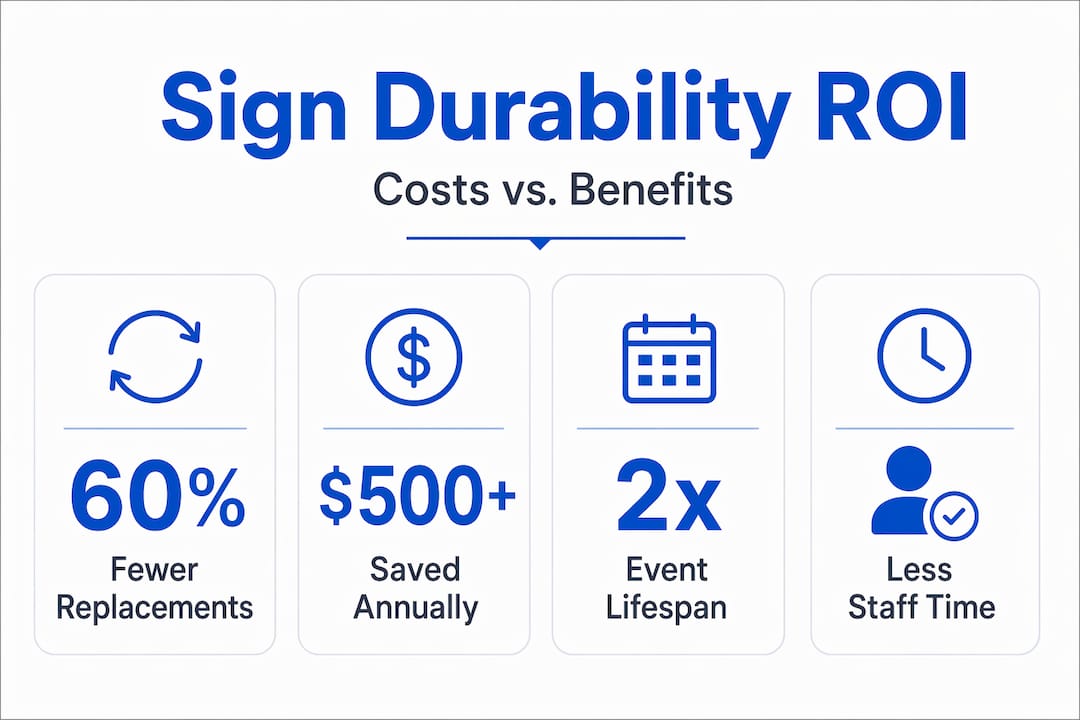
Durable signage for multi-day events pays for itself through avoided replacement costs, reduced staff time spent fixing signage issues, and measurable improvements to crowd flow and sponsor satisfaction. When your signs hold up, your team focuses on running the event rather than patching problems.
You can find a practical breakdown of budget impact from outdoor sign choices in bulk event planning contexts, which reinforces the case for treating signage as a long-term investment rather than a disposable supply line.
Multi-day and rainy event signage best practices
A single-day event and a three-day outdoor festival have very different signage demands. Multi-day event signage best practices center on one idea: plan for the worst weather on day one so you are not scrambling by day two.
Here is what that planning looks like in practice:
- Choose heavier substrate weights for all primary signage. Heavy-duty polyester fabrics and reinforced vinyl with welded seams handle sustained multi-day wind far better than standard materials.
- Apply waterproof coatings or select inherently waterproof materials. Do not rely on the forecast. Events that run multiple days will encounter morning dew at minimum, and outdoor humidity alone compromises paper-based substrates over time.
- Schedule signage inspections at the start of each event day. Walk every sign location before gates open. Tighten loose hardware, replace any sign that took damage overnight, and confirm that all text is still legible.
- Reinforce high-traffic signs with structural support. Stake signs near entry points benefit from a second stake or a weighted base, not just a single push-in rod.
- Swap banners instead of paper posters for any schedule or wayfinding information. Why durable signs survive rainy community events comes down to substrate. Vinyl and polyester shed water. Paper absorbs it.
Pro Tip: Order 10 to 15 percent more signs than you think you need for any multi-day outdoor event. Keep the extras in a dry storage area on-site. When a sign fails, you replace it in minutes rather than hours.
My take on why signage is always the last thing planned and the first thing to fail
I have worked with enough event organizers to recognize a pattern. Signage gets treated as a last-minute detail. The venue, the vendors, the entertainment lineup all get months of planning. The signs get ordered two weeks out, sometimes one week, with the cheapest option that fits the remaining budget.
That approach costs more in the end. I have watched a community 5K come to a near standstill at the course split because the directional signs were not visible from 20 feet away in overcast light. I have seen a sponsor pull their logo from an event recap because their branded banner was warped beyond recognition by rain before the afternoon crowd arrived.
The uncomfortable truth is that signage durability is event infrastructure, not decoration. You would not rent a PA system that cuts out in light rain. Your signs deserve the same scrutiny.
What I tell every organizer I work with: plan your signage budget before you know your final attendee count, not after. The number of signs you need scales with the crowd, but the quality of materials does not. Weatherproof festival signage pays dividends across every event you run, because the same durable materials keep performing while cheaper alternatives end up in the trash.
Start signage planning during venue selection, not the week before setup. That single shift in timing removes most of the surprises.
— YardSignGuy
Get event-ready signs that hold up outdoors
Yardsigns specializes in weatherproof, high-quality outdoor signage built for exactly the conditions this article describes. Whether you are organizing a charity fundraiser, a community run, or a multi-day festival, Yardsigns offers customizable signs with UV-resistant inks and sturdy materials that perform in real outdoor conditions. Orders under 50 pieces ship within 24 hours, which means you can move fast without sacrificing quality. Browse purpose-built options like the charity fundraising event sign and the Run for a Cause sign for durable, event-specific solutions. You can also explore the full durable sign catalog to find the right fit for your next outdoor program.
FAQ
Why do outdoor event signs fail so quickly?
Most outdoor sign failures come down to material choice and mounting method. Paper-based and foam board signs absorb moisture, fade under UV exposure, and buckle in wind, especially during multi-day or rainy events.
What is the most durable material for outdoor event signage?
UV-stabilized cast acrylic and marine-grade materials offer the longest outdoor lifespan, lasting 10 to 15 years or more. For cost-effective single-event use, reinforced vinyl and heavy-duty polyester fabric are the most reliable choices.
How can I protect signs from rain at a community event?
Choose inherently waterproof materials like vinyl or coroplast, apply a sealed laminate coating to printed signs, and mount everything with hardware that will not loosen under sustained moisture and wind.
Is it worth spending more on durable signage for a one-day event?
Yes, because one-day outdoor events can still experience full weather exposure, high foot traffic, and hours of direct sun. Durable signs maintain legibility and branding integrity through the full event without requiring mid-day replacement.
How many extra signs should I order for a multi-day outdoor event?
Order 10 to 15 percent above your estimated need and store extras on-site in a dry location. This gives you immediate replacements if weather or physical contact damages a sign during the event.
