


Yard Sign Heat Resistance: Picking Materials That Survive Summer
For most hot-climate applications, UV-stabilized corrugated polypropylene at 4–6 mm thickness or aluminum sheeting is the strongest choice, because both hold their shape and color when temperatures climb past 100°F on asphalt or open lawn. Coroplast is rated for a range of -13°F to 158°F, which covers nearly every yard-sign climate in the country, but that rating only holds if the resin includes UV stabilizers.
Here’s the quick breakdown by use case:
- Short-run events (under 30 days): 4 mm UV-stabilized corrugated polypropylene. Light, cheap, and it won’t fade before the event ends.
- Real estate campaigns (30 to 180 days): 4–6 mm UV-stabilized PP with UV-cured inks for consistent color through multiple showings.
- Long-term or permanent signage: Aluminum sheet, which commonly lasts 3 to 5 or more years when properly mounted.
- High-wind, exposed sites: 6 mm PP or aluminum, reinforced with a frame or heavier-gauge stakes to resist both heat softening and wind flex.
Key Takeaways
Matching sign material and thickness to actual sun exposure, not just budget, is what determines whether a yard sign lasts three months or three years.
| Point | Details |
|---|---|
| Match thickness to duration | Use 4 mm for short campaigns, 6 mm or aluminum for anything over 90 days in full sun. |
| Confirm UV stabilization | Stabilized resin can add 2–3 years of outdoor life compared with untreated plastic. |
| Watch placement, not just material | Asphalt and reflective surfaces raise local sign temperature well above ambient air. |
| Reinforce for wind and heat together | Frames or heavier stakes reduce the flex that cracks heat-softened panels first. |
| Yardsigns offers UV-resistant options | Yardsigns supplies UV-resistant corrugated and aluminum signs with fast turnaround for hot-climate orders. |
Table of Contents
- What Materials Hold Up Best Against Yard Sign Heat Resistance Demands?
- How Does Heat Actually Damage a Yard Sign?
- How Long Do Yard Signs Actually Last in Heat?
- How Can You Extend a Yard Sign’s Life in Extreme Heat?
- What Should You Ask a Supplier to Confirm Heat Resistance?
- Get Heat-Resistant Yard Signs Without the Guesswork
- Frequently Asked Questions
- Sources
What Materials Hold Up Best Against Yard Sign Heat Resistance Demands?
If you want the short version: UV-stabilized corrugated polypropylene wins for cost-effective, mid-term heat performance, and aluminum wins for anything measured in years rather than months. Everything else on the market is a tradeoff between those two.
Standard corrugated polypropylene (Coroplast) is fluted plastic sheeting, the same category used for real estate and campaign signs everywhere. Untreated versions handle moderate sun fine but degrade faster once UV exposure adds up. The temperature rating on this material runs from -25°C to 70°C (-13°F to 158°F), and staying inside that window matters, because heat above the threshold softens the plastic enough to warp under its own weight or a stiff breeze.
UV-stabilized sign-grade polypropylene is the upgrade that actually earns the word “heat resistant.” Manufacturers extrude these sheets with UV stabilizers built into the resin and construct them with fluted, twin-wall channels that trap air for rigidity. That air-gap design is why these panels stay flatter in heat than thin single-layer plastics do, even at the same overall thickness. If you’re comparing two signs at a store shelf and one says “UV-stabilized” on the spec sheet, that’s the one to grab for anything staying outside more than a few weeks.
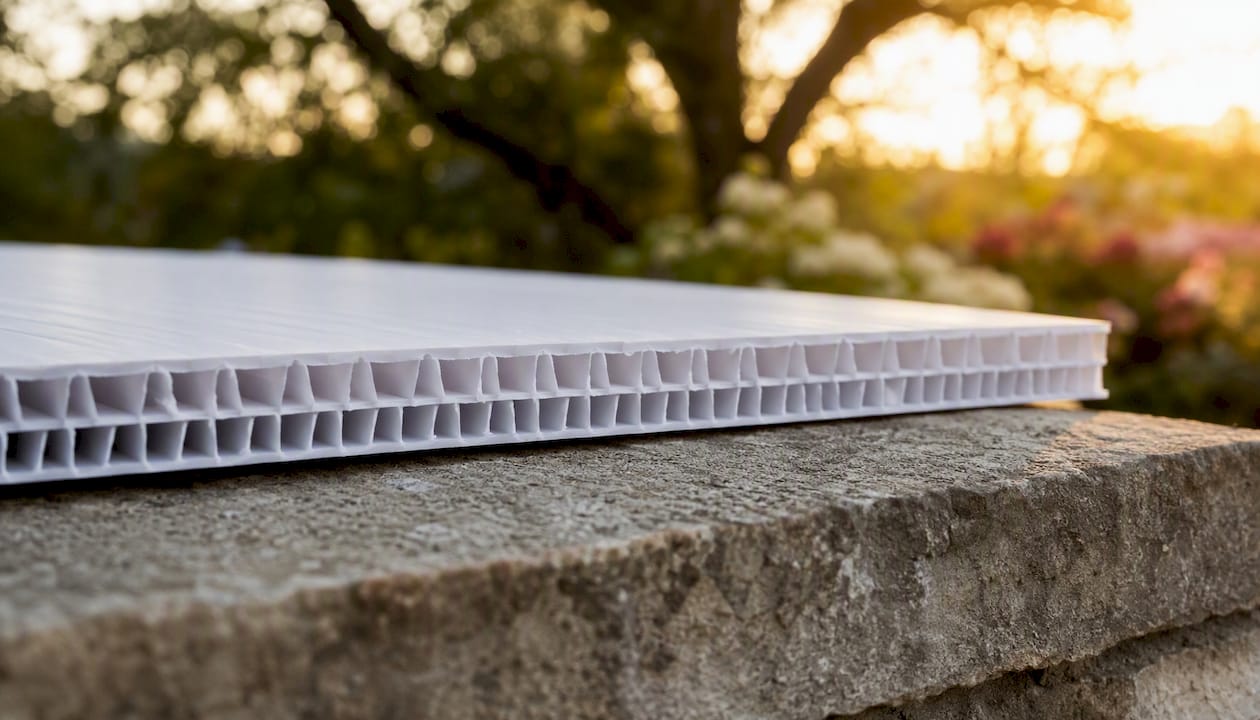
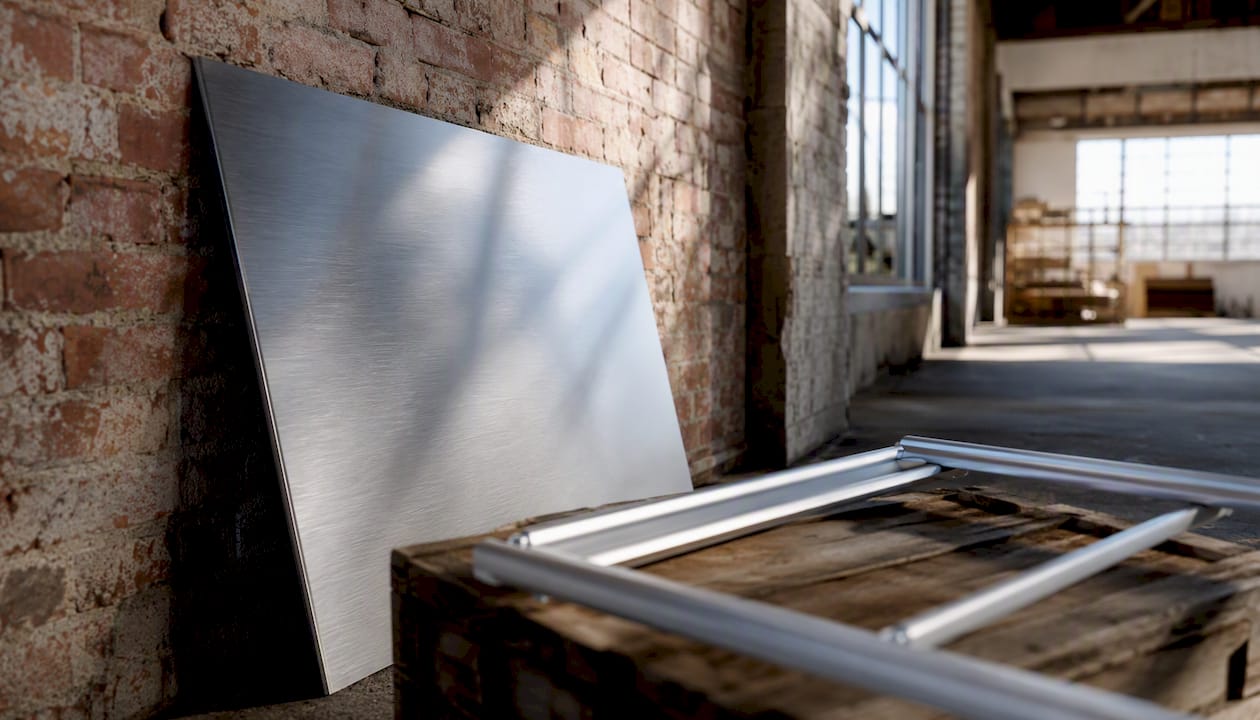
Aluminum sheet and composite signs skip the softening problem entirely. Aluminum doesn’t warp from heat the way plastic does, and it won’t rust, which makes it the default for anything you plan to leave up through multiple seasons: property markers, directional signage, contractor job-site signs that stay for the life of a project. The tradeoff is weight and cost. Aluminum runs heavier per square foot and typically costs more than corrugated plastic, so it makes less sense for a batch of 200 event signs you’ll toss after one weekend.
PVC and foam board show up in some yard sign product lines, but they’re a poor match for sustained heat exposure. Foam board in particular softens and can delaminate at temperatures well within a typical summer afternoon on blacktop. If a supplier pitches PVC or foam for an outdoor application lasting more than a couple weeks, ask directly about the material’s rated temperature range before you order.
Thickness changes the calculus more than most buyers expect. Corrugated PP and polypropylene sign boards typically come in 3 mm, 4 mm, and 5–6 mm options, and the jump from 3 mm to 4 mm or 6 mm delivers a real gain in rigidity and heat stability for a small price increase. Thicker panels resist the sagging and edge curl that thin sheets show after weeks of thermal cycling, and they hold up better against wind gusts that would flex or crack a 3 mm sign. For aluminum, .040-inch gauge is a common baseline, with heavier gauges recommended anywhere wind load is a concern.
Print method matters too. UV-cured inks resist fading far better than solvent prints without UV protection, which is why signs printed with UV-cured inks keep their color longer under direct sun. Lamination adds another layer of protection, but a dark or glossy laminate can actually trap heat against the substrate, so a matte or lighter laminate is usually the safer call in hot climates.
Pro Tip: In high-wind or high-heat locations, don’t rely on standard wire H-stakes alone. Adding a light aluminum frame or switching to heavier spiral stakes reduces the panel flex that accelerates fatigue cracking at the stake slots, which is often where a heat-softened sign fails first.
If you’re weighing these options against real installation photos and specs, our guide to weather-resistant sign material types breaks down each substrate side by side.
How Does Heat Actually Damage a Yard Sign?
The short answer: fading, softening, warping, and adhesive failure, usually in that order. UV rays break down pigment molecules through photodegradation, which is why colors dull months before the plastic itself shows any physical damage. Heat works differently. Once a substrate crosses its rated temperature ceiling, the polymer chains loosen enough that the panel softens and starts to sag or ripple, especially if it’s already flexing in wind.
Thermal cycling, the daily swing between hot afternoons and cool nights, adds fatigue stress that plain heat alone doesn’t. Ink binders can also break down under repeated heat exposure, causing prints to crack or peel at the surface even when the plastic underneath is intact.
Placement changes how much heat a sign actually absorbs. A sign staked into asphalt or gravel runs hotter than one on a shaded lawn, because reflective surfaces like asphalt and metal push local temperatures well above ambient air temperature. A sign facing due south in full midday sun takes more cumulative UV and heat stress than the same sign angled toward morning or evening light.
How Long Do Yard Signs Actually Last in Heat?
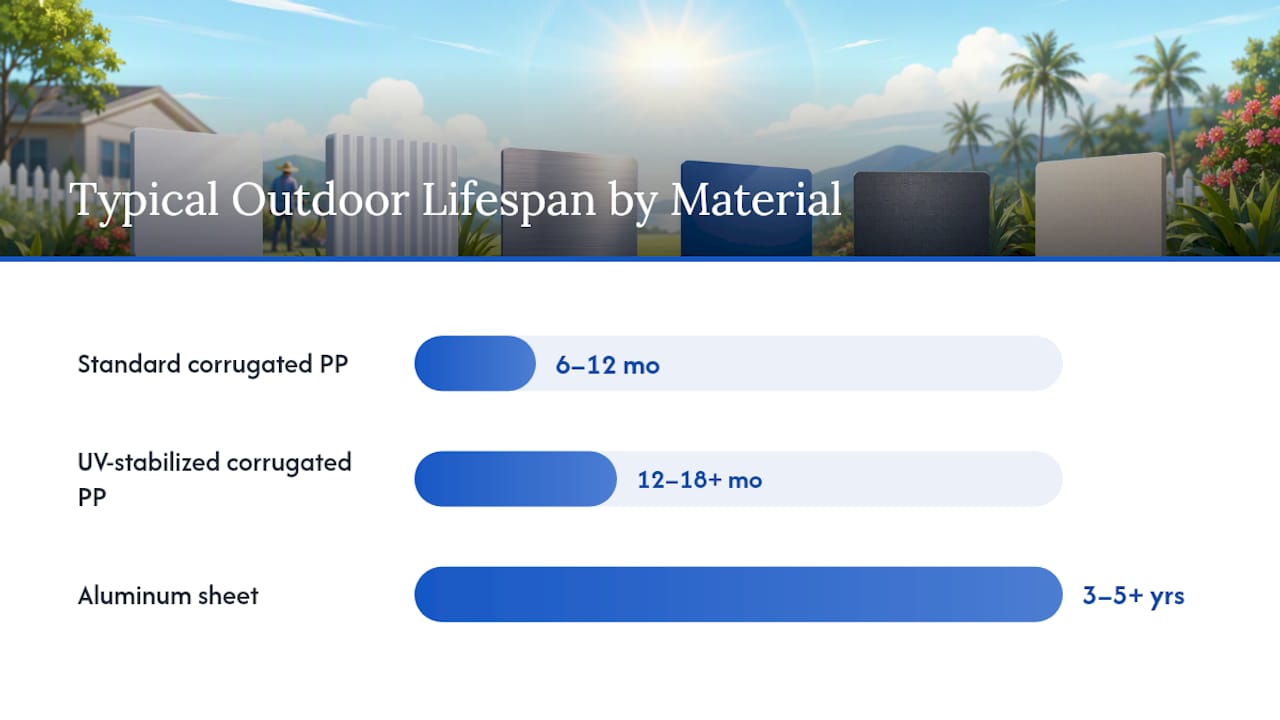
Expect roughly 6 to 18 months from corrugated polypropylene and 3 to 5 or more years from aluminum, depending on thickness and UV treatment. Those numbers come from real supplier data, not marketing copy, and the spread between them tells you almost everything you need to know about matching material to timeline.
At the thinner end, 4 mm corrugated polypropylene with UV-cured inks typically lasts 6 to 12 months outdoors under normal conditions. Step up to 6 mm and that stretches to roughly 12 to 18 months or more. Aluminum, once mounted, commonly holds up for 3 to 5 years or longer, which is why it dominates permanent and semi-permanent applications despite the higher upfront cost.
UV stabilization is the variable that moves these numbers the most. Stabilized substrates can extend outdoor life by roughly 2 to 3 years compared with unstabilized corrugated plastic under strong sun, and UV-stabilized PP sign boards typically carry a rated outdoor life of about 3 to 5 years when kept within their -25°C to 70°C temperature window.
Manufacturers back these figures with a few standard tests. Accelerated UV fade testing exposes samples to concentrated light to simulate months of sun in days. Thermal cycling tests run repeated heat and cool cycles to check for warping or cracking. Wind-load testing measures how much a panel deflects under gust pressure, which matters as much for heat-softened plastic as it does for rigid aluminum.
| Material | Heat Tolerance | UV/Fade Resistance | Typical Lifespan Outdoors | Best Use Case |
|---|---|---|---|---|
| Standard corrugated PP | -13°F to 158°F | Moderate without stabilizers | 6–12 months | Short-run events |
| UV-stabilized corrugated PP | -13°F to 158°F | High with UV-cured ink | 12–18+ months (3–5 yrs at 6mm+) | Real estate, campaigns |
| Aluminum sheet | Resists warping at high heat | High, doesn’t fade like plastic | 3–5+ years | Permanent, contractor, high-wind sites |
Climate matters beyond the raw temperature rating. A sign in the desert Southwest sees more cumulative UV radiation per year than the same sign in a cloudier region, even if peak temperatures are similar, so buyers in high-UV zones should lean toward the upper end of thickness and always confirm UV stabilization before ordering.
How Can You Extend a Yard Sign’s Life in Extreme Heat?
- Choose a UV-stabilized substrate first. This single decision affects lifespan more than almost any other spec on the order form.
- Size up on thickness for anything beyond 90 days. Move from 3 mm to 4 mm or 6 mm PP, or go with aluminum for multi-year placements.
- Confirm UV-cured inks. They resist the fading that solvent prints show within a season in direct sun.
- Add lamination selectively. A matte or lighter laminate protects print without trapping extra heat the way dark, glossy finishes can.
- Mount with airflow in mind. Raising the sign slightly off the ground and avoiding direct contact with hot asphalt or gravel reduces the radiant heat the panel absorbs.
- Orient for lower peak exposure. Where possible, angle the sign away from due-south, midday sun.
- Inspect regularly. Check for edge curl, stake-slot cracking, and delamination every few weeks during peak summer, and re-tighten or replace stakes that have loosened from wind flex.
Pro Tip: A light-colored backing or a reflective layer behind dark print areas can meaningfully cut heat absorption on a sign that sits in full sun all day. It’s a low-cost upgrade that pays off most on signs mounted directly on asphalt or metal fencing.
For a deeper walkthrough of mounting strategies by season, see our guide on durable real estate signs in all weather.
What Should You Ask a Supplier to Confirm Heat Resistance?
Pick the material first, then verify the print method, coating, and mounting hardware match your exposure conditions. A supplier who can’t answer basic questions about resin and ink treatment is a supplier whose “heat resistant” claim you should not trust.
- What is the substrate’s rated temperature range, and is the resin UV-stabilized?
- Are the inks UV-cured, and is lamination available in a matte finish?
- What thickness do you recommend for full-sun exposure over [X] months?
- What stakes or frame options do you offer for high-wind sites?
- Is there a stated lifespan expectation or warranty backing the product?
Checklist for your order:
- Material and gauge confirmed in writing
- UV-stabilized resin, not just “UV resistant” marketing language
- UV-cured ink printing
- Lamination option if the sign faces intense, sustained sun
- Stake or frame reinforcement appropriate for your site’s wind exposure
Watch for vague spec sheets that mention “weatherproof” without a temperature range or UV treatment detail. That’s a red flag, not a feature. Our page on what material yard signs are made of covers the terminology suppliers should be using.
A Signage Pro’s Rule of Thumb for Heat-Prone Placements
Signs that sit on asphalt or face due south all day fail faster than spec sheets suggest, because ambient temperature ratings don’t account for reflected heat. The rule that holds up: for anything staying up longer than 90 days in full sun, go with 6 mm polypropylene or aluminum. Anything thinner is a bet against the sun, and the sun usually wins.
Get Heat-Resistant Yard Signs Without the Guesswork
Yardsigns builds every corrugated sign with UV-resistant material and UV-cured inks as standard, so you’re not choosing between fast turnaround and heat performance. Orders under 50 pieces ship within 24 hours, and larger runs move in 1 to 3 days, which matters when a campaign or a listing can’t wait weeks for signage to arrive.
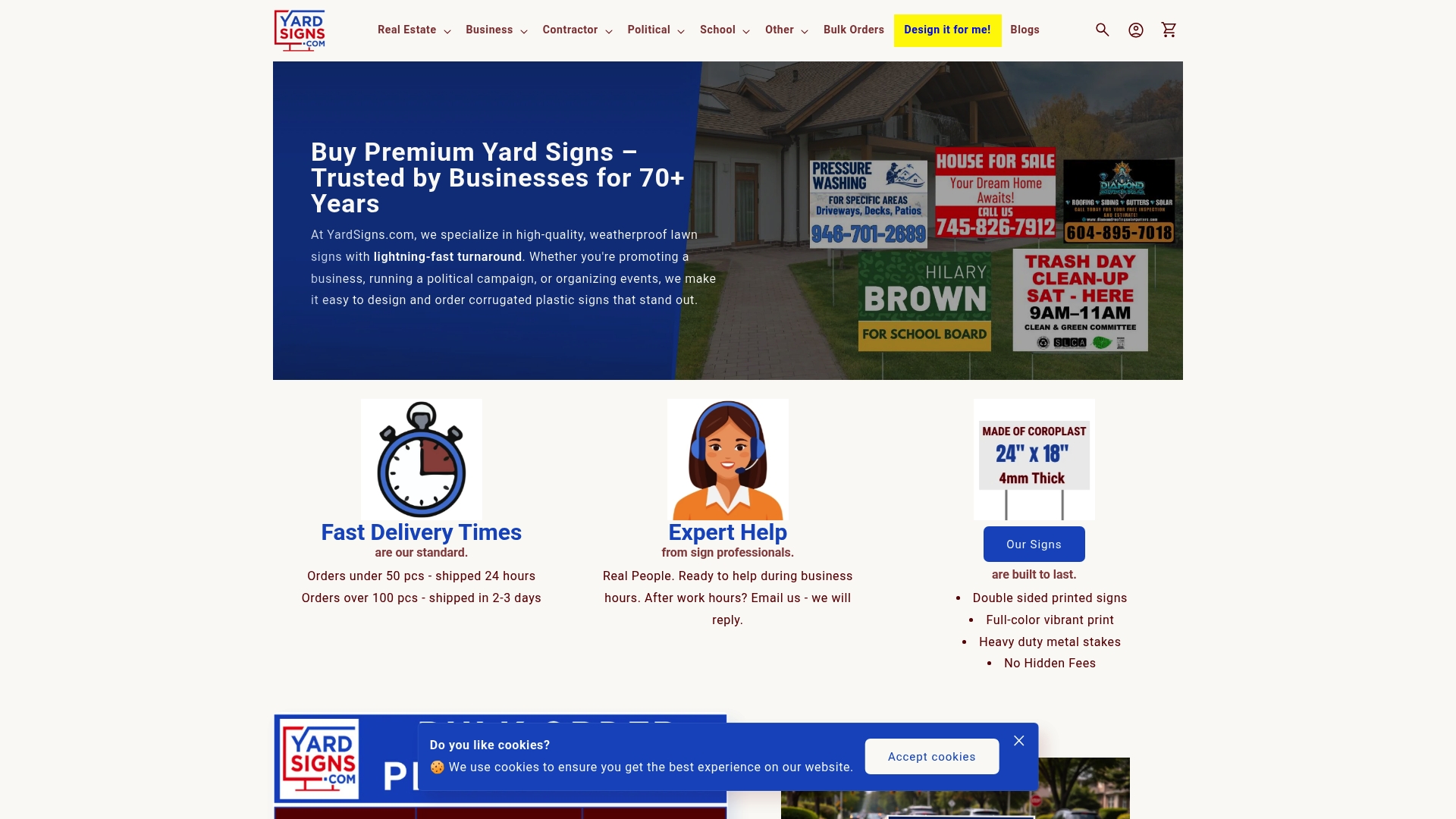
Whether you need 4 mm corrugated plastic for a 60-day real estate push or want to talk through aluminum for a permanent install, Yardsigns includes metal H-stakes, free design proofs, and unlimited revisions before anything prints. Browse the real estate yard sign templates to see gauge and print options directly on a live product page, or start a custom order and confirm your exposure conditions with a proof before it ships.
Frequently Asked Questions
What’s the most heat-resistant material for yard signs? UV-stabilized corrugated polypropylene at 4–6 mm handles most residential and campaign uses, while aluminum sheet is the strongest option for multi-year, permanent placements since it doesn’t soften or warp.
Does yard sign heat resistance depend on color or ink type? Yes. UV-cured inks resist fading far better than standard solvent prints, and darker colors and glossy laminates can absorb more heat than lighter, matte finishes.
Will a yard sign melt or warp in extreme heat? Standard Coroplast is rated up to 158°F; sustained exposure above that, especially on hot asphalt, can cause softening or warping, which is why UV-stabilized, thicker panels perform better in extreme climates.
How often should I inspect a yard sign in hot weather? Check every few weeks during peak summer for edge curl, stake-slot cracking, or delamination, and re-secure any stakes loosened by wind or ground heat expansion.
Is aluminum worth the extra cost over corrugated plastic? For anything staying up longer than six months or facing high wind, yes. Aluminum’s 3 to 5 or more years of typical outdoor life offsets the higher per-sign cost for permanent or semi-permanent signage.
Sources
- Everything about Coroplast | CoroPak
- UV Resistant Sign Grade Sheets – Tucson Plastics
- PP Sign Boards - Printable Corrugated Plastic Signs | PPBOXY
- Custom Yard Signs and Lawn Signs: The Complete Buyer’s Guide - Custom Ink Blog
- What is the lifespan of plastic corrugated roofing sheets? | Everleadsteel blog
