


Yard Sign Turnaround Times: What to Expect Before You Order
Most small custom yard sign orders (under 50 pieces) are produced within 24 hours, with many vendors shipping same-day or the next business day. Add carrier transit and you have your real delivery date. Medium orders of 50 to 250 signs typically need 1 to 3 business days in production. Large runs of 250 or more can take 3 to 7 or more business days depending on the printer’s capacity.
Here’s the quick-reference breakdown:
- Small runs (under 50): production often complete within 24 hours
- Medium runs (50–250): 1 to 3 business days of production
- Large runs (250+): 3 to 7+ business days, depending on capacity
- Shipping transit: a separate 2 to 7 business days on top of production, depending on distance and service level
Pro Tip: Production time and shipping time are two different clocks. A “24 hour turnaround” claim covers only the first one, so always ask your printer to confirm when the clock starts and when it stops.
Key Takeaways
Yard sign turnaround combines production time, which runs from hours to a week depending on quantity and material, with a separate shipping window of 2 to 7 business days.
| Point | Details |
|---|---|
| Small orders move fastest | Under 50 signs often finish production within 24 hours, especially on standard Coroplast. |
| Quantity drives production days | Expect 1 to 3 days for 50 to 250 signs and 3 to 7+ days for 250 or more. |
| Production and shipping are separate | Add 2 to 7 business days of carrier transit on top of your production window. |
| Control what you can | Print-ready artwork and same-day proof approval are the fastest ways to shave off delays. |
| Yardsigns benchmarks small runs | YardSigns.com ships orders under 50 pieces within 24 hours, with free proofs and included H-stakes. |
Table of Contents
- How Do Yard Sign Turnaround Times Change by Order Size and Material?
- How Do You Calculate Your Real Delivery Date?
- What Speeds Up or Slows Down Sign Production?
- When Should You Pay for Rush or Expedited Service?
- How Do You Plan a Yard Sign Order to Hit Your Deadline?
- What Does YardSigns.com’s Fulfillment Benchmark Mean for Your Order?
- What Do I Wish More Buyers Knew About Deadlines?
- How Do You Order a Rush Yard Sign Batch Right Now?
- Frequently Asked Questions
- Sources
How Do Yard Sign Turnaround Times Change by Order Size and Material?
Quantity is the single biggest lever on your production schedule, but material and finishing choices move the needle too. Here’s how the tiers typically break down:
- Under 50 signs: Many printers can produce and ship these within 24 hours, particularly on standard sizes and single-sided prints. Vendor pages across the industry advertise same-day or 24-hour production for small quantities like this, which makes it the easiest tier to plan around.
- 50 to 250 signs: Expect 2 to 3 business days as a common window. Several fast sign product lines list 2 to 3 business days as their standard turnaround for this range, and some vendors extend that to a full 2 business days even at the upper end of 250 units before adding more time for larger batches.
- 250+ signs: Production commonly stretches to 3 or more business days. Larger print runs require multiple press cycles, more finishing labor, and tighter quality checks, all of which add time on top of the base schedule.
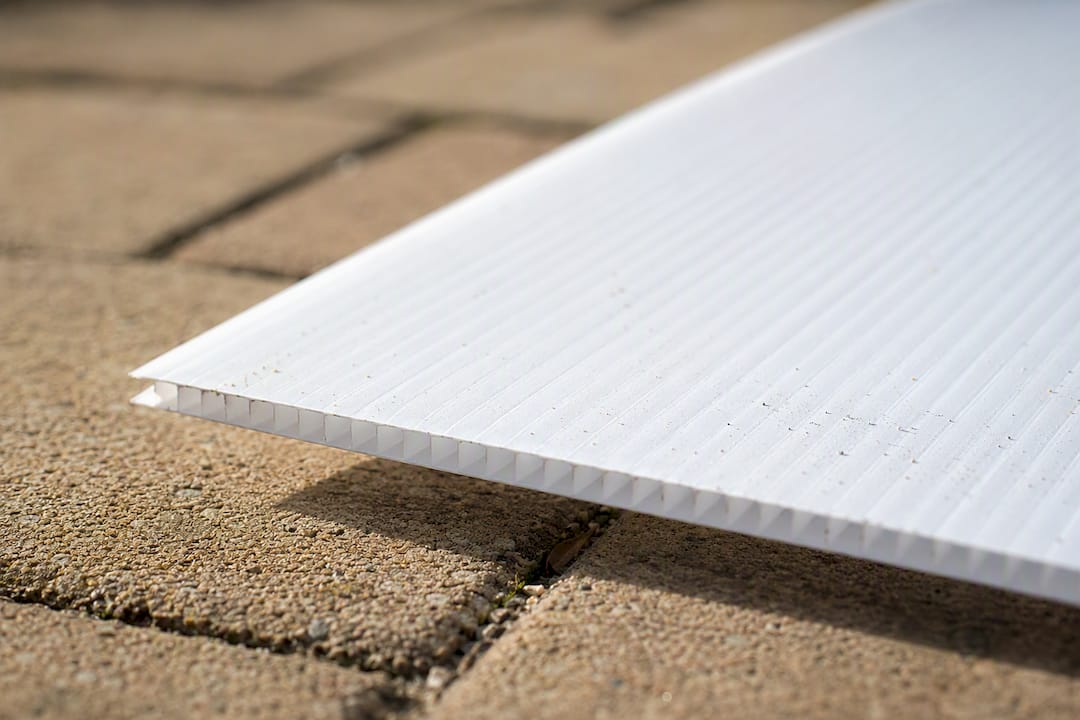
Material matters just as much as quantity. Corrugated plastic, often called Coroplast, is the fastest substrate to run because it’s lightweight, cuts quickly, and doesn’t require curing time. Aluminum signs, by contrast, often need an extra 1 to 2 days because the metal requires different mounting hardware and a slower print process. If you’re choosing between the two, remember that Coroplast typically holds up outdoors for 3 to 12 months depending on gauge, while aluminum lasts considerably longer, which can justify the extra production days for a sign meant to stay in the ground year after year.
Finishing steps add their own time on top of base printing:
- Double-sided printing adds a drying or alignment pass
- Metal H-stake insertion is usually fast but still requires a labor step
- Lamination or gloss coating can add a full day depending on the shop’s equipment
A real-world example: 50 signs on Coroplast, single-sided, standard 18x24 size, often clears production in 24 to 48 hours. Swap that same order to aluminum with double-sided printing, and you’re realistically looking at 3 to 4 days before it ships.
How Do You Calculate Your Real Delivery Date?
Your delivery date is production time plus shipping time, and treating them as one number is the most common planning mistake buyers make. Production is the days a printer needs to print, cut, and finish your signs. Shipping is the days a carrier needs to move that finished box from the printer’s dock to your address.
Here’s the math in practice:
- Order placed Thursday evening for 30 standard signs: production often finishes by Friday or the following Monday (weekends usually don’t count as production days), then shipping adds another 2 to 5 business days depending on your location.
- Order placed Monday morning for the same quantity: you’re ahead of the weekend gap entirely, so you could see your signs ship by Tuesday and arrive by the following week.
- Rush scenario: if you pay for expedited production and 2-day shipping, that same Thursday-evening order could realistically land the following Wednesday or Thursday.
Carrier cutoff times matter more than most buyers realize. Missing a 2 PM shipping cutoff by ten minutes can push your ship date a full day. Weekends and holidays don’t count toward standard business-day estimates either, and neither carriers nor most print shops process orders on those days.
Pro Tip: Always ask whether tracking and insurance are included by default. A lost or damaged shipment without tracking can turn a 3-day wait into a two-week ordeal while you sort out a reprint.
What Speeds Up or Slows Down Sign Production?
Some variables are entirely in your hands. Others aren’t, and knowing the difference keeps you from blaming a printer for a delay you actually caused.
What you control:
- Submitting print-ready artwork in the correct file format and color mode
- Sticking to standard sizes instead of custom dimensions
- Approving digital proofs within hours instead of days
- Choosing standard materials and finishes over specialty options
What you don’t control:
- Production queue volume during peak seasons like election cycles or spring real estate rushes
- Material shortages on specific substrates or ink colors
- Carrier network delays, especially around holidays
- Severe weather affecting regional shipping hubs
Custom die cuts, unusual shapes, and high-gloss coatings typically add 1 to 3 days on top of standard turnaround because they require separate tooling or a dedicated finishing pass. If your deadline is tight, a standard size and finish is almost always the safer bet over a bespoke design.
Material sourcing plays a quieter role here too. Print shops that rely on tightly managed sustainable print materials supply chains sometimes face longer lead times on specialty substrates, which is one more reason standard Coroplast tends to be both the fastest and most reliably stocked option.
When Should You Pay for Rush or Expedited Service?
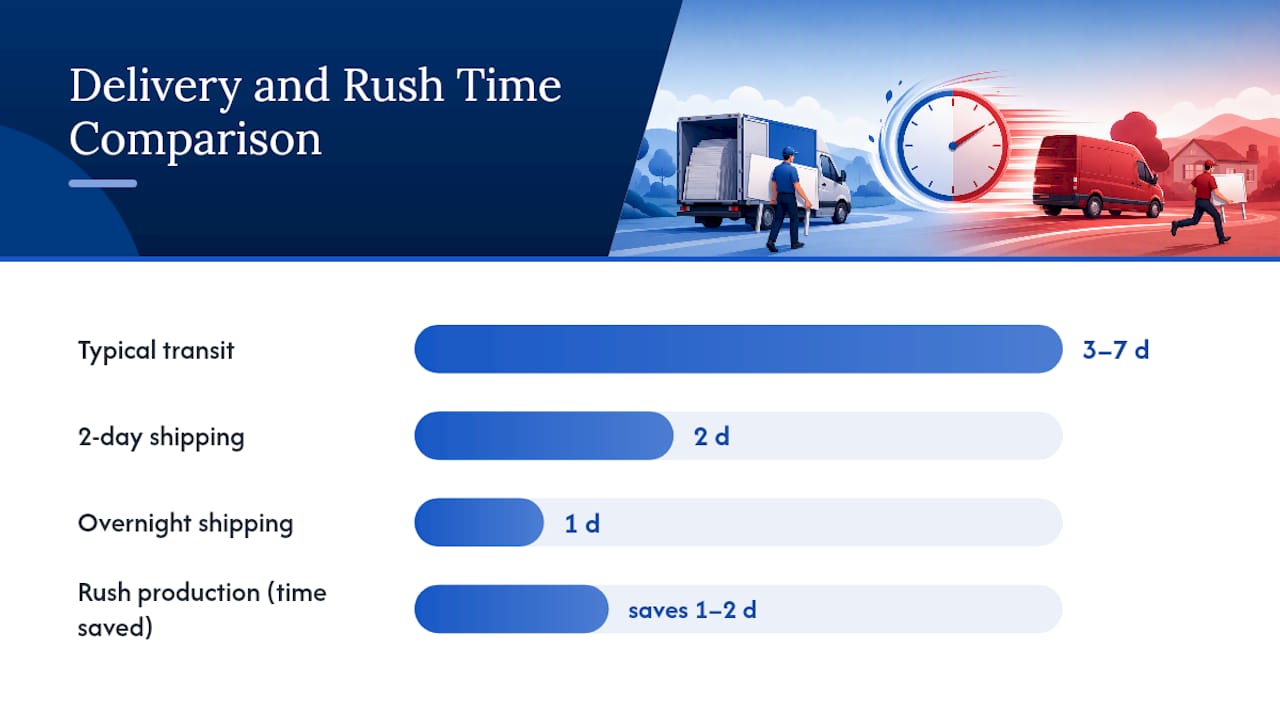
Rush production means your order jumps to the front of the print queue instead of waiting in standard sequence. It typically shaves 1 to 2 days off production for small and medium runs, though it rarely helps much on large orders where the bottleneck is finishing labor rather than queue position.
Expedited shipping is a separate purchase from rush production, and the two get confused constantly:
- 2-day shipping cuts transit from a typical 3 to 7 days down to 2, usually for a flat surcharge
- Overnight shipping gets your box there the next business day but costs the most and isn’t available to every region
Rush and expedited options both cost more, and buyer guides are consistent that these services can’t fix pre-production problems like unusable artwork or an out-of-stock material. If your file isn’t print-ready, no amount of rush fee changes that.
When rush won’t help, fall back on local pickup if your printer offers it, or place a smaller pilot run now and a full order later. A 10-sign pilot run can often clear production in hours rather than days.
How Do You Plan a Yard Sign Order to Hit Your Deadline?
A little scheduling math up front saves a lot of stress later. Work backward from your event or install date using this sequence:
- Confirm your hard deadline first, including the exact day you need signs in hand, not just installed.
- Prepare or approve artwork using a print-ready template so there’s no back-and-forth on file formats.
- Select quantity and material based on the tiers above, and be honest about whether you need aluminum’s durability or Coroplast’s speed.
- Approve your digital proof same day. This single step is the most common source of unplanned delays.
- Choose your shipping tier based on how much buffer you have left after production.
- Inspect signs on arrival and count the exact quantity before your install date, so a shortage doesn’t surprise you on-site.
Sample timelines: A 2-week runway gives you room for standard production and free shipping. A 1-week runway usually means standard production but 2-day shipping. A 3-day runway almost always requires rush production and overnight shipping, plus same-day proof approval with zero room for revisions.
Pro Tip: Ask your printer directly what their internal approval SLA is. If they say proofs are reviewed “within 24 hours” but you need same-day turnaround, that mismatch alone can blow your deadline before printing even starts.
Keep a sign order checklist on hand for repeat orders. It removes the guesswork every time a new deadline shows up.
What Does YardSigns.com’s Fulfillment Benchmark Mean for Your Order?
YardSigns.com’s own operating benchmark is direct: orders under 50 pieces ship within 24 hours. That maps cleanly onto the small-run tier described earlier, meaning if your deadline falls into that category, you’re working with one of the tightest realistic windows in the industry rather than a best-case marketing claim.
That speed comes from a workflow built to remove the usual bottlenecks:
- Ready-to-use templates for real estate, political, business, and event signs
- Free digital proofs with unlimited revisions before anything prints
- UV-resistant inks for color that holds up outdoors
- Metal H-stakes included with every order, so there’s no separate hardware order to wait on
Fast proof approval is consistently the biggest lever in real-world production speed. When the design step moves quickly, the printing step almost never becomes the bottleneck.
Read more about how the 24-hour benchmark works in practice.
What Do I Wish More Buyers Knew About Deadlines?
The miscalculation I see most often isn’t about production speed. It’s buyers forgetting that shipping is a second, separate countdown. Someone orders on a Friday assuming “24 hour turnaround” means Saturday delivery, then panics when the box hasn’t moved by Monday.
Reuse a template you’ve already approved once. Keep a standing “emergency” design file with your logo and basic layout ready to go. Pre-approve your typical color scheme and copy style so a rushed proof review takes minutes, not hours.
How Do You Order a Rush Yard Sign Batch Right Now?
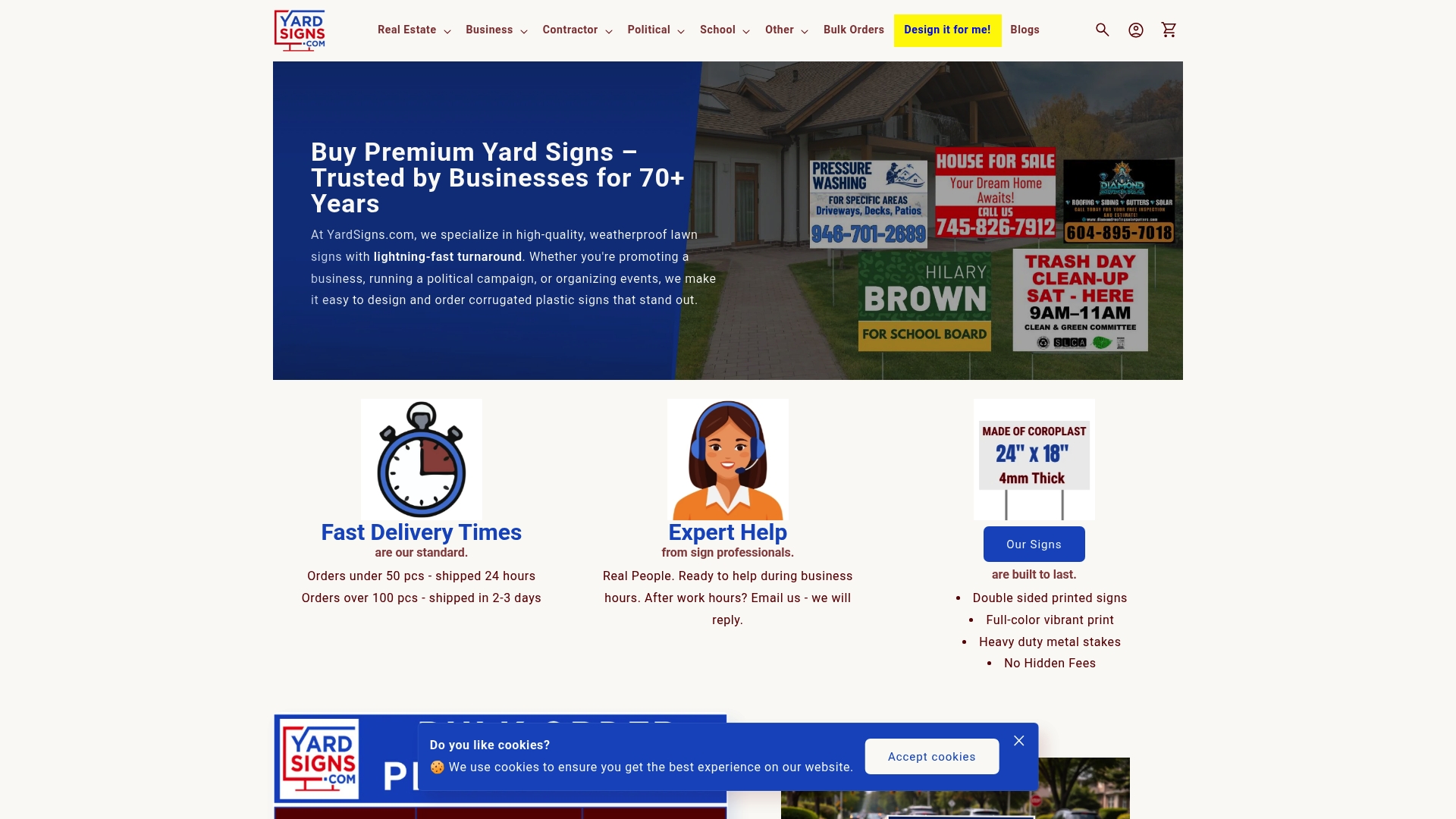
If your deadline is tight, YardSigns.com’s core advantage over piecing together a print job elsewhere is straightforward: orders under 50 pieces ship within 24 hours, backed by free digital proofs, UV-resistant inks, and included metal H-stakes, so you’re not sourcing hardware or a proofing tool separately while the clock runs down.
To request a rush order, have your artwork ready in a standard size, note your exact quantity, and flag your deadline date when you check out so the team can confirm the fastest realistic path to your door. Standard-size single-sided Coroplast signs move fastest through production, so lead with that option if your timeline is under a week. For custom shapes or aluminum, build in the extra day or two discussed above.
Start your order at Yardsigns and get a proof in your inbox the same day you submit your design.
Frequently Asked Questions
How long does it take to get custom yard signs? Small orders under 50 pieces are often ready within 24 hours, with medium orders taking 1 to 3 business days. Add 2 to 7 business days for shipping depending on your location and service level.
Does double-sided printing slow down production? Yes, typically by a small amount because each side needs its own print and drying pass. Budget an extra half day to a full day for double-sided runs compared to single-sided ones.
Can rush shipping fix a late order? Only if the delay is in shipping, not production. Rush and expedited services can’t resolve problems like unapproved artwork or an out-of-stock material, so fix those first.
Why do aluminum signs take longer than Coroplast? Aluminum requires different mounting hardware and a slower print process, adding roughly 1 to 2 days versus standard Coroplast. It’s a worthwhile trade for signs that need to last well beyond a single season, especially for permanent business signage.
What’s the fastest way to shorten my turnaround? Submit print-ready artwork, stick to standard sizes, and approve your digital proof the same day it arrives. Those three steps eliminate almost every avoidable delay in the process.
