


Order Rounded Corners to Stop Oxidation on Aluminum Yard Signs
Aluminum yard signs do not rust because rust is iron oxide, and aluminum contains no iron. What can happen is oxidation or dulling once a scratch, drilled hole, or bent corner exposes bare metal underneath the coating. The fix is simple: keep the protective finish intact, especially at edges, and inspect your signs after every installation.
TL;DR:
- Aluminum yard signs cannot rust because they lack iron, but surface oxidation can occur if protective coatings are damaged or exposed edges are not sealed.
- Coated or anodized aluminum with rounded corners and factory pre-drilled holes lasts longer outdoors, especially in multi-season or high-wind settings.
- Regular cleaning, inspecting after storms, and sealing any scratches or chips with touch-up paint are essential to prevent oxidation and prolong sign life.
- Proper handling during installation, such as stacking signs face-to-face and avoiding metal-to-metal contact, prevents early coating breaches.
- Aluminum is a better choice than corrugated plastic for long-term outdoor use, as it resists shape deformation and oxidation over several years.
Table of Contents
- Will Aluminum Yard Signs Rust Outdoors?
- Quick Prevention Checklist Readers Can Act On Today
- How Protective Coatings Actually Stop Corrosion
- How Do You Clean and Repair an Oxidizing Aluminum Sign?
- Installation and Handling Habits That Prevent Coating Damage
- When Should You Choose Aluminum Over Corrugated Plastic?
- How Often Should You Inspect and Maintain Your Signs?
- YardSignGuy’s Field Perspective: Top Mistakes and Simple Priorities
- Get a Rust-Resistant Aluminum Sign Without the Wait
- Sources
- FAQ
Will Aluminum Yard Signs Rust Outdoors?
No. True rust is a chemical reaction unique to iron and steel, and aluminum simply does not have the ingredients for it. That’s why aluminum is consistently described as rust-resistant and durable outdoors, even in exposed installations that see rain, humidity, and direct sun for years at a stretch.
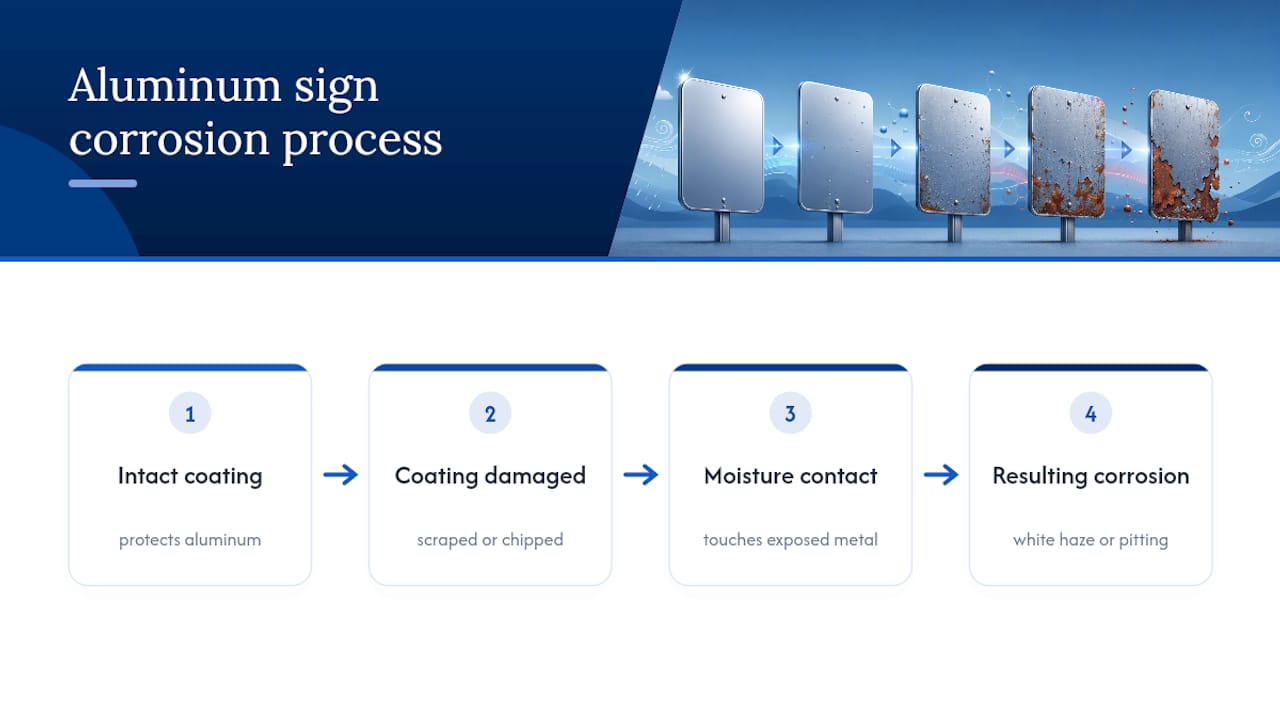
Aluminum forms a natural, hard oxide layer within seconds of contact with air. That layer is actually protective under normal circumstances, sealing the metal beneath it. The trouble starts when a factory coating, powder coat, or laminate gets cut, chipped, or scraped away, letting moisture sit against raw aluminum for extended periods. The result is a chalky white haze or pitting, not the reddish flaking most people picture when they hear “rust.” It looks bad, but it isn’t structural failure. It’s a coating problem that wears a corrosion costume.
Quick Prevention Checklist Readers Can Act On Today
Most oxidation problems trace back to a handful of preventable habits. Fix these and you’ll extend your sign’s outdoor life by years, not months.
- Order coated or anodized aluminum instead of bare stock whenever the sign will live outside longer than a season.
- Request rounded corners and factory pre-drilled holes rather than cutting or drilling on-site.
- Seal or paint any exposed cut edge, and never let a sign panel rest directly on wet soil or bare metal hardware.
- Mount with sturdy stakes or fasteners that hold the sign steady in wind, since constant flapping wears through coatings fast.
- Store signs dry, stacked face-to-face with cardboard or foam between them, never loose in a damp garage.
- Walk your signage monthly, and always after a storm, wiping surfaces down with mild detergent and water.
Pro Tip: Keep a small bottle of matching touch-up paint or clear coat with your sign inventory. Catching a nick within a week is the difference between a five-minute fix and a full oxidation stain that needs sanding.
How Protective Coatings Actually Stop Corrosion
The coating, not the aluminum itself, is doing most of the defensive work. Understanding how each type holds up tells you what to order and what to watch for.
- Paint and powder coat act as a physical barrier between air, moisture, and the metal. Powder coat is baked on and generally outlasts liquid paint, but both degrade under prolonged UV exposure and can chip on impact.
- Anodizing changes the aluminum’s surface chemically rather than layering something on top, so it resists chipping better than paint. The tradeoff is that anodized finishes are harder to spot-repair once damaged. A scratched anodized panel usually needs a full refinish, not a touch-up.
- UV-cured inks and clear laminates protect the printed graphic itself. Reputable outdoor sign suppliers pair aluminum with UV-cured inks specifically because they hold color and resist fading through repeated freeze-thaw cycles.
Edges and corners fail first in every finish type. That’s where blades cut through the coating during fabrication, and it’s the primary point where protective finishes get breached and expose bare metal to oxidation. If you remember one thing from this section, remember that.
How Do You Clean and Repair an Oxidizing Aluminum Sign?
A dull, chalky patch on aluminum is almost always surface oxidation, not deep corrosion. Deep corrosion shows up as pitting, flaking, or a soft, crumbly texture you can feel with a fingernail. If you’re only seeing haze or light discoloration, a repair is straightforward:
- Wipe the sign down with mild dish soap and warm water using a soft cloth. Skip abrasive pads, which scratch the coating further.
- For grease or grime that soap won’t touch, use isopropyl alcohol on a rag rather than a harsh solvent.
- For light surface oxidation on bare aluminum, a diluted oxalic acid solution can lift it, applied carefully and rinsed thoroughly. Wear gloves and work outdoors.
- Once dry, dab matching touch-up paint or a clear coat over any exposed scratch, chip, or drilled edge. Let it cure fully before rehanging.
One repair rule matters more than any product: factory-applied finishes hold up longer than DIY fixes, but small nicks caught early respond well to touch-up paint and a clear top coat. Wait too long and moisture works its way under the surrounding coating, which is when a $12 touch-up job turns into a full panel replacement. If you’re seeing pitting, bubbling paint, or a panel that flexes or feels thin in one spot, that’s structural. Replace it rather than patch it.
Installation and Handling Habits That Prevent Coating Damage
Most coating failures happen before a sign ever gets planted in the ground. Transport and handling do more damage than weather does in the first year.
- Stack panels face-to-face with a soft interleaving material during transport, never sliding metal against metal.
- Carry signs by the edges, not by pressing a thumb into the printed face, to avoid scoring the surface.
- Use H-stakes or grommets sized to the panel so the sign doesn’t rattle or chafe against the mount in wind.
- Request factory rounded corners and sealed edges at order time rather than trimming panels yourself after delivery.
Rounded corners, sealed edges, and pre-drilled holes specified at the ordering stage cut down on the abrasion and finish breaches that cause most premature oxidation. It’s a five-second checkbox that saves months of sign life.
When Should You Choose Aluminum Over Corrugated Plastic?
Aluminum earns its higher price tag when a sign needs to survive more than one season outdoors. It holds its shape in heat and cold, resists warping in wind, and, again, never develops the iron oxide that steel and unprotected metals do. For a real estate agent’s listing sign that moves between properties for years, or a permanent business directional sign, aluminum is the better long-term choice for durable outdoor use worth the upfront cost.
Corrugated plastic still has its place. It costs a fraction of aluminum and works well for short-term campaigns like a single election cycle, a weekend yard sale, or a one-time fundraiser where you’re ordering in bulk and don’t need the sign back next year.
Use this quick filter:
- Multi-season, permanent, or high-wind locations → aluminum.
- One event, one season, or a large batch on a tight budget → corrugated plastic.
- Roadside visibility at night or regulatory postings → reflective-coated composite options.
Not sure which category your project falls into? A material comparison breakdown can help you match sign material to your specific use before you order.
How Often Should You Inspect and Maintain Your Signs?
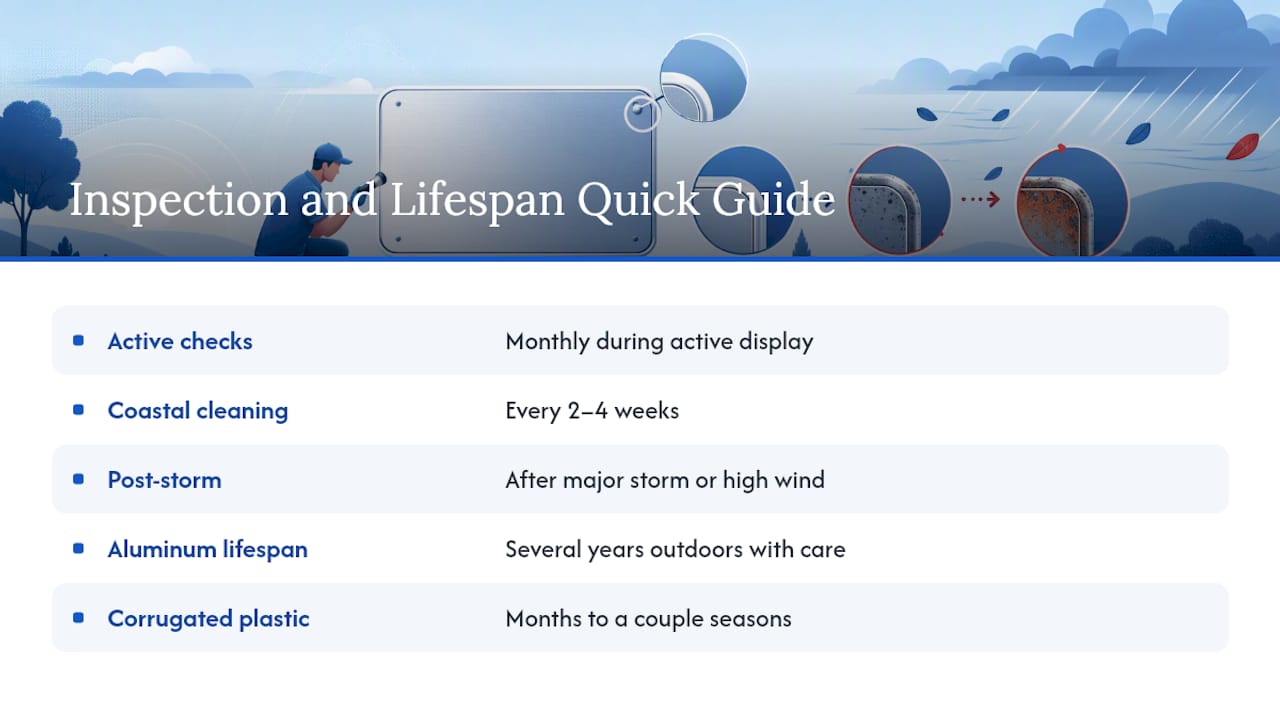
Set a simple rhythm and stick to it. Check signs monthly during active display, and always after a major storm or high-wind event. Coastal or high-UV regions need more frequent cleaning, roughly every two to four weeks, since salt air and intense sun accelerate coating breakdown faster than inland, temperate climates.
A well-finished aluminum sign can last several years outdoors with proper care, while corrugated plastic typically holds up for months to a couple of seasons depending on gauge. Between uses, store aluminum panels flat or vertically in a dry space, out of direct ground contact, and you’ll get the most out of that longer expected lifespan.
YardSignGuy’s Field Perspective: Top Mistakes and Simple Priorities
The same three mistakes show up over and over: unsealed cut edges, mounting hardware that lets a sign flap and chafe, and ignoring how coastal air or heavy UV changes maintenance needs. Fix those at the ordering stage. Choosing rounded corners and pre-drilled holes up front eliminates most of the risk before a sign ever ships. If a mistake shows up anyway, quick turnaround on small orders helps you replace a damaged panel without lengthy delays.
— YardSignGuy
Get a Rust-Resistant Aluminum Sign Without the Wait
If you want signage that stays sharp through multiple seasons without babysitting a coating, YardSigns.com builds aluminum yard signs designed for that job from the start. Some suppliers offer fast shipping on small orders, so replacing a damaged panel or testing a new design can be done quickly.
The design process walks you through finish and edge options before production, which matters given everything above about coating breach at corners and drilled holes. This fits businesses running permanent directional signage, candidates who need signs to survive a full election cycle, and event organizers planning multi-season campaigns rather than single-weekend use. Browse a ready-made congratulations and employee recognition sign to see the finish quality in action, or reach out to design support to specify rounded corners and sealed edges on your next order.
Sources
- Aluminum Signs – Rust-Proof & Customizable Metal Signage | UPrinting
- UVTS-Series - UV Traffic Sign Screen Ink | Nazdar
- What Material Are Yard Signs Made Of? All Yard Sign Materials Explained - Alpha Imprint
FAQ
Do Aluminum Yard Signs Rust in the Rain?
No. Aluminum doesn’t contain iron, so it can’t form rust regardless of how much rain it sees. What it can develop is surface oxidation if the protective coating gets scratched or chipped, exposing bare metal to moisture.
How Long Do Aluminum Yard Signs Last Outdoors?
A well-finished aluminum sign typically lasts several years outdoors with basic care, far longer than corrugated plastic, which usually holds up for months to a couple of seasons.
Can You Fix a Scratched or Oxidizing Aluminum Sign?
Yes, if caught early. Clean the area, then apply matching touch-up paint or a clear coat over the exposed edge; deep pitting or a soft, flexing panel means it’s time to replace rather than repair.
Is Aluminum Better Than Corrugated Plastic for Yard Signs?
For multi-season or permanent use, yes. Aluminum holds its shape and resists corrosion better, while corrugated plastic remains the more economical choice for one-time events or short campaigns.
What Causes Aluminum Signs to Oxidize?
Oxidation happens when a coating breach, usually at a cut edge, corner, or drilled hole, exposes bare aluminum to prolonged moisture. Sealing edges and choosing factory pre-drilled holes largely prevents it.
