


Are Yard Signs Waterproof? What Actually Determines Survival
Most yard signs are effectively waterproof at the material level. Corrugated plastic, the substrate behind roughly nine out of ten yard signs on the market, is chemically inert and sheds water without warping or weakening. What actually determines whether your sign survives a storm and still looks sharp afterward comes down to a few other factors entirely.
The material resisting water is only half the equation. Here’s what tips the scale:
- Ink type: standard inks can smear or fade in wet conditions; UV-cured inks resist both moisture and sun bleaching
- Sheet thickness: 3mm flexes and bows in wind and standing water; 4mm and 6mm hold shape far longer
- Mounting method: a flimsy stake in soft, saturated ground fails long before the sign material does
- Lamination: an optional layer that adds abrasion and moisture protection, especially useful near sprinklers or high-traffic curbs
For most short campaigns, a corrugated plastic sign around 4mm thick with UV-cured ink and a solid stake is a reliable choice.
Key Takeaways
Yard sign durability depends less on whether the plastic repels water and more on ink quality, sheet thickness, and stake choice working together.
| Point | Details |
|---|---|
| Substrate is water-resistant by default | Corrugated plastic and aluminum both shed water; failures usually come from ink or stakes, not the sheet itself. |
| Match thickness to campaign length | Use 4mm for standard short campaigns and step up to 6mm or aluminum for windy or multi-season installs. |
| UV-cured ink protects legibility | Standard-dry inks fade faster in sun and rain; UV-cured ink holds color through a full six to twelve months outdoors. |
| Stake choice prevents wind failure | Step or spiral stakes outperform basic wire stakes in loose soil or high-wind locations. |
| Yardsigns ships fast with durable materials | Yardsigns offers 4mm or 6mm Coroplast and aluminum with UV-resistant inks and included stakes, with most small orders shipped within 24 hours. |
Table of Contents
- Are Yard Signs Waterproof at the Material Level?
- Do Inks and Coatings Affect Weather Resistance?
- How Long Do Yard Signs Last Outdoors?
- Does Stake Type Change How Signs Handle Rain and Wind?
- Simple Ways to Waterproof and Protect Your Yard Signs
- What Buyers Get Wrong About Waterproof Signs
- Order Weatherproof Yard Signs Built for Real Conditions
- Sources
Are Yard Signs Waterproof at the Material Level?
The honest answer is “waterproof enough” rather than “waterproof, full stop.” Corrugated polypropylene, better known by the trade name Coroplast, is a twin-wall plastic sheet with a fluted core, similar in structure to cardboard but made entirely of polymer. Because it contains no paper fiber, water has nothing to soak into. Rain beads up and rolls off, and the sheet stays flat and rigid. Coroplast’s own buyer guides confirm this is chemically inert material, unaffected by standing water or humidity.
PVC sits in a similar category. It’s a solid, non-corrugated plastic that also resists moisture completely, though it tends to run heavier and pricier than Coroplast for the same square footage. You’ll see PVC used more often for indoor-outdoor hybrid signage, real estate riders, or smaller directional pieces where a slightly premium look matters more than shipping ten signs overnight.
Aluminum is the outlier, and it’s the only one of the three that’s genuinely waterproof in the strictest sense of the word, since metal doesn’t have a fluted cavity where moisture could theoretically pool. It won’t degrade from rain, sprinklers, or humidity over years of exposure. The tradeoff is weight, cost, and installation complexity. Aluminum signs typically get mounted on posts or frames rather than pushed into the ground on a wire stake, which changes the entire installation calculus for a short-term campaign.
Thickness is where the real performance differences show up:
- 3mm: lightweight and budget-friendly, but it flexes noticeably in wind and dents easily during handling
- 4mm: the industry-standard choice for real estate, political, and event signs because it balances rigidity, weight, and cost
- 6mm: nearly double the stiffness of 4mm, built for longer installations or locations with regular wind exposure
A sign’s gauge matters more than most buyers realize. Supplier data on wholesale Coroplast shows that thicker material combined with heavier stakes improve survival rates in windy or high-traffic locations. A 6mm sign on a flimsy wire stake can still blow over. Read more about how corrugated construction handles moisture if you want the deeper mechanical breakdown.
Do Inks and Coatings Affect Weather Resistance?
Here’s the part that trips up a lot of buyers: the substrate can be bone-dry proof against rain and the sign can still fail. Why? Because the graphic layer, meaning the ink and any laminate on top of it, is a separate system from the plastic underneath, and it doesn’t automatically inherit the plastic’s water resistance.
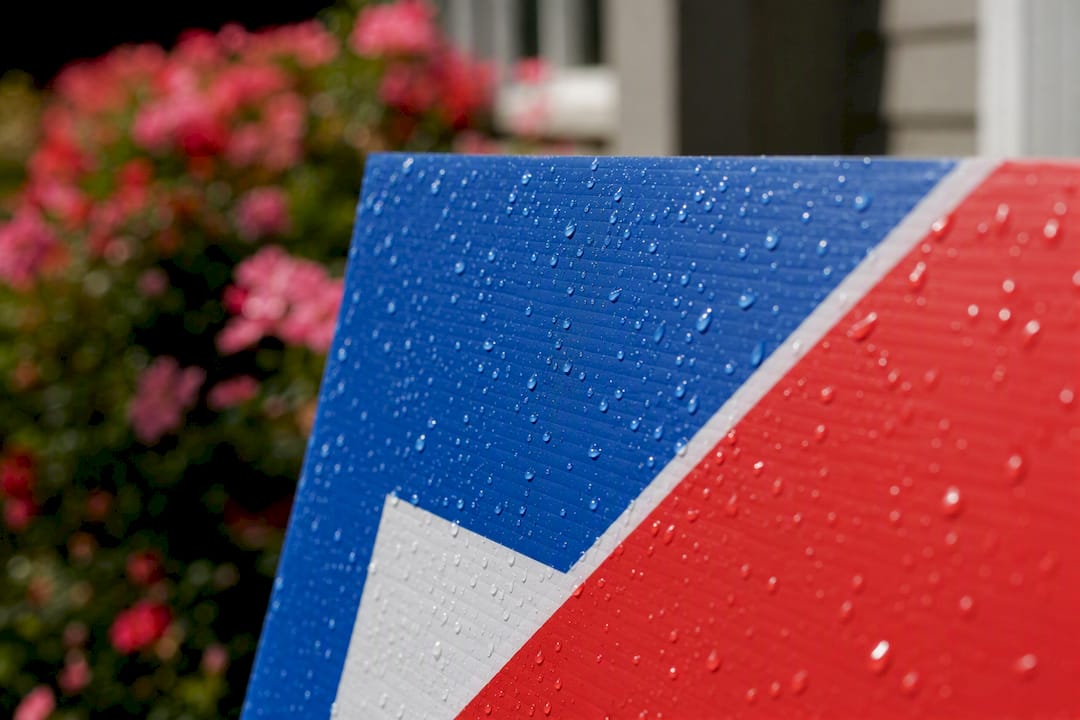
UV-cured inks are cured with ultraviolet light rather than left to air-dry, which bonds the pigment more tightly to the surface. That bond matters because it resists both water intrusion and sun-driven fading. A sign printed with standard solvent ink might survive one rainstorm looking fine, then start streaking or fading within weeks under regular sun exposure. Manufacturer guides consistently point to UV-cured inks as the deciding factor for graphics that hold up over a multi-month campaign, not just a single wet weekend.
Lamination is optional, but it earns its cost in specific situations:
- High-traffic areas where the sign gets brushed, bumped, or handled repeatedly
- Sprinkler zones where the same panel gets wet daily rather than occasionally
- Campaigns running longer than three months, where fade resistance compounds over time
- Coastal or humid climates where moisture exposure is near-constant rather than intermittent
Pro Tip: Ask your printer directly whether their standard order uses UV-cured inks or a cheaper solvent process. Don’t assume “outdoor sign” on a website automatically means outdoor-rated ink.
A waterproof sheet with weak ink is still a failed sign in the eyes of anyone driving past it. The plastic will be sitting there in perfect shape while the message on it has already faded past readable.
How Long Do Yard Signs Last Outdoors?
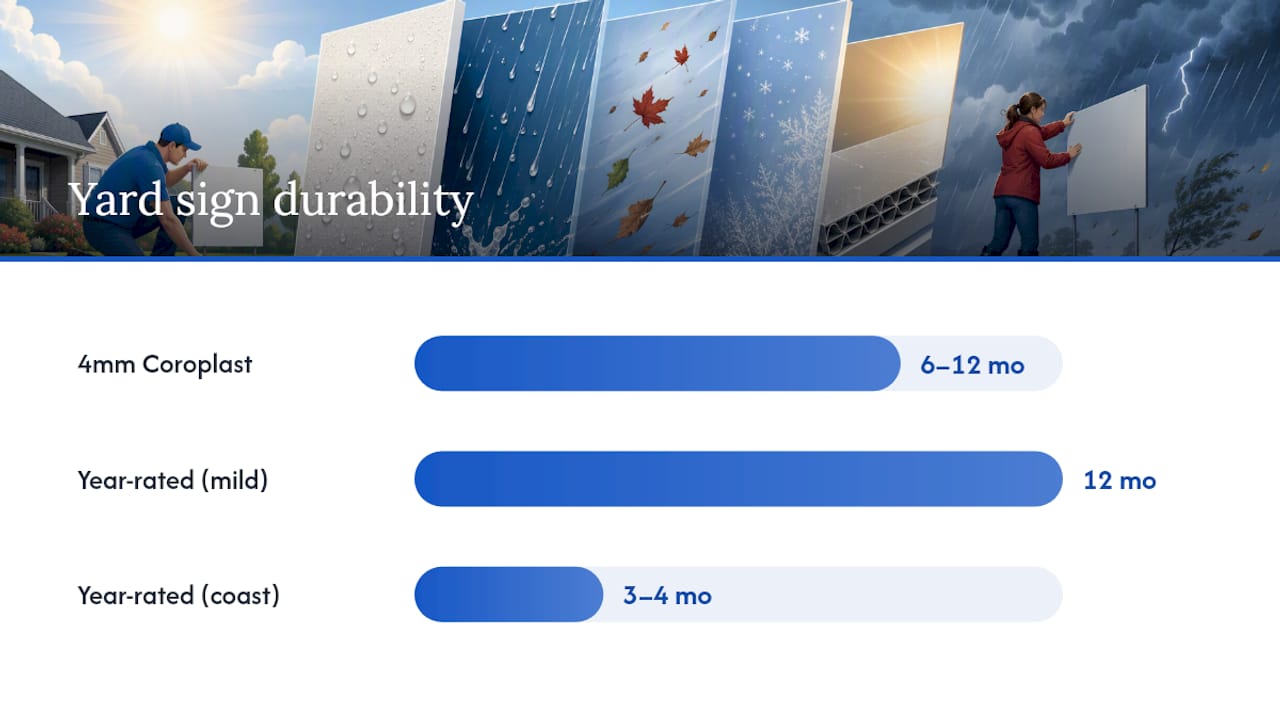
Expect months, not years, from a standard corrugated plastic sign, and plan your material choice around how long you actually need it to hold up. A 4mm Coroplast sign printed with UV-cured inks typically lasts about six to twelve months under normal outdoor conditions. That range shifts significantly based on climate.
Sun exposure, not rain, does most of the damage to a well-made sign. UV radiation breaks down ink pigment and slowly embrittles the plastic itself, while water alone, as established, mostly just rolls off. That said, wind stress compounds both problems: a sign flapping against its stake in a storm accumulates micro-cracks at the mounting holes faster than one sitting still.
Signs in coastal or high-UV regions can lose half their expected lifespan. Climate-specific guidance warns that salt air and intense sun exposure shrink the typical six-to-twelve-month window considerably, so a sign rated for a year in a mild climate might need replacing after three or four months near the coast.
A few maintenance habits stretch usable life further:
- Wipe down grime and pollen buildup periodically rather than letting it bake into the surface
- Store signs indoors between uses instead of leaving them staked year round
- Choose laminated graphics for anything running past the three-month mark
- Upgrade to 6mm or aluminum once a “temporary” sign becomes a recurring, permanent fixture
If you’re planning a campaign that stretches across seasons rather than weeks, Yardsigns covers climate-specific expectations in more depth.
Does Stake Type Change How Signs Handle Rain and Wind?
Waterproof material means nothing if the sign is lying face-down in a puddle. Installation choices, more than substrate chemistry, determine whether a sign stays upright, legible, and dry through a storm.
- H-wire stakes work well in soft to medium soil and are the standard for short campaigns under a few months. They’re cheap, fast to install, and easy to pull for storage, but they can work loose in sandy or heavily saturated ground.
- Step stakes offer a firmer hold thanks to a wider footplate that resists both wind lift and soil erosion. They’re a smart upgrade for locations with regular foot traffic or looser soil.
- Spiral stakes twist into the ground for maximum grip and are the best option in rocky, compacted, or clay-heavy soil where a straight wire stake struggles to seat.
- Permanent frames (posts, U-channel mounts) suit signage meant to stay up for a full season or longer, and they pair naturally with heavier 6mm or aluminum panels.
Wind is the real enemy of an otherwise weatherproof sign. A gust catching a flat panel acts like a sail, and repeated flexing at the stake slots is where cracks start, even on premium 6mm stock. Buyer guides note that pairing 4mm Coroplast with a step stake, rather than a basic wire stake, meaningfully improves how well a sign survives roadside wind gusts.
Placement matters almost as much as the stake itself. Angle signs slightly away from prevailing wind direction, keep the bottom edge a few inches clear of low spots where water pools after rain, and avoid facing a panel directly into gusts coming off open fields or highways. For real estate installs specifically, this pro guide on all-weather signage walks through frame options that hold up through an entire selling season.
Simple Ways to Waterproof and Protect Your Yard Signs
You don’t need to overthink this, but a handful of cheap habits separate a sign that lasts the full campaign from one that needs replacing after the first storm.
- Ask the right questions before you order. Confirm sheet thickness (4mm minimum for anything running longer than a few weeks), whether inks are UV-cured, whether lamination is available, and what stake options ship with the sign.
- Tilt signs slightly when you install them. A small forward or backward angle helps rainwater run off the face rather than sitting in the flutes at the top edge.
- Keep the bottom edge above grade. Setting the sign an inch or two above saturated soil prevents wicking at the base, where corrugated flutes can trap moisture longest even on inert plastic.
- Seal exposed edges on cut panels. If a sign has been trimmed to a custom shape, a thin bead of clear sealant along the cut edge keeps water from creeping into the flute channels.
- Pull signs before major storms. High wind does more damage than rain ever will; a sign lying flat in the garage survives a storm that would have snapped it on the stake.
- Store them clean and dry between uses. Hosing off dirt and letting panels air-dry fully before stacking prevents mildew buildup on the surface, which is a common problem with signs sold as “reusable” for multi-season campaigns.
Pro Tip: Spray-on sealants sold for general outdoor use can actually cloud a laminate finish or react poorly with UV-cured ink. If you want extra protection, ask your printer about factory lamination instead of applying a DIY coating after the fact.
Edge-sealing and factory lamination solve different problems. Edge-sealing is a five-minute fix for a trimmed panel. Lamination is a manufacturing step that protects the whole face from abrasion and sun, and it’s worth the small upcharge for anything you plan to reuse across multiple events.
When Aluminum Makes More Sense Than Corrugated Plastic
Corrugated plastic covers the vast majority of yard sign needs, but a few situations justify the jump to aluminum or coated metal:
- Permanent wayfinding or parking signage that needs to survive years, not months, without replacement
- ADA-compliant signage where consistent rigidity and a professional finish are part of the requirement
- High-wind or high-traffic sites where corrugated plastic would need frequent replacement anyway, making metal cheaper over the sign’s full lifespan
- Multi-season branding, like a permanent real estate office marker or a recurring annual event location
Aluminum’s maintenance profile is almost the inverse of Coroplast’s. It won’t crack, fade from moisture, or bow in wind, but it will show scratches and dents that plastic simply flexes around. Finish options like powder coating or baked enamel add another layer of protection to the graphic itself, extending color life well beyond what a printed plastic panel can offer. For a side-by-side look at where each material category fits, Yardsigns breaks down the tradeoffs by use case, and comparable rigid sign options from other fabricators show similar finish considerations for permanent installs.
What Backs These Recommendations
These material and thickness recommendations reflect standard practice across sign manufacturers and buyer guides, not a single company’s preference. YardSigns.com ships most orders under 50 pieces within 24 hours, which matters if you’re reading this because a campaign deadline snuck up on you.
Customer feedback on printed yard signs consistently centers on two things: whether the sign held its shape through bad weather, and whether the print stayed vivid instead of washing out. Both come down to the thickness and ink choices covered above, not luck.
A few resources worth bookmarking if you want to go deeper on any one factor:
- How long yard signs actually last under different weather conditions
- Heat and UV resistance specifics for summer campaigns
- What separates corrugated plastic from other sign substrates structurally
What Buyers Get Wrong About Waterproof Signs
Most people ask “is this material waterproof” when they should be asking “will this sign still be readable in ninety days.” Those are different questions with different answers, and conflating them leads to buyers overspending on aluminum for a two-week yard sale sign, or underspending on flimsy 3mm plastic for a six-month campaign that needed 6mm from the start.
The conventional advice, “get a waterproof sign,” undersells the real decision. Corrugated plastic has been effectively waterproof for decades. The variable that actually separates a sign that survives from one that doesn’t is almost always the ink quality, the stake choice, or the thickness, not whether water can penetrate the sheet.
If you’re buying for a short political or real estate push, prioritize 4mm with UV-cured ink and a step stake over anything fancier. If you’re installing something meant to greet visitors for years, skip corrugated plastic entirely and go straight to aluminum. The middle ground, where most wasted money gets spent, is buying premium plastic for a job that needed metal, or metal for a job that needed a $10 plastic sign and a sturdy stake.
— YardSignGuy
Order Weatherproof Yard Signs Built for Real Conditions
Yardsigns is the practical answer for buyers who need a sign that survives its full campaign without a second order. Every panel ships in your choice of 4mm or 6mm corrugated plastic, or aluminum for permanent installs, printed with UV-resistant inks so the graphics hold their color through sun and rain rather than fading after a few weeks outdoors.

Ordering is built for speed: pick a template for real estate, political, contractor, or event use, or upload your own design, and get a free proof with unlimited revisions before anything goes to print. Metal H-stakes come included, double-sided printing is standard, and orders under 50 pieces typically ship within 24 hours, with larger runs out the door in one to three days. If you’re planning a company milestone, an employee recognition push, or a fundraising drive, browse the charity fundraising event sign template or the employee of the month sign to see proof turnaround and sizing options before you place an order.
Sources
- Custom Yard Signs and Lawn Signs: The Complete Buyer’s Guide - Custom Ink Blog
- Yard Signs Lifespan | Blog - PrintPronto
- Custom Yard Signs 18×24 with Stakes — Coroplast | Arnold Prints®
- Coroplast Yard Signs Wholesale | 4mm & 5mm | H-Stakes Available
