


Neighborhood Canvassing with Lawn Signs: 2026 Strategy Guide
Neighborhood canvassing with lawn signs works because it puts your message exactly where people already are: at intersections, along sidewalks, and in front of homes throughout the community you want to reach. Done right, it combines the personal touch of door-to-door outreach with the persistent visibility of physical signage. The result is a campaign that keeps working even when your volunteers have gone home for the night.
The advantages are real and practical:
- Continuous visibility around the clock, even without active canvassing
- Neighborhood recognition that builds familiarity and trust over time
- Community engagement by showing broad local support for your cause or event
- Cost-effective reach compared to digital advertising in the same geographic area
- Reinforced messaging when signs appear at multiple points along canvassing routes
Weatherproof, professionally printed signs are not optional here. A sign that fades after one rainstorm or buckles in the wind undermines the credibility of your entire campaign. Yardsigns.com has built its reputation on exactly this standard, with vibrant, durable printing that customers consistently highlight in reviews.
How to choose durable, weatherproof signs for canvassing
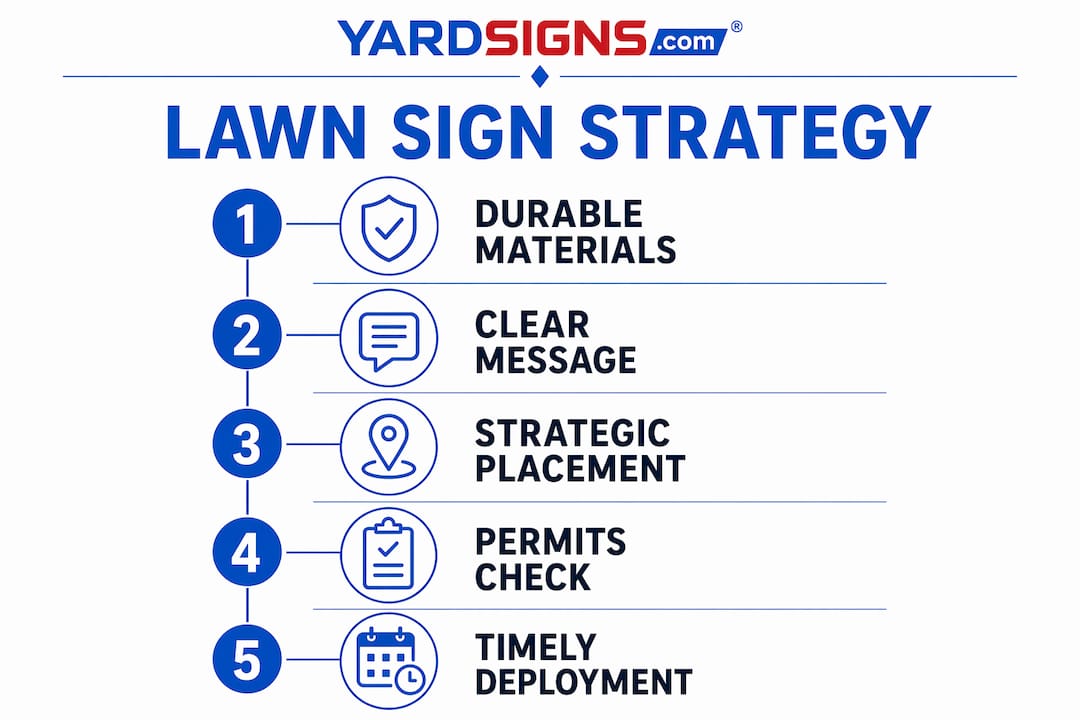
The material you choose determines how long your sign stays readable and professional-looking outdoors.
- Coroplast (corrugated plastic): Lightweight, weather-resistant, and affordable. The standard choice for most lawn sign campaigns.
- Aluminum: Heavier and more rigid, suited for semi-permanent placements or high-wind areas.
- UV-resistant inks: Prevent fading from sun exposure, keeping colors vibrant throughout your campaign.
- Waterproof coatings: Extend sign lifespan and legibility through rain and humidity.
- H-stakes or wire frames: Rust-resistant metal stakes keep signs upright and stable in soft ground.
- Reflective options: Available on some Coroplast panels, useful for signs that need to be visible at dusk or dawn.
Standard sizes like 18"x24" work well for most residential placements, while 24"x36" signs offer better visibility near busy roads.
Pro Tip: Orders under 50 pieces from Yardsigns.com can ship within 24 hours, so if your campaign timeline shifts or you need a fast reorder, you are not stuck waiting.

What makes a lawn sign design actually work?
Most people passing your sign will give it two to three seconds, tops. Your design has to communicate the core message in that window.
- Bold, high-contrast colors: Dark text on a light background (or vice versa) reads fastest from a distance.
- One primary message: A name, a date, or a single call to action. Not all three at once.
- Clear text hierarchy: The most important element should be the largest. Visual hierarchy guides viewer focus and improves message retention in busy environments.
- Minimal clutter: Every element you add competes for attention. Cut anything that is not load-bearing.
- Consistent branding: Use the same colors, fonts, and logo across all signs so people recognize your campaign at a glance.
- Readable fonts: Avoid script or decorative typefaces. Sans-serif fonts like Arial or Helvetica hold up at distance.
Signs that try to say everything end up saying nothing. Pick the one thing you want someone to remember and build the design around that.
Where to place lawn signs for maximum neighborhood impact
Placement is where many campaigns leave visibility on the table. A well-made sign in the wrong location reaches far fewer people than a simple sign at the right one.
- High-traffic intersections: Drivers and pedestrians both pass through, giving you two audiences at once.
- Neighborhood entrances: Anyone entering the area sees your message before anything else.
- Along canvassing routes: Repeated sign placement at key intersections reinforces your message with each pass.
- Near decision points: Anywhere people slow down or stop, such as crosswalks or bus stops, increases read time.
- Avoid blocking walkways: Keep signs clear of pedestrian paths to maintain safety and community goodwill.
- Use stable hardware: H-stakes driven fully into the ground prevent signs from tipping or blowing into traffic.
Do: Space signs at regular intervals along major routes to create a sense of momentum and broad support.
Don’t: Cluster multiple signs in one yard or on one block. It reads as desperation rather than strength.
How to integrate lawn signs into your full canvassing campaign
Lawn signs work best as one layer of a coordinated effort, not as a standalone tactic. Timing matters as much as placement.
- Deploy signs before canvassing begins: Residents who have already seen your signs are more receptive when a volunteer knocks.
- Coordinate routes with sign locations: Canvassing routes that pass existing sign placements reinforce the message at every step.
- Track placements with photos: Document each sign location so you can monitor condition and coverage throughout the campaign.
- Measure engagement: Note response rates in areas with high sign density versus low, and adjust placement accordingly.
- Pair with digital outreach: Social posts showing sign installations build online momentum that mirrors your physical presence.
- Remove signs promptly after the campaign ends: Leaving signs up past their purpose damages your credibility with the community.
Pro Tip: Avoid placing too many signs in a single area. Well-timed, well-placed signs during critical campaign phases yield higher visibility than a flood of signs that creates visual noise.
What you need to know about permits and local sign rules
Skipping the permit research is the fastest way to have your signs pulled and your campaign fined. Rules vary significantly by city, county, and even neighborhood association.
Most municipalities regulate sign placement on public property, including sidewalk strips, medians, and utility poles. Private property placements generally require the owner’s permission but fewer permits. Some areas restrict sign size, the number of signs per property, or the duration of display.
Respecting no-solicitation signs and local ordinances prevents complaints and preserves the positive community relationships your canvassing depends on. A quick call to your city or county clerk’s office before you deploy will clarify what is allowed. Political campaigns often have different rules than commercial promotions, so confirm which category applies to your effort.
Yardsigns has the signs your campaign needs, ready fast
When your canvassing timeline is tight, the last thing you need is a printing delay. Yardsigns.com offers professionally printed, weatherproof lawn signs built for exactly the conditions this guide describes: outdoor exposure, high-traffic placements, and campaigns that need to move quickly.
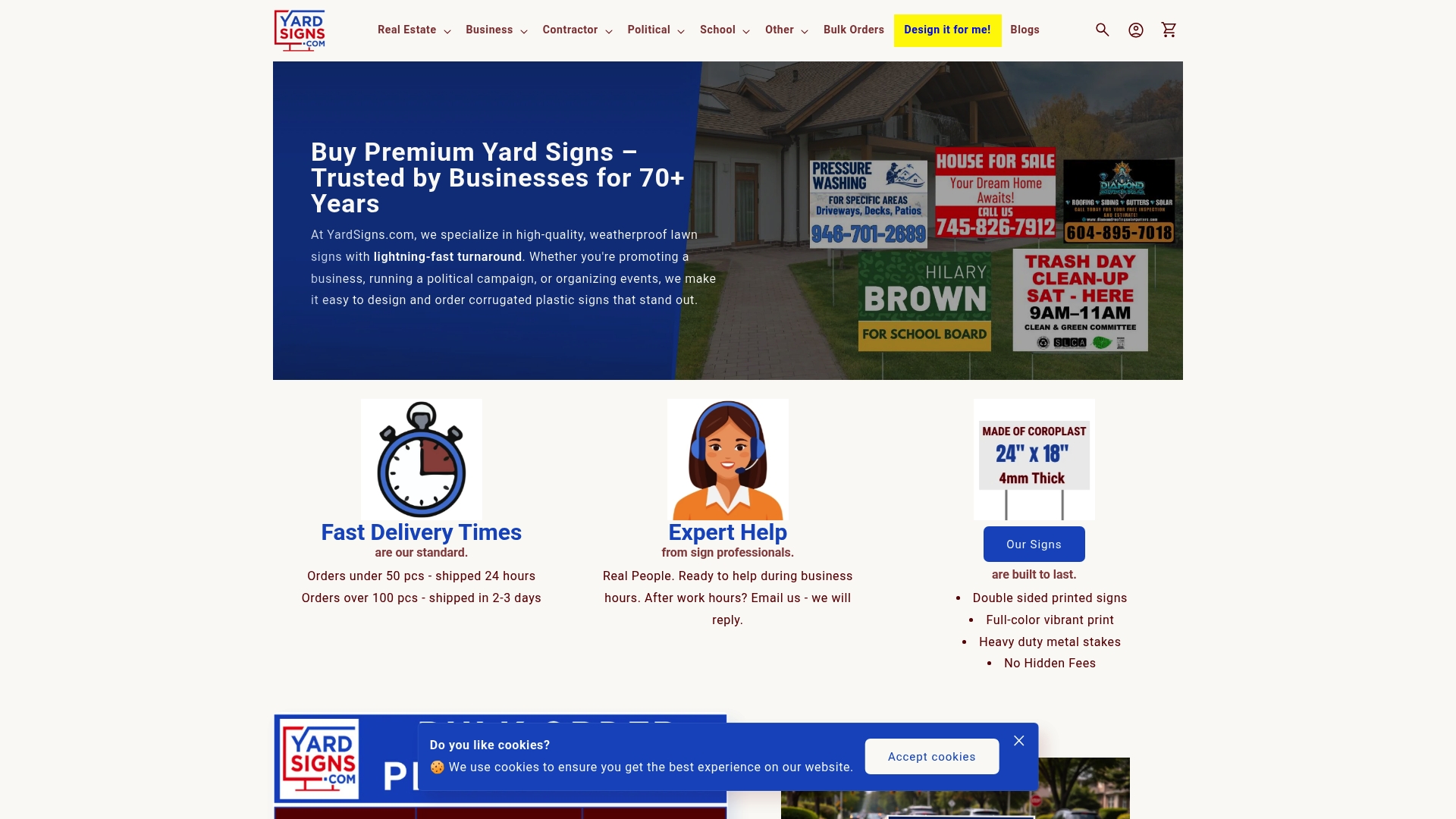
Orders under 50 pieces ship within 24 hours, so you can respond to a last-minute event, restock a depleted supply, or expand into a new neighborhood without losing momentum. The yard sign effectiveness speaks for itself in customer reviews that consistently point to vibrant color and durability as the standout qualities. Whether you are running a fundraiser, a local election campaign, or a community event, browse the charity fundraising sign options at Yardsigns.com and get your order started today.
Key Takeaways
Neighborhood canvassing with lawn signs delivers sustained local visibility when you combine durable materials, clear design, strategic placement, and proper legal compliance.
| Point | Details |
|---|---|
| Material choice drives durability | Coroplast with UV-resistant inks and waterproof coatings keeps signs readable through sun and rain. |
| Design clarity wins attention | One primary message with bold contrast and clear hierarchy communicates in two to three seconds. |
| Placement multiplies impact | Repeated signs at intersections and neighborhood entrances reinforce recognition with every pass. |
| Legal compliance protects your campaign | Check city and county permit rules before placing any sign on public property to avoid fines. |
| Yardsigns delivers fast | Orders under 50 pieces ship within 24 hours, keeping your canvassing timeline on track. |
