


Rain-Proof Signs in Event Planning: 2026 Guide
Rain-proof signs are defined as weather-resistant displays built to maintain legibility and structural integrity through rain, wind, and temperature shifts. The role of rain-proof signs in event planning goes beyond aesthetics. Weatherproof signage ensures continuous brand visibility and guides attendee movement even when conditions turn against you. Without it, a sudden downpour can erase directional cues, wash out branding, and create safety gaps that no backup plan fully covers. Event planners who treat signage as a weather-dependent afterthought pay for it in crowd confusion and lost brand impact.
What is the role of rain-proof signs in event planning?
Rain-proof signs serve two non-negotiable functions at outdoor events: they communicate and they brand. When rain hits, paper signs curl, ink bleeds, and foam boards collapse. Weatherproof signs hold their shape and color, keeping wayfinding arrows readable and sponsor logos sharp. That reliability directly affects crowd flow and the attendee experience.
The industry term for this category is “weatherproof signage,” though event planners commonly call them rain-proof or water-resistant signs. Both terms describe the same standard: a sign that resists moisture penetration, maintains graphic clarity, and stays structurally sound through a weather event. Planners who understand both terms communicate more clearly with vendors and logistics teams.
Effective weatherproof signage enhances brand credibility and improves crowd flow by maintaining clear wayfinding in bad weather. That outcome is not incidental. It reflects a deliberate material and design choice made weeks before the event date.
What materials and technologies make signage rain-proof?
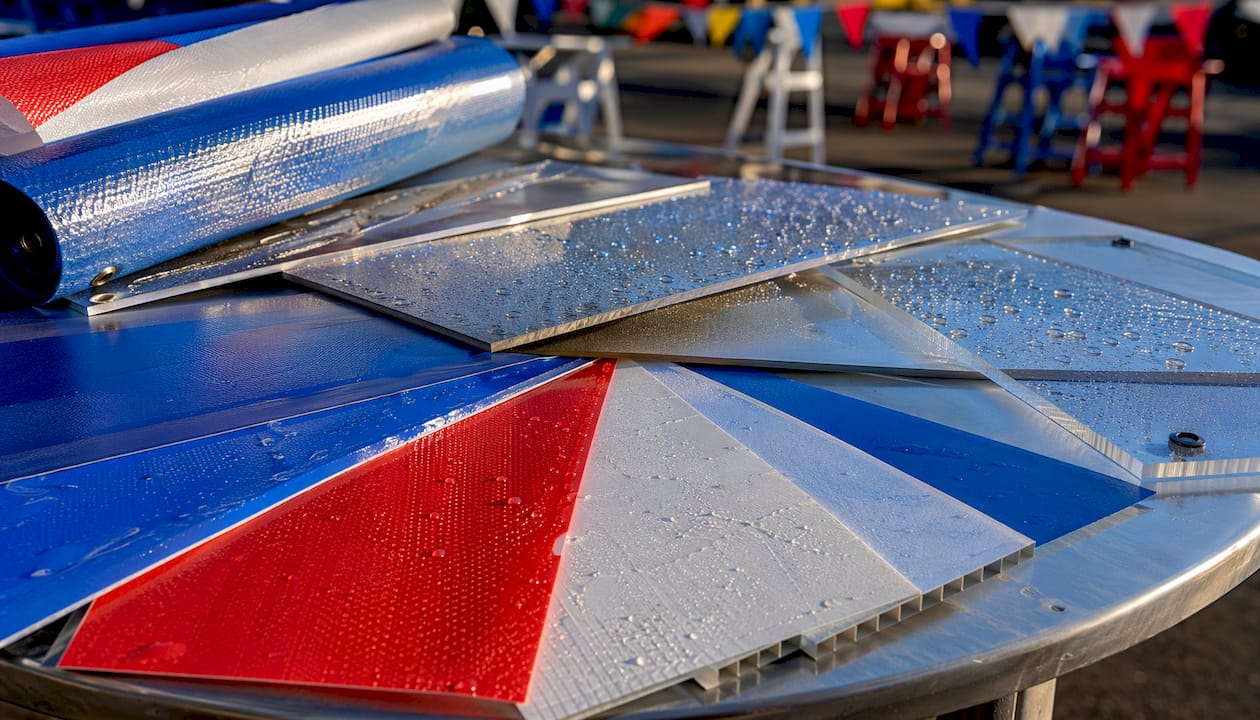
Material selection determines how well a sign performs when wet. Three substrates dominate outdoor event signage: vinyl, aluminum, and polycarbonate. Each carries distinct trade-offs across cost, durability, and weather performance.
| Material | Weather resistance | Best use case | Key limitation |
|---|---|---|---|
| Vinyl | Good moisture resistance | Short-term events, banners | Fades and shrinks under prolonged sun |
| Aluminum | Excellent, rust-resistant | Semi-permanent outdoor signs | Dents under impact, needs wind support |
| Polycarbonate | High impact resistance | Illuminated or high-traffic signs | May yellow without UV inhibitors |
Vinyl is the most common choice for single-day or weekend events. It withstands moisture and adapts to curved surfaces, but continuous sun exposure accelerates fading. Aluminum suits multi-day festivals or recurring events where signs stay up longer. It resists rust and holds its appearance, though large panels need proper mounting to handle wind loads. Polycarbonate works well for illuminated signs or areas with vandalism risk, but requires UV inhibitors to prevent discoloration over time.
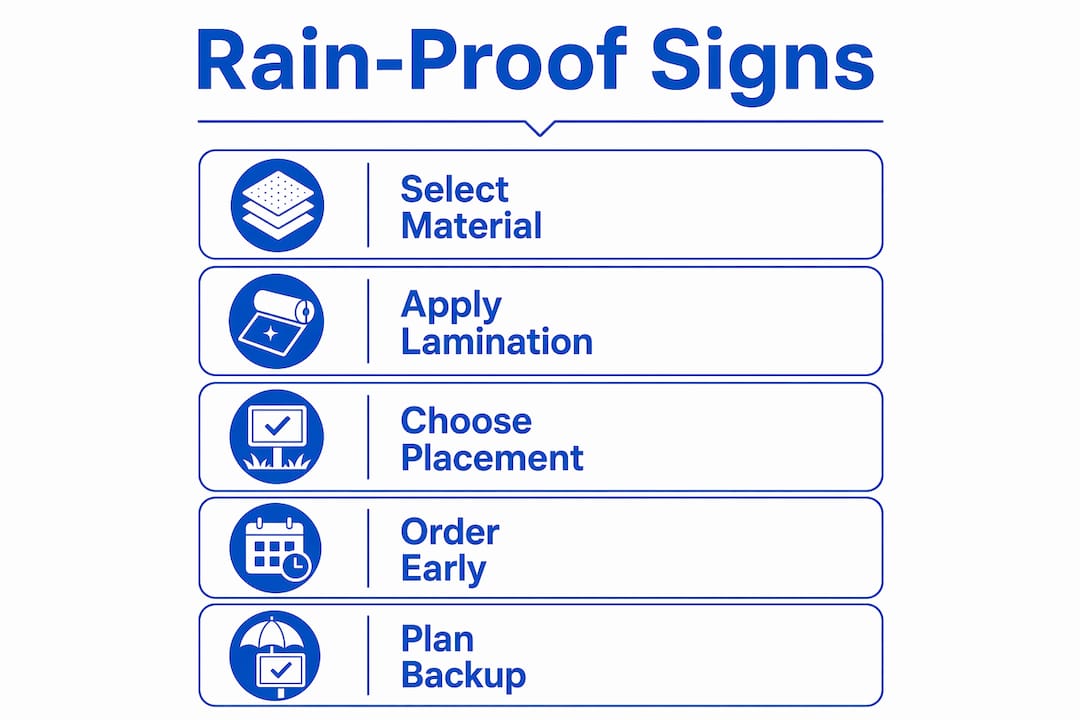
Protective coatings and lamination add a critical layer of defense regardless of substrate. Lamination keeps signs dry and prevents warping and smudging when rain hits. A clear overlaminate film applied to a printed vinyl banner can extend its readable life from one event to several without reprinting. For a deeper breakdown of each material’s performance specs, the 2026 material comparison guide from Yardsigns covers current options in detail.
Pro Tip: Order laminated versions of your most critical directional signs, even if budget limits lamination across the full sign set. Wayfinding signs take the most weather abuse and carry the highest attendee impact.
How to design rain-proof signs for maximum visibility
Design choices determine whether a sign communicates in two seconds or gets ignored entirely. Standard outdoor signage legibility requires 1 inch of capital letter height per 10–25 feet of viewing distance, with a 2–3 second message absorption window. That standard shapes every font size decision you make for outdoor events.
Rain and overcast skies reduce ambient light and flatten contrast. Signs that look sharp on a sunny day can become unreadable in a downpour. The following design principles address that directly:
- Font choice: Use sans-serif typefaces such as Arial, Helvetica, or similar. Serif fonts lose legibility when wet or viewed at distance.
- Contrast ratio: Contrast ratios near 7:1 between text and background are recommended. Avoid saturated red on deep blue for text. Black on white or white on dark navy performs best in low light.
- Finish: Specify non-glare finishes on sign faces. Glossy surfaces create reflective glare in rain that obscures text.
- Headline length: Limit headlines to 5–7 words. Longer messages fail within the 2–3 second read window.
- Ink and print type: Use UV-resistant, weather-resistant inks. Solvent-based or UV-cured inks bond to the substrate and resist moisture far better than water-based alternatives.
- Color saturation: Print at full saturation. Rain-soaked environments dull perceived color, so undersaturated designs look washed out before the weather even changes.
Placement height also affects readability. Signs mounted at eye level (roughly 5–6 feet at center) perform better than ground-level or overhead placements in crowded, wet conditions where umbrellas block sightlines.
Where should rain-proof signs be positioned at outdoor events?
Placement strategy separates a functional signage plan from one that fails under pressure. The goal is maximum visibility with minimum weather exposure. That combination requires deliberate positioning relative to the event layout and local terrain.
- Avoid natural drainage channels. Low-lying flood areas collect water fast. Signs placed in or near drainage paths face submersion, mud splatter, and structural undermining of stakes or bases.
- Use sheltered zones for critical signs. Queue lines, entry points, and first-aid stations benefit most from signs placed under canopies or near tent edges. Attendees stop and read in sheltered spots, which increases message absorption.
- Account for wind corridors. Open fields and parking areas channel wind. Large signs in these zones need reinforced mounting or weighted bases. Aluminum panels require additional support against high wind loads.
- Integrate with traffic flow. Position directional signs at every decision point: entry gates, path forks, and stage approaches. The types of outdoor directional signs used at each point should match the viewing distance and dwell time available.
- Comply with wind speed trigger points. Event safety guidelines specify wind thresholds at which freestanding signs must come down. Know those thresholds before the event and brief your logistics team on the protocol.
Pro Tip: Walk the venue during a light rain before the event day. You will find drainage paths, wind tunnels, and blind spots that no site map reveals. Adjust sign placement based on what you observe, not just what the layout shows.
What maintenance and contingency planning keep signs performing reliably?
Maintenance is not optional for multi-day events. Signs degrade faster than expected when rain, wind, and foot traffic combine. A structured inspection routine prevents small problems from becoming visible failures during peak attendance hours.
- Pre-event inspection: Check every sign 24 hours before doors open. Look for loose mounting hardware, peeling laminates, and faded graphics. Replace any sign that shows visible wear before attendees arrive.
- Weather monitoring schedule: Monitor local weather forecasts starting 7 days before the event. Increase monitoring frequency to every few hours within 48 hours of the event start. Define specific trigger points for wind speed and rain intensity that activate your contingency plan.
- Cleaning during the event: Wipe sign faces with a soft cloth after heavy rain. Dirt and mud accumulate on lower sign panels and reduce legibility. Regular cleaning combined with weather monitoring reduces sign damage significantly across multi-day events.
- Repair kit on site: Keep a kit with replacement zip ties, mounting tape, spare sign panels for critical locations, and a clear protective spray. Fast repairs prevent a damaged sign from staying up in a degraded state.
- Removal protocol: Assign a team member to each sign zone with clear instructions on when to remove signs. If wind speeds hit your defined threshold, removal starts immediately. Damaged signs left up create safety risks and undermine brand presentation.
Contingency planning also means having backup panels printed and stored on site for your highest-priority signs. Entry gates and first-aid locations are non-negotiable. If those signs fail, attendee safety and event flow both suffer.
Key takeaways
Rain-proof signage is the single most controllable factor in maintaining event communication and brand visibility when weather conditions change.
| Point | Details |
|---|---|
| Material choice drives performance | Match substrate to event length: vinyl for short events, aluminum for multi-day, polycarbonate for illuminated signs. |
| Design for low-light conditions | Use 7:1 contrast ratios, sans-serif fonts, and 5–7 word headlines to meet the 2–3 second read standard. |
| Placement prevents weather damage | Avoid drainage channels and wind corridors; position critical signs under canopies and at every decision point. |
| Monitor weather 7 days out | Define wind and rain trigger points in advance and brief your logistics team on the removal protocol. |
| Lamination extends sign life | Apply clear overlaminate to all critical signs to prevent warping, smudging, and moisture penetration. |
What event planners get wrong about weatherproof signage
Most planners I work with treat signage as a line item to finalize the week before the event. That timing kills your options. By the time you realize your venue has a drainage channel running through the main entrance path, your signs are already printed and your supplier’s rush window has closed.
The detail that gets overlooked most often is the finish specification. Planners order the right material and the right size, then forget to specify non-glare laminate. On a rainy day, a glossy sign under a canopy light becomes a mirror. Attendees cannot read it, and no amount of repositioning fixes a glare problem baked into the substrate.
Balancing cost and durability is a real tension, but the math usually favors spending more on the five or six signs that carry the most attendee traffic. Spending less on decorative perimeter signs and more on entry, wayfinding, and safety signs is the right trade-off. I have seen planners do the opposite and regret it when a first-aid sign becomes unreadable in the rain.
Start conversations with your signage supplier at least three weeks out. That window gives you time to review material samples, confirm mounting hardware, and adjust quantities without paying rush fees. Logistics teams also need lead time to plan sign placement relative to the venue layout. Early collaboration between your signage supplier and your site team is the single change that most improves outdoor signage outcomes.
— YardSignGuy
Yardsigns has weatherproof event signage ready to order
Event planners who need reliable outdoor signage on a tight timeline get exactly that from Yardsigns. Orders under 50 pieces ship within 24 hours, which means you can respond to last-minute venue changes or weather-driven reprints without losing your schedule.
Yardsigns offers customizable weatherproof signs built for outdoor events, from directional wayfinding panels to branded event signs with UV-resistant printing and laminate options. You choose the material, size, and finish. The design process is straightforward, and the result holds up in rain, wind, and direct sun. For fundraising runs, charity events, or special occasions, the event sign options at Yardsigns cover the full range of outdoor needs. Place your order early, specify lamination on your critical signs, and arrive at your event knowing your signage will perform regardless of the forecast.
FAQ
What makes a sign truly rain-proof?
A rain-proof sign uses a moisture-resistant substrate such as vinyl, aluminum, or polycarbonate, combined with UV-resistant inks and a protective laminate coating. These elements together prevent warping, ink bleeding, and graphic degradation when exposed to rain.
How far in advance should I order weatherproof signs for an event?
Order at least three weeks before your event to allow time for material selection, proofing, and shipping. Yardsigns ships orders under 50 pieces within 24 hours for planners who need faster turnaround.
What font size do outdoor event signs require?
Standard outdoor signage requires 1 inch of capital letter height per 10–25 feet of viewing distance. A sign read from 50 feet away needs letters at least 2 inches tall to meet legibility standards.
When should I remove signs during a weather event?
Define wind speed and rain intensity trigger points before the event starts, and brief your logistics team on the removal protocol. Freestanding signs in open areas are the first priority when wind speeds rise.
Does lamination really extend sign life outdoors?
Yes. Lamination creates a sealed barrier that keeps moisture off the printed surface, preventing smudging and warping. A laminated sign consistently outlasts an unlaminated version of the same substrate in wet outdoor conditions.
