


Types of Outdoor Event Directional Signs: 2026 Guide
Outdoor event directional signs are purpose-built visual tools designed to guide attendees through event spaces using concise messaging and weather-resistant materials. The industry recognizes four essential sign functions: Identification, Directional, Informational, and Regulatory. Each type serves a distinct role in what professionals call a wayfinding system. Together, they reduce guest confusion, improve safety, and keep foot traffic moving. Choosing the right types of outdoor event directional signs before your event is one of the highest-impact decisions you will make as a planner.
What are the main types of outdoor event directional signs?
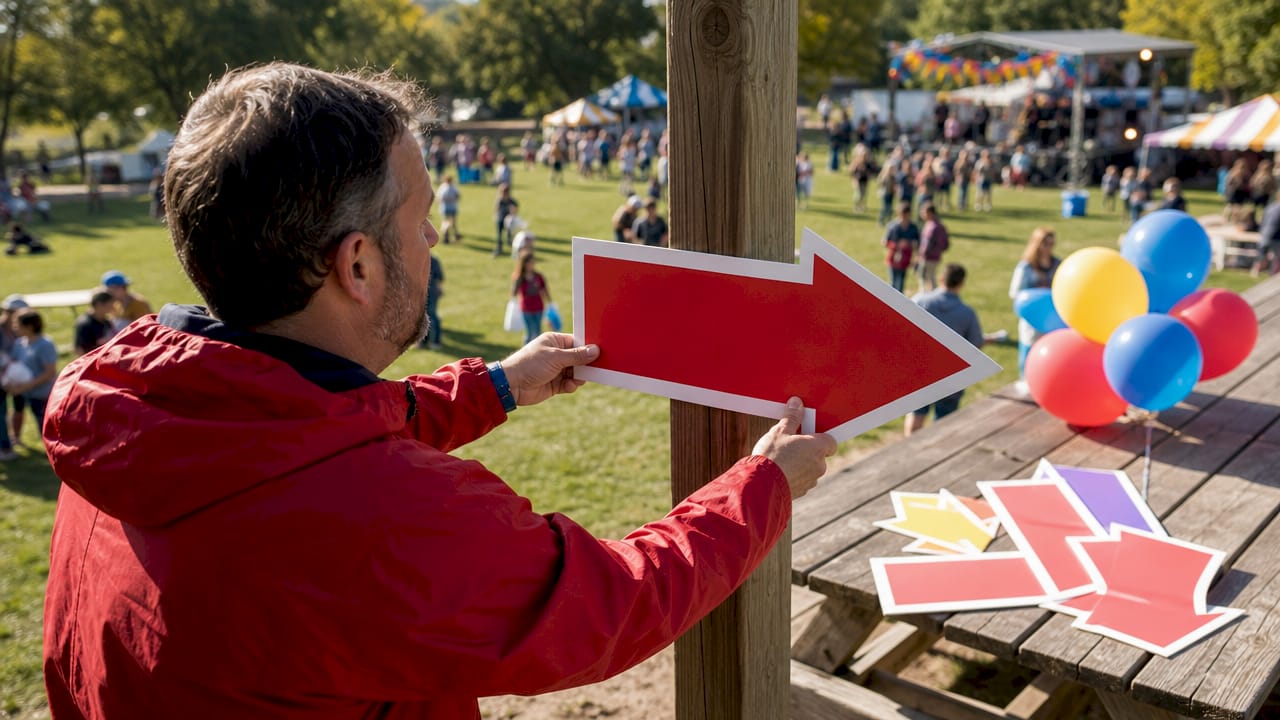
Directional arrow signs are the backbone of any outdoor event wayfinding system. They use bold arrows, icons, and short labels to point attendees toward parking, entrances, restrooms, stages, and exits. High-contrast arrows and icons reduce questions and maintain guest flow at large outdoor events. That means fewer staff interruptions and a smoother experience for everyone.
Yard signs
Yard signs are the most common temporary event directional signs used at outdoor events. They stake directly into the ground, require no hardware, and deploy in seconds. Yardsigns prints these on weatherproof corrugated plastic (coroplast) with vibrant, UV-stable inks that hold up through sun and rain. Double-sided printing lets you capture foot traffic from both directions with a single sign.
Pro Tip: Order yard signs with double-sided printing for intersections and path splits. One sign does the work of two.
A-frame signs
A-frame signs, also called sandwich boards, stand on their own without stakes or hardware. They work well on hard surfaces like parking lots, sidewalks, and pavement where you cannot drive a stake into the ground. Their folding design makes them easy to transport and reposition during setup. Place them at venue entrances and high-traffic bottlenecks for maximum impact.
Feather flags
Feather flags ranging from 8 to 15 feet tall catch attention from a distance and help guide foot traffic effectively outdoors. Their height makes them visible above crowds and parked vehicles. Use them to mark main entrances, stage areas, and vendor zones. They anchor with a ground stake or a weighted base on hard surfaces.
Banners
Vinyl banners span large distances and carry bold messaging across wide spaces. Hang them between poles, on fencing, or across building facades to mark zones from far away. They work especially well for naming sponsor areas, marking the main stage, or identifying general admission versus VIP sections. Grommeted edges and reinforced hems prevent tearing in wind.
Floor decals and pathway markers
Floor decals guide attendees along paved surfaces without taking up vertical space. They adhere to asphalt, concrete, and sealed pavement and peel off cleanly after the event. Use them in tight corridors, inside tents, or along pathways where vertical signs would create clutter. Pair them with vertical signs at decision points for a complete guidance system.
Retractable banner stands
Retractable banner stands work well at covered entry points, registration tables, and indoor-outdoor transition zones. They set up in under a minute and retract into a compact base for easy transport. Their polished appearance suits branded events, corporate gatherings, and fundraisers where aesthetics matter alongside function.
How to select the right materials for outdoor directional signs
Material choice determines whether your signs survive the event or fail halfway through. UV-stable, weather-resistant materials like aluminum, aluminum composite material (ACM), and coroplast prevent fading and structural failure under sun and wind. Each substrate suits different event types and budgets.
| Material | Best for | Key advantage | Limitation |
|---|---|---|---|
| Coroplast | Temporary events, yard signs | Lightweight, low cost, easy to stake | Not suited for permanent use |
| Aluminum | Multi-day or recurring events | Rigid, fully weatherproof, reusable | Heavier, higher cost |
| ACM (aluminum composite) | Premium events, branded signage | Flat, professional finish, durable | Requires framing or mounting |
| Vinyl banner | Spanning large areas | Flexible, large format, grommeted | Needs anchor points |
| Fabric flag | High-visibility vertical markers | Tall, eye-catching, wind-resistant | Requires weighted base or stake |
Legibility depends on letter size as much as material quality. Use at least 1 inch of letter height per 30 feet of viewing distance, and size up to a 6-inch minimum for signs in busy corridors. A sign that looks sharp at 5 feet but disappears at 50 feet fails its purpose entirely.
Pro Tip: Choose coroplast for single-day events and aluminum for events that repeat across multiple weekends. The cost difference pays for itself after the second use.
Weatherproofing is not optional for outdoor signage. Weather-resistant outdoor signage requires different material and placement choices than indoor signage to maintain impact and safety. UV-stable inks resist fading through a full day of direct sun. Reinforced edges and grommets prevent wind damage on banners and flags.
What are the best practices for placement and setup of outdoor directional signage?
Placement determines whether your wayfinding system works or frustrates attendees. Follow this setup sequence for reliable results.
-
Map decision points first. Walk the venue before setup and mark every spot where an attendee must choose a direction. These are your primary sign locations: parking lot exits, path forks, and venue entrances.
-
Place signs at eye level and angle toward traffic flow. Eye-level placement and orientation toward attendee flow increases visibility and legibility. A sign mounted too high or facing the wrong direction loses its audience.
-
Add confirmation signs after every major turn. Confirmation signs placed shortly after directional turns significantly reduce attendee confusion and questions to staff. A simple “You’re headed to the main stage” sign after a turn reassures guests and keeps them moving.
-
Limit message length to 6 words or fewer. Maximum 6 words per sign is the proven standard for outdoor directional messaging. Attendees read signs while walking. Long messages get ignored.
-
Audit every sign from 100 feet away before the event opens. Auditing visibility from 100 feet before event start catches legibility problems before guests arrive. Walk the full route as an attendee would and fix anything that is unclear.
-
Cover bottlenecks with double-sided signs. Narrow pathways and pinch points need signs visible from both directions. Double-sided printing on yard signs and A-frames handles this without doubling your sign count.
-
Secure all signs against wind. Stake yard signs at least 6 inches into the ground. Weight A-frame bases with sandbags in exposed areas. A sign that blows over during the event is worse than no sign at all.
Pro Tip: Label the back of every sign with its location during production. When teardown happens fast, labeled signs sort and pack in a fraction of the time.
What are additional types of event signs that support directional signage?
A complete outdoor event wayfinding system goes beyond arrows. Effective wayfinding integrates identification, informational, and directional signs into a consistent design language to enhance visitor experience. Each type fills a gap the others cannot.
Identification signs name specific locations so attendees know where they have arrived. Stage names, vendor zone labels, VIP area markers, and sponsor booth identifiers all fall into this category. For branded events, matching the identification sign design to your event branding and apparel creates a unified visual experience that reinforces your organization’s identity.
Informational signs carry content that helps attendees make decisions: event schedules, maps, rules of the venue, and emergency contact numbers. Post them at high-traffic gathering points like registration tables, food courts, and main entrances. Keep the layout clean and the type size large enough to read without stepping closer.
Regulatory signs communicate safety rules and legal requirements. These include:
- No smoking zone markers
- Emergency exit indicators
- Capacity limit notices
- Accessible route markers (ADA-compliant)
- Alcohol service boundary signs
Regulatory signs protect both attendees and event organizers. Skipping them creates liability exposure and confuses guests about what is permitted in each area.
A unified design across all four sign types, matching colors, fonts, and logo placement, signals professionalism and helps attendees recognize your signage instantly. Inconsistent design forces guests to read every sign carefully instead of scanning and moving on.
Key takeaways
A complete outdoor event wayfinding system requires all four sign types: Directional, Identification, Informational, and Regulatory, built from weather-resistant materials and placed at every decision point along the attendee route.
| Point | Details |
|---|---|
| Use all four sign types | Directional, Identification, Informational, and Regulatory signs each serve a distinct role. |
| Match material to event length | Use coroplast for single-day events and aluminum or ACM for multi-day or recurring events. |
| Follow the 6-word rule | Limit every directional sign to 6 words or fewer for fast, walking-pace readability. |
| Add confirmation signs after turns | Post a follow-up sign after each major turn to reassure attendees and reduce staff questions. |
| Audit from 100 feet before opening | Walk the full route at distance before guests arrive to catch any legibility or placement issues. |
What I’ve learned from watching signage fail at live events
After working with event organizers across dozens of outdoor setups, the most common failure is not a bad sign. It is a missing sign. Planners spend hours designing beautiful directional arrows and then forget to place a confirmation sign after the first major turn. Guests make the turn, see nothing, and immediately assume they went the wrong way. Staff spend the next hour answering the same question.
The second most common failure is oversized messaging. Organizers want to explain everything on one sign. The result is a paragraph that no one reads while walking. The 6-word rule feels restrictive until you see it work in practice. Short signs get read. Long signs get ignored.
The insider tip that changed how I approach teardown: label the underside of every sign during production with its location name. Labeling signs during production cuts teardown time dramatically, which matters when you are racing to clear a venue by midnight. It sounds trivial. It is not.
Aesthetics matter more than most planners admit. A sign that clashes with your event branding signals disorganization, even if the arrow points the right way. Match your sign colors and fonts to your event identity from the start, not as an afterthought.
— YardSignGuy
Outdoor directional signs for your next event
Planning a run, fundraiser, or community gathering? Yardsigns offers weatherproof outdoor event signs built for real conditions, printed with UV-stable inks and shipped fast.
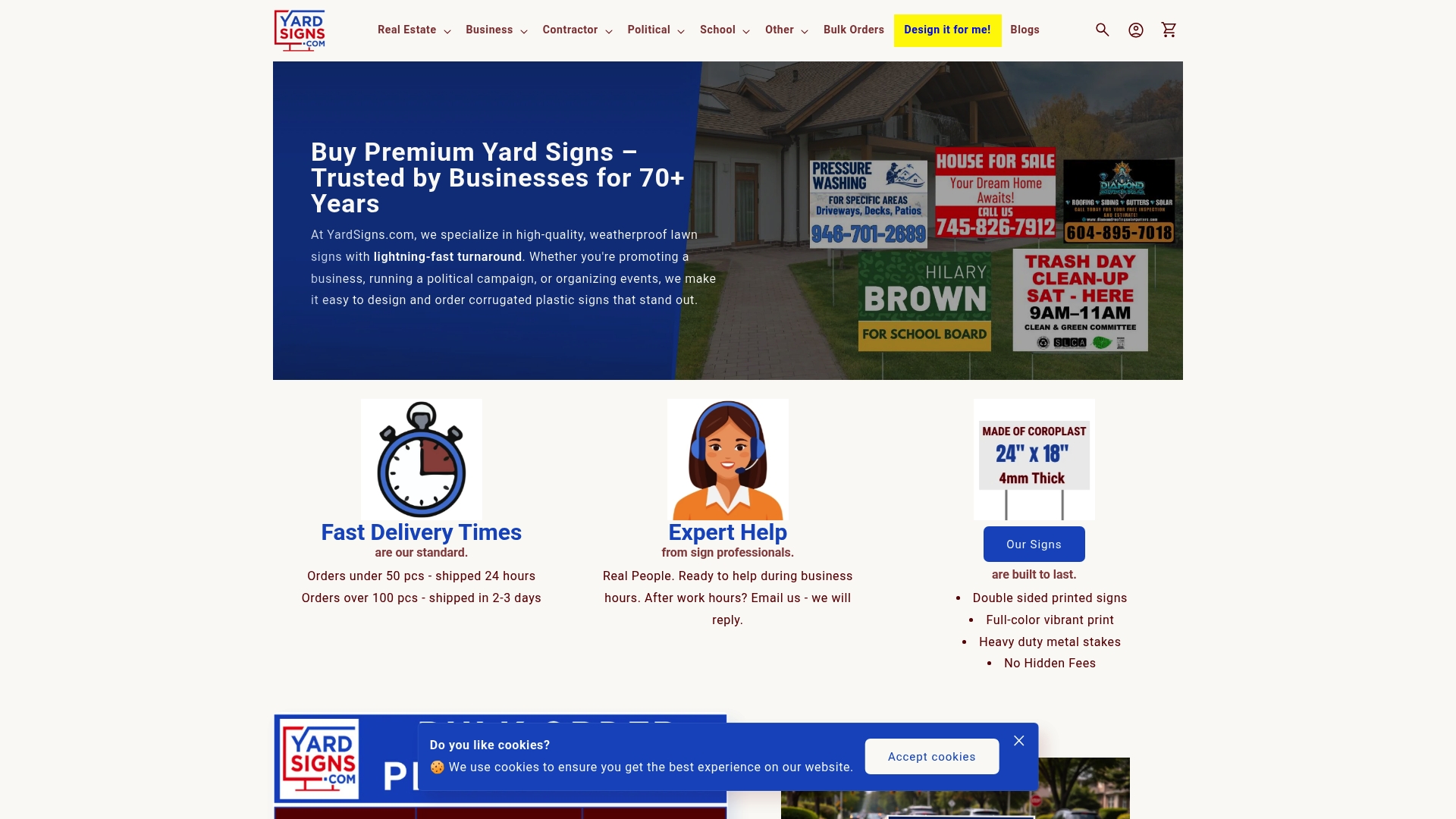
Orders under 50 pieces ship within 24 hours, so you can finalize your sign plan close to event day without stress. Yardsigns’ special event sign options cover everything from directional arrows to identification markers, all printed on durable substrates that hold up through wind and sun. For run and walk fundraising events, the run for a cause signage category offers ready-to-customize wayfinding and route marker designs. Use the online design tool to add your event name, arrows, and color scheme in minutes.
FAQ
What are the main types of outdoor event directional signs?
The main types are directional arrow signs, yard signs, A-frame signs, feather flags, vinyl banners, floor decals, and retractable banner stands. Each type suits different surfaces, distances, and event formats.
What material works best for temporary event directional signs?
Coroplast (corrugated plastic) is the best material for temporary outdoor event signs. It is lightweight, weather-resistant, easy to stake, and cost-effective for single-day or short-run events.
How many words should an outdoor directional sign have?
Outdoor directional signs should carry 6 words or fewer. Attendees read signs while walking, so short messages communicate faster and more reliably than detailed ones.
Where should directional signs be placed at outdoor events?
Place signs at every decision point: parking lot exits, path forks, and venue entrances. Add confirmation signs after major turns and audit all placements from 100 feet away before the event opens.
What is a confirmation sign and why does it matter?
A confirmation sign is a follow-up sign placed shortly after a major directional turn. It reassures attendees they are on the correct path and significantly reduces questions directed at event staff.
