


Types of Outdoor Promotional Signage: 2026 Guide
Outdoor promotional signage is defined as any physical advertising display placed outside a business location, event venue, or public space to attract attention and drive engagement. The most effective options include A-frame signs, monument signs, pylon signs, digital LED displays, blade signs, vinyl banners, and yard signs. Each format serves a distinct purpose, and choosing the right one depends on your location, audience, and campaign goals. Yardsigns offers weatherproof, fast-turnaround options that work across all of these categories.
What are the most effective types of outdoor promotional signage?
The range of outdoor advertising formats available in 2026 is broader than most marketers realize. A-frame signs boost foot traffic by 8–43% and increase inquiries by up to 48%. That single stat explains why coffee shops, salons, and boutique retailers keep one on the sidewalk every day. Blade signs mounted perpendicular to storefronts improve visibility by 35% compared to flat-mounted alternatives. Illuminated channel letters and backlit pylon signs deliver a 35% boost in brand recognition, making them the standard choice for high-traffic corridors.
Pro Tip: Choose roadside signage like pylon or monument signs for vehicle traffic, and pedestrian-focused formats like A-frames or blade signs for walkable retail districts. Matching the sign type to your audience’s movement pattern is the single biggest factor in sign effectiveness.
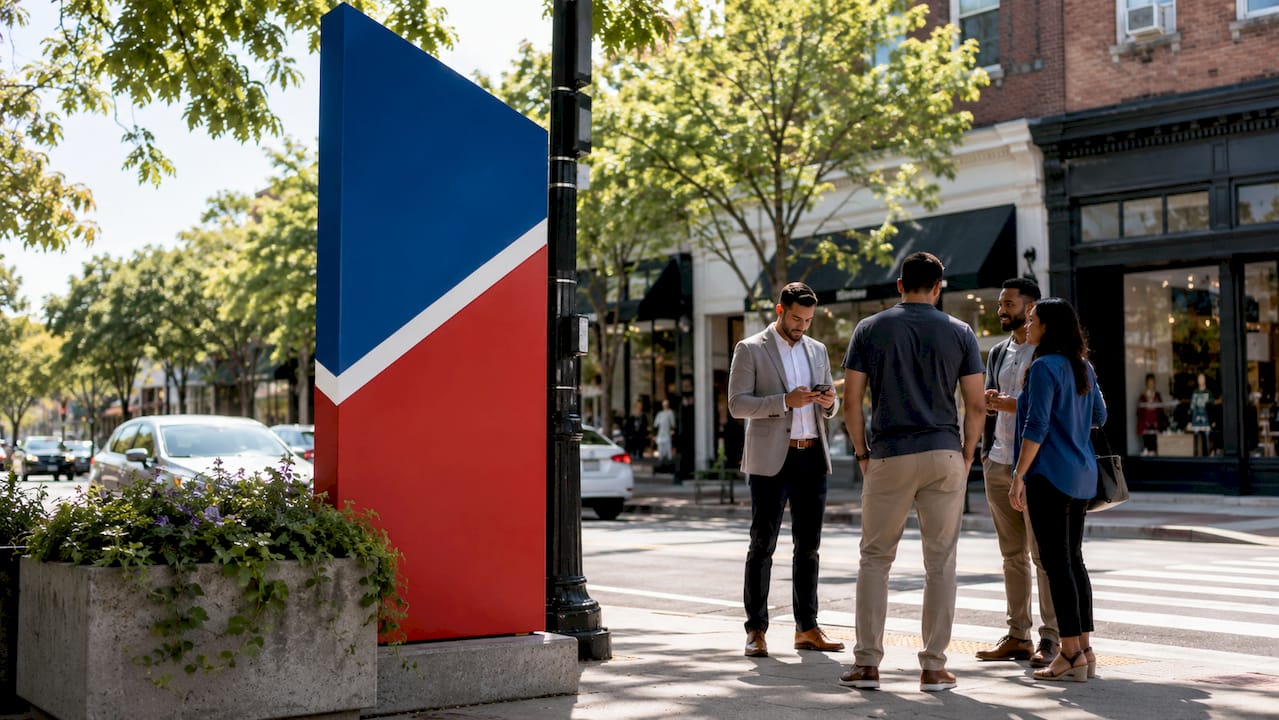
1. a-frame signs
A-frame signs, also called sandwich boards, are freestanding double-sided displays placed directly on sidewalks or entrances. They work because they intercept foot traffic at eye level, right at the moment a passerby decides whether to enter. Restaurants use them for daily specials, retailers use them for sales, and event organizers use them to direct crowds. They are lightweight, portable, and require no installation permits in most municipalities.
The format also supports quick seasonal message swaps, which keeps promotions current without reprinting the entire sign. Chalkboard inserts and snap-open frames make updates a matter of minutes.
2. monument signs
Monument signs are low-profile, ground-mounted structures built at commercial property entrances. They provide an architectural presence that taller pole signs cannot match. Monument signs are preferred at office parks, medical campuses, shopping centers, and upscale retail locations where a permanent, professional identity matters. They are typically constructed from brick, stone veneer, aluminum, or high-density urethane foam with a painted finish.
The low height keeps them within local zoning limits while still commanding attention from drivers approaching an entrance. Many property owners add illuminated lettering to extend visibility into evening hours.
3. pylon signs
Pylon signs are tall, freestanding structures mounted on one or two poles, designed to be visible from a distance. They are the standard format for highway-adjacent businesses, gas stations, fast food chains, and strip mall anchor tenants. Their height gives them a clear sightline advantage over surrounding structures and landscaping.
Double-sided pylon signs capture traffic from both directions on a road. Many modern pylon installations include a digital LED panel at the top for rotating messages, combining the permanence of a structure with the flexibility of digital content.
4. digital LED message boards
Digital LED displays are programmable outdoor signs that cycle through text, graphics, and animations. Advanced LED outdoor displays feature automatic heat dissipation modules that reduce energy consumption by roughly 30%. That efficiency matters for businesses running signs 16 or more hours per day. United Signs’ XT-Pro series is one example of a commercial-grade LED display built specifically for direct sunlight environments.
The core advantage of digital signage is speed. You can update a promotion, announce an event, or change pricing without printing or installing anything new. Car dealerships, banks, and churches rely on these boards for exactly that reason.
5. blade signs
Blade signs project perpendicularly from a building facade, making them readable from both directions along a sidewalk. They are the dominant format in dense urban retail corridors, historic downtown districts, and shopping malls. A well-designed blade sign is visible from 50 feet or more in either direction, which flat-mounted signs simply cannot achieve.
Most blade signs use aluminum frames with printed or routed inserts. Illuminated versions with LED backlighting extend visibility after dark. If your business is in a pedestrian-heavy area and you are not using a blade sign, you are leaving visibility on the table.
6. vinyl banners
Vinyl banners are the most versatile format in temporary outdoor marketing. Standard outdoor vinyl banners are made from 13 oz scrim-reinforced PVC and last 6–12 months under normal outdoor conditions. CustomInk and similar suppliers produce these in custom sizes, making them practical for grand openings, seasonal sales, trade shows, and event perimeters.
Banners attach to fences, building facades, tent poles, or banner stands. They are cost-effective for short campaigns and easy to store and reuse. The main limitation is that they require a mounting surface or stand, which adds a small setup step compared to freestanding formats.
7. yard signs
Yard signs are the go-to format for temporary outdoor campaigns with a wide geographic spread. Yard signs made from 4mm corrugated polypropylene last 6–12 months and balance rigidity with a lightweight design that handles wind without warping. Political campaigns, real estate agents, contractors, and event organizers use them because they are fast to deploy and easy to move.
Yardsigns ships orders under 50 pieces within 24 hours, which means you can respond to a last-minute event or promotion without missing the window. For budget-conscious campaigns that need geographic coverage, yard signs deliver the lowest cost per impression of any physical format.
8. feather flags and swooper flags
Feather flags are tall, narrow flags mounted on flexible fiberglass poles. Their constant movement in the wind draws the eye from a distance, making them effective at car lots, outdoor retail locations, and event entrances. They are available in single-sided and double-sided versions, with double-sided flags providing better readability from multiple angles. Read more about single vs. double-sided sign options before ordering.
Setup takes under two minutes, and most flags use a ground spike, weighted base, or cross base depending on the surface. They are among the most affordable custom outdoor displays available for high-visibility applications.
9. window graphics
Window graphics turn storefront glass into advertising space. Perforated vinyl allows one-way visibility so customers can see out while passersby see a full-color graphic from the street. Solid vinyl decals work for hours, promotions, and branding elements. Both formats apply without permanent adhesive and remove cleanly.
For retailers with significant street-facing glass, window graphics are one of the highest-ROI outdoor signage options available. They use space that would otherwise go unused and require no permits or installation hardware.
How materials and styles affect signage performance
Material choice determines how long a sign lasts, how much it costs to maintain, and how easy it is to update. Corrugated polypropylene is the standard substrate for yard signs because its internal fluted structure provides rigidity without adding weight. Scrim-reinforced PVC handles the tension and UV exposure that vinyl banners face outdoors. Powder-coated aluminum is the preferred material for channel letters and permanent cabinet signs because it resists rust and holds color under direct sunlight.
Magnetic letters or tiles on modular sign boards reduce long-term operational costs by allowing quick message updates without full replacements. This approach is common in restaurant menu boards and retail promotional displays. The table below summarizes the most common outdoor signage materials by key performance factors.
| Material | Durability | Typical Lifespan | Best Use | Maintenance |
|---|---|---|---|---|
| Corrugated polypropylene | Moderate | 6–12 months | Yard signs, temporary displays | Low |
| Scrim-reinforced PVC | Moderate to high | 6–12 months | Vinyl banners, event signage | Low |
| Powder-coated aluminum | High | 5+ years | Channel letters, cabinet signs | Low |
| Magnetic tiles | Moderate | Varies by use | Modular message boards | Very low |
| LED display panels | High | 5–10 years | Digital message boards | Moderate |
Pro Tip: If you update your messaging more than four times per year, invest in a modular or digital format. The cost of reprinting static signs adds up fast, and weatherproof signage for seasonal sales pays for itself within a few cycles.
Choosing the right sign for your location and business type
Selecting signage based on environment rather than aesthetics consistently produces better results and stronger ROI. A visually impressive sign placed in the wrong location reaches the wrong audience. The table below matches common business scenarios to the most effective sign formats.
| Business Scenario | Recommended Sign Type | Key Reason |
|---|---|---|
| Highway-adjacent retail | Pylon sign | Maximum visibility from distance |
| Downtown pedestrian retail | Blade sign or A-frame | Sidewalk-level engagement |
| Commercial campus entrance | Monument sign | Architectural presence |
| Outdoor event or festival | Vinyl banners, feather flags | Fast setup, portable |
| Temporary promotion or campaign | Yard signs, A-frames | Low cost, quick deployment |
| 24-hour or high-traffic location | Digital LED display | Dynamic content, night visibility |
Outdoor sign placement for retail stores is a discipline in itself. Visibility distance, viewing angle, and competing visual clutter all affect whether a sign gets noticed. Roadside signs need to communicate in under three seconds at 45 mph. Pedestrian signs can carry more detail because viewers have time to read.
Pro Tip: Double-sided signs are worth the extra cost in any location where traffic approaches from two directions. A single-sided sign in a two-way traffic zone loses half its potential impressions.
Emerging and customizable outdoor signage options for 2026
The most notable shift in outdoor signage in 2026 is the move toward formats that combine physical presence with digital flexibility. Here are the formats gaining the most traction:
- Digital LED message boards with dynamic content: Update promotions, hours, or event details remotely without touching the sign. United Signs’ XT-Pro series handles direct sunlight and temperature extremes that standard commercial displays cannot.
- Modular magnetic sign systems: Swap letters, numbers, or graphic tiles in seconds. These are popular with restaurants, schools, and churches that change messaging weekly.
- Customizable A-frame inserts: Snap-open frames accept printed inserts that change in under a minute, making them practical for daily specials or rotating promotions.
- Feather flags with full-bleed printing: Modern dye-sublimation printing produces vibrant, weather-resistant color on fabric flags that hold up through multiple seasons.
- Augmented reality-enabled signage: QR codes embedded in physical signs link to AR experiences, product demos, or digital coupons. This format is growing in retail and event marketing.
- Interactive chalkboard and whiteboard signs: Low-tech but highly engaging, these formats invite passerby participation and generate social media sharing organically.
- Eco-friendly substrates: Recycled corrugated materials and water-based inks are becoming standard requests from brands with sustainability commitments.
The common thread across all of these formats is flexibility. The best outdoor signage in 2026 is not just durable. It is updatable.
Key takeaways
The most effective outdoor promotional signage matches the sign format to the location, audience movement pattern, and update frequency of the campaign.
| Point | Details |
|---|---|
| Match sign type to location | Pylon signs serve highways; A-frames and blade signs serve pedestrian zones. |
| Material determines lifespan | Corrugated polypropylene and scrim PVC last 6–12 months; aluminum lasts 5+ years. |
| Modular formats cut costs | Magnetic tiles and snap-frame inserts eliminate reprinting costs for frequent updates. |
| Digital LED adds flexibility | LED displays reduce energy use by roughly 30% and allow remote content updates. |
| Yard signs deliver fast ROI | Lightweight, weatherproof, and shippable within 24 hours for time-sensitive campaigns. |
What i’ve learned after years of watching signs win and lose
Most businesses get outdoor signage wrong in the same way. They choose a format because it looks good in a catalog, not because it fits the location. A beautiful monument sign at a pedestrian-heavy storefront misses the audience entirely. A yard sign on a highway gets ignored at 55 mph. The format has to match the context, or the investment is wasted.
The second mistake I see constantly is treating signage as a one-time purchase. Markets change, promotions rotate, and seasons shift. A sign that cannot be updated becomes stale within months. The businesses that get the most from their signage budget are the ones that build in flexibility from the start. That means modular inserts, digital displays, or at minimum a format like vinyl banners that can be reprinted affordably.
The third mistake is underestimating the compounding value of outdoor signs over digital ads. A physical sign works 24 hours a day with no ongoing ad spend. A yard sign placed in a high-traffic neighborhood generates impressions every single day until it is removed. The cost per impression on a well-placed physical sign is lower than almost any digital channel over a 90-day window.
My honest recommendation: start with the location, not the sign. Walk the space, observe how people move through it, and identify where eyes naturally land. Then choose the format that intercepts that attention most efficiently. Add durability appropriate to your climate, and build in a way to update the message at least seasonally. That combination outperforms any single sign type every time.
— YardSignGuy
Get your outdoor signage ready fast with Yardsigns
Yardsigns offers a full range of weatherproof outdoor signs built for businesses, event planners, and marketers who need results quickly. Orders under 50 pieces ship within 24 hours, so you never miss a promotion window because of production delays.
From event congratulations signs to charity fundraising event signs, Yardsigns covers the full spectrum of outdoor promotional needs. Every sign uses premium materials and vibrant printing that holds up through rain, heat, and wind. The design process is straightforward, and the turnaround is built for real deadlines. Visit Yardsigns to browse ready-to-order designs or start a custom order today.
FAQ
What are the most common types of outdoor promotional signage?
The most common types are A-frame signs, vinyl banners, yard signs, pylon signs, monument signs, blade signs, and digital LED displays. Each serves a different visibility distance and audience type.
How long do outdoor signs typically last?
Yard signs and vinyl banners made from corrugated polypropylene or scrim-reinforced PVC last 6–12 months. Permanent aluminum and LED signs last 5–10 years with minimal maintenance.
Which outdoor sign type works best for events?
Vinyl banners, feather flags, and A-frame signs are the top choices for events because they set up quickly, require no permanent installation, and are easy to transport and reuse.
How do i choose between a single-sided and double-sided sign?
Double-sided signs are the better choice in any location where foot or vehicle traffic approaches from two directions. Single-sided signs work when the audience only views from one angle.
Are yard signs effective for business promotions?
Yes. Yard signs made from 4mm corrugated polypropylene are lightweight, weather-resistant, and cost-effective for temporary campaigns. They deliver a low cost per impression over a 6–12 month lifespan.
