


Wraps or Rigid Yard Signs? UV vs Eco Solvent Printing
For vehicle wraps, choose eco-solvent for its stretch and conformability. For yard signs, outdoor banners, and rigid displays like coroplast or acrylic, UV printing wins on direct-to-substrate strength and finish options. Eco-solvent costs less to start with, while UV cures instantly and handles more material types, including metal and wood, straight off the press.
TL;DR:
- UV printing adds white ink and varnish on acrylic, metal, or wood, but standard inks may crack on flexible films unless formulated to stretch.
- Eco solvent systems usually cost less to buy, while UV flatbeds require more upfront investment but cure instantly and avoid drying delays.
- Some polypropylene may not bond well with eco solvent ink, so request a material specific proof before approving a large production run.
- Roland DG says compatible eco solvent prints can last several years outdoors without lamination, while some UV inks are rated for about two years.
- Lamination adds protection from sunlight, abrasion, and chemicals, and is especially useful for vehicle graphics, heavily handled banners, and signs in prolonged direct sunlight.
Table of Contents
- At-a-Glance Comparison of UV and Eco-Solvent Printing
- How Each Technology Works and Why That Matters
- Substrate Compatibility: What Each Method Prints Reliably
- Outdoor Lifespan and When to Laminate
- Upfront and Running Costs Plus Workflow Impacts
- How Color, White Ink, and Varnish Compare
- Safety, Ventilation, and Environmental Considerations
- Pick by Application: Vehicle Wraps, Banners, Yard Signs, Retail POP, and Specialty Items
- Why We Favor UV Printing for Yard Signs
- Order Durable Yard Signs from YardSigns.com
- FAQ
- Sources
- Manufacturer and Authoritative Pages That Back the Claims
At-a-Glance Comparison of UV and Eco-Solvent Printing
UV printing cures ink instantly using LED or UV light, bonding it to the surface of the material. Eco-solvent printing uses solvent-based ink that partially absorbs into the media, then air-dries over time.
- Material compatibility: eco-solvent favors flexible vinyl and banner material; UV handles rigid substrates like acrylic, wood, and metal plus many flexible films.
- Outdoor durability: eco-solvent inks can last several years without lamination on compatible media, according to Roland DG; some UV inks can last for a couple of years outdoors without added gloss, per Roland DG’s ECO-UV page.
- Cost: eco-solvent systems typically cost less to adopt; UV flatbeds carry higher upfront investment, per Mutoh.
- Curing and drying: UV cures instantly; eco-solvent requires an outgassing period before finishing.
- Finish options: UV supports white ink, varnish, and texture layers; eco-solvent reflects the gloss or matte quality of the media itself.
- Ventilation: both require checking ink safety data sheets, though neither demands heavy-duty exhaust systems in most modern shops.
If your job involves stretching material around curves, lean eco-solvent. If it involves printing directly on something rigid, lean UV.
How Each Technology Works and Why That Matters
Eco-solvent ink relies on a solvent carrier that partially penetrates the media it’s printed on. Once printed, the piece needs time to outgas, meaning the solvent evaporates before the print is fully stable and ready for lamination or finishing. That penetration is also what gives eco-solvent prints their flexibility: the ink becomes part of the material’s surface layer rather than sitting entirely on top of it.
UV ink works differently. It cures almost instantly when exposed to UV or LED light, forming a hardened layer on the surface rather than soaking in. Because the ink sits on top, UV printers can build up multiple layers, including white ink for opacity and varnish for texture or gloss effects. This surface-curing process is also what makes direct printing on rigid materials practical since there’s no need for the ink to absorb into something like acrylic or metal.

Substrate Compatibility: What Each Method Prints Reliably
Flexible media like solvent-rated vinyl, banner vinyl, and adhesive vinyl are eco-solvent’s home turf. These materials stretch and conform to curves, which matters for vehicle wraps and anything that needs to wrap around edges. UV can print on specialty flexible films too, but it needs ink formulated for stretch, since standard UV ink can crack when flexed.
Rigid substrates like coroplast, PVC, acrylic, metal, and wood are where UV typically takes over. Printing directly onto these surfaces skips the need for adhesive-backed vinyl altogether.
- Some polypropylene materials don’t bond well with eco-solvent ink and need testing before a production run.
- Request a material-specific proof before committing to a large order. A quick test saves you from reprinting an entire batch.
Checking our weather resistant sign material guide before ordering helps match substrate to expected use.
Outdoor Lifespan and When to Laminate
Manufacturer claims give you a starting point, not a guarantee. Eco-solvent inks are rated for multiple years outdoors without lamination on compatible media, according to Roland DG, while some UV inks are noted to last about two years outdoors when a gloss or varnish layer is applied, per Roland DG. Newer UV formulations, like those detailed by Mutoh, extend that window and add stretch for some flexible uses.
Lamination adds a protective layer against UV rays, abrasion, and chemical exposure, and it becomes important for vehicle graphics, high-handling banners, or anything facing years of direct sun, as discussed in will canvas art fade over time. Without it, UV exposure and physical wear shorten the usable life of either technology. For signs facing long seasons outside, a weather-effects breakdown shows how climate factors into that lifespan.
Upfront and Running Costs Plus Workflow Impacts
Eco-solvent systems generally cost less to set up, making them a common entry point for shops starting out, according to Mutoh. UV flatbeds ask for more capital upfront, but instant curing eliminates drying time, which speeds up turnaround on busy production days.
Running costs look different too. Eco-solvent jobs need time for outgassing before lamination or cutting, which can slow a tight schedule. UV jobs skip that wait, though ink, maintenance, and energy use still factor into the ongoing cost of either setup. Shop layout matters as well: eco-solvent printing calls for ventilation and a finishing area, while UV setups need space for dust control and properly configured curing lamps.

How Color, White Ink, and Varnish Compare
UV printing brings real advantages for special effects. White ink adds opacity on dark or clear materials, varnish creates spot-gloss or texture, and layering builds a tactile, premium feel, according to Roland DG. Color also stays consistent across different substrate types since the ink cures on the surface rather than reacting with the media underneath.
Eco-solvent prints take on the gloss or matte quality of the material itself, which gives color density a natural look on solvent-rated films. For retail displays or premium signage where texture and opacity carry the design, UV’s layering options tend to stand out more.
Safety, Ventilation, and Environmental Considerations
Many modern eco-solvent formulas run lower odor than older versions, but they still contain volatile components worth checking against the manufacturer’s safety data sheet before setting up a shop, according to InkProducts. UV systems typically produce less odor, though they need proper dust control and a correctly configured curing setup to avoid uneven cure or stray emissions.
Before choosing equipment, review the ink’s SDS and your local building and fire codes. Ventilation requirements vary by shop size and local regulation, so this step matters regardless of which technology you pick.
Pick by Application: Vehicle Wraps, Banners, Yard Signs, Retail POP, and Specialty Items
- Vehicle wraps: eco-solvent is generally the better match for stretch and conformability around curves and panels; UV with specialty stretch film is an option when a shop is already UV-equipped.
- Outdoor banners and stickers: eco-solvent handles flexible durability well, and lamination helps when the piece will see heavy handling or long-term outdoor exposure.
- Direct-to-rigid signage and specialty merch: UV printing is the practical choice here, since it prints straight onto materials like acrylic, metal, or wood and supports white ink and varnish effects that flexible substrates can’t offer.
- Yard signs: a durable substrate paired with UV-resistant ink and the right finish covers most outdoor sign needs. This is the mix we rely on for yard signs: a weatherproof base material combined with UV printing matched to the substrate to resist cracking and fading through a full season outdoors. Whether a sign actually holds up outside depends on more than ink, too, which our waterproofing breakdown covers in detail.
Why We Favor UV Printing for Yard Signs
Our priorities for yard signs come down to three things: fast turnaround, durable materials, and vibrant printing that holds up outdoors. We print with UV-resistant inks chosen specifically to resist the cracking that shows up months into a sign’s life outdoors. Matching ink to substrate isn’t a detail we skip. It’s the difference between a sign that fades by midsummer and one that still looks sharp at the end of a campaign.
— YardSignGuy
Order Durable Yard Signs from YardSigns.com
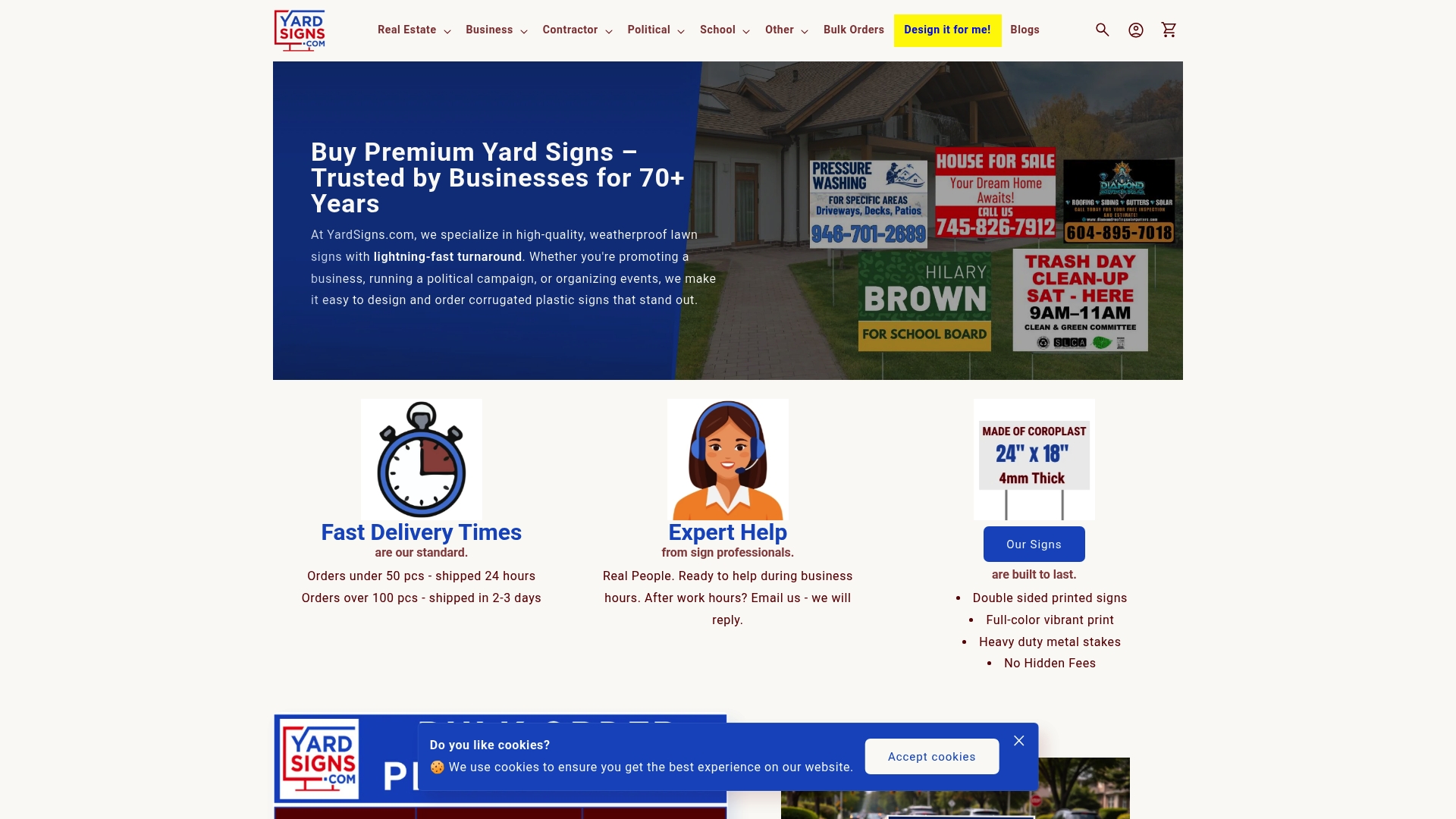
Once you’ve landed on UV printing and a weatherproof substrate for your yard signs, the next step is placing the order. We offer custom yard signs built with UV-resistant inks, double-sided printing, and metal H-stakes included, with free design proofs and unlimited revisions before anything prints. Orders under 50 pieces ship within 24 hours, and bulk yard signs come with volume discounts for campaigns, events, or multi-location rollouts. Start your order today and get a proof in hand before you commit to a print run.
FAQ
What are the key differences between eco-solvent ink and pigment ink?
Eco-solvent ink uses a solvent carrier that partially absorbs into the print media, giving it flexibility and strong adhesion on vinyl and banner materials. Pigment ink, by contrast, relies on a water-based carrier and sits closer to the surface, which generally makes it better suited for indoor or controlled-environment printing rather than long-term outdoor exposure.
Is UV printing long lasting?
UV printing holds up well outdoors, with some UV inks rated for up to two years without added gloss or lamination, according to Roland DG. Adding a varnish layer or choosing newer stretch-formulated UV inks, as noted by Mutoh, can extend that lifespan further.
What are the disadvantages of ecotank printers?
Standard desktop ecotank printers aren’t built for outdoor signage. They use water-based ink meant for paper, which fades and smears quickly when exposed to rain, sun, or humidity, unlike commercial eco-solvent or UV systems designed specifically for outdoor durability.
What are eco-solvent printers?
Eco-solvent printers use solvent-based ink that partially bonds into flexible media like vinyl and banner material, producing durable, stretchable prints suited to wraps and outdoor banners. They’re a common choice for shops that need strong adhesion on flexible substrates without the higher equipment cost of a UV system, according to Mutoh.
What’s the main tradeoff between UV and eco-solvent for outdoor signage?
Eco-solvent tends to cost less upfront and flexes well on vinyl, while UV cures instantly and prints directly onto rigid materials with options like white ink and varnish. The right choice depends mostly on whether your job needs stretch or a hard, direct-printed surface.
Sources
- Eco-Solvent vs UV Printing
- SureColor V7000 10-Color 4’ x 8’ UV Flatbed Printer | Products | Epson US
- MUTOH: PJUVG5 UV ink for the PJ-2508UF flatbed printer features increased stretchability and up to two years outdoor durability
Manufacturer and Authoritative Pages That Back the Claims
- ECO-SOL MAX | Roland DG
- ECO-UV Ink Features | Roland DG
- Eco-Solvent vs UV Printing | Mutoh
- SureColor V7000 UV Flatbed Printer | Epson
- PJUVG5 UV Ink Durability | Mutoh
- What Is Eco-Solvent Ink? | InkProducts
