


Why Small Businesses Use Lawn Signs to Win Locally
Lawn signs, known in the signage industry as yard signs or corrugated plastic signs, are one of the most cost-effective local advertising tools available to small businesses. A single strategically placed sign generates 3–5 qualified leads over its lifetime, at a material cost of just $2–$10 per unit when ordered in volume. That math is hard to argue with. Understanding why small businesses use lawn signs comes down to three factors: low cost, high local visibility, and the kind of neighborhood trust that no digital ad can replicate. Yardsigns has seen this play out across thousands of orders from contractors, retailers, and service businesses who want results without a large ad budget.
Why small businesses use lawn signs for local visibility
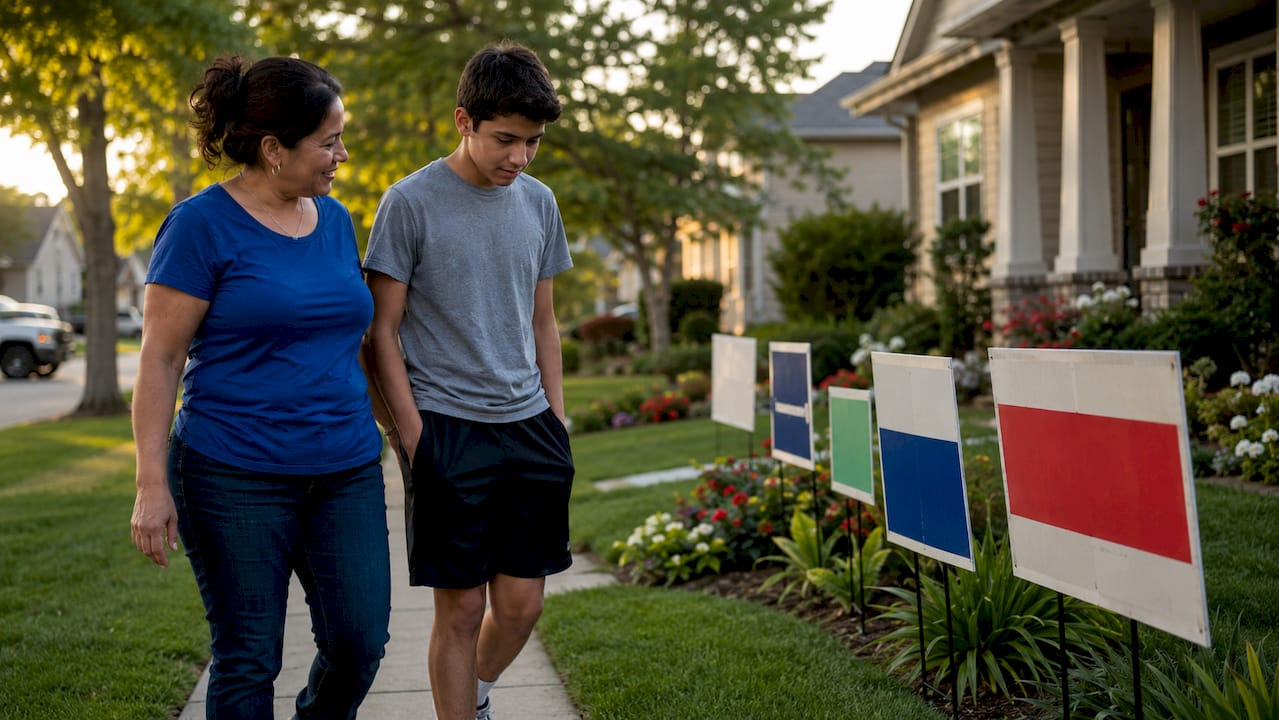
Lawn signs work because they meet your neighbors where they already are. Every time a resident walks the dog, pulls out of the driveway, or parks on the street, they see your sign. Repeated exposure in familiar contexts builds subconscious brand recall in a way that a scrolled-past social media post simply cannot.
The psychological mechanism here is called neighborhood proof. According to Brand Vision, a dense cluster of signs shifts a message from advertising to community consensus. That shift matters because it lowers the customer’s hesitation before calling. When three houses on your street already have the same landscaping company’s sign in the yard, you assume that company is trustworthy before you even look them up.
Lawn signs also avoid the interruption problem that plagues digital ads. A Facebook ad interrupts what you were doing. A yard sign is simply part of the street. It earns attention rather than demanding it, which means the impression is more positive from the start.
The benefits of lawn signs extend beyond individual impressions. A well-placed sign near a completed job becomes a standing referral. Neighbors who saw the crew work, and then see the sign, connect quality work to a specific business name. That connection is far more persuasive than any ad copy.
Pro Tip: Place signs in clusters of three or more within the same block whenever possible. Saturation within a small geographic area creates the neighborhood proof effect much faster than spreading signs thinly across a wide territory.
Key advantages of lawn signs for local brand visibility include:
- Continuous exposure during residents’ daily routines without recurring media costs
- Physical presence that signals active local business operations
- Community trust signals that reduce customer hesitation before contact
- No algorithm changes or platform fees affecting your reach
What lawn sign marketing strategies actually work?
Effective lawn sign marketing strategies are built on placement, permission, and tracking. Without all three, you are spending money without measuring results.
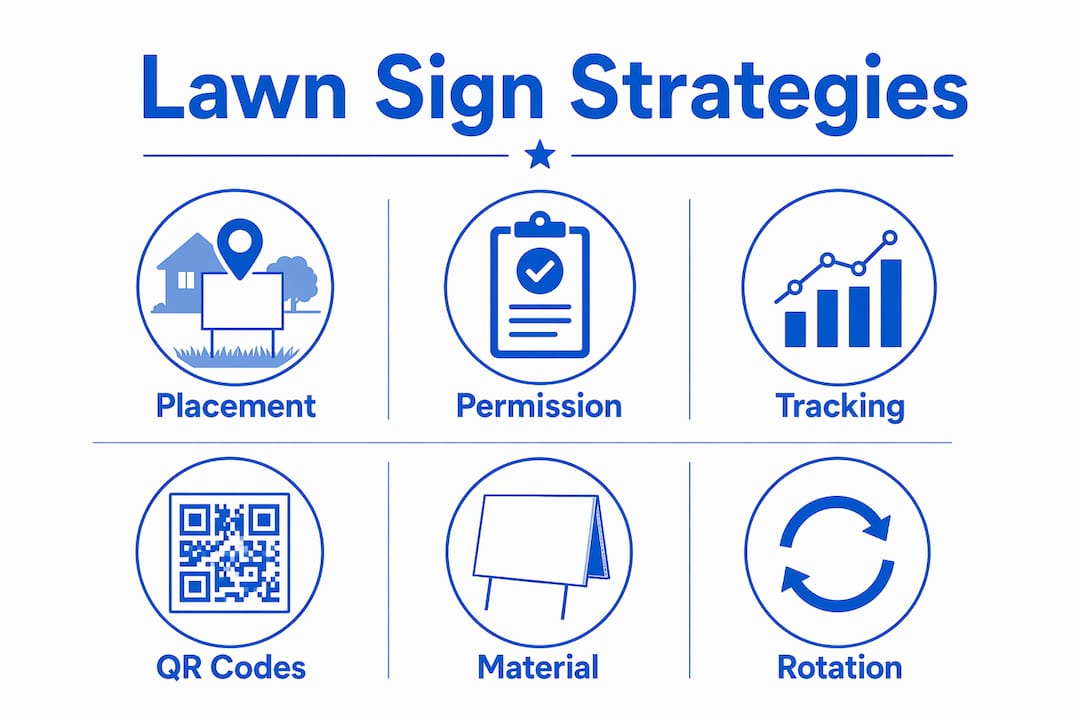
1. Place signs within 500 feet of completed jobs. Signs near recent job sites improve lead conversion by four times compared to cold placements. The reason is simple: neighbors already saw your crew, your truck, and your work. The sign connects that visible proof to your business name and phone number.
2. Secure placement permission through a formal process. The most successful contractors incentivize customers with a $25–$50 service credit in exchange for sign placement, formalized at contract signing. This turns permission into a standard part of your workflow rather than an awkward afterthought.
3. Use unique tracking phone numbers on every sign. Tracking numbers cost $2–$5 per month and let you log exactly how many calls each sign location generates. Without this, you cannot know which placements are working and which are wasted.
4. Add a QR code for digital engagement. QR codes on yard signs now achieve scan rates of 8–12%, up from 2% before 2020. Scan-to-call conversion rates from those QR codes range between 30–60%. That is a meaningful secondary channel from a single printed sign.
5. Choose the right material for your timeline. Standard 18x24 inch corrugated plastic (coroplast) signs are the industry default for short-term campaigns. Aluminum signs, priced at $30–$45 each, make sense for permanent or semi-permanent placements where durability matters more than cost per unit.
6. Rotate your signs regularly. A faded or damaged sign signals neglect, not professionalism. Set a calendar reminder to inspect and replace signs every 60–90 days.
Pro Tip: Print a different phone number on signs placed in different neighborhoods. This costs almost nothing extra at print time and gives you clean data on which areas generate the most calls, letting you concentrate future placements where they perform best.
How do lawn signs compare to other local advertising methods?
The cost efficiency of lawn signs is their defining advantage over most local advertising channels. At $3–$8 each in bulk, a coroplast sign generates hundreds to thousands of impressions over its usable life. No other format delivers that cost-per-impression ratio at this price point.
| Advertising method | Typical cost | Estimated impressions | Cost per impression |
|---|---|---|---|
| Corrugated plastic yard sign | $3–$8 per sign | Hundreds to thousands | Fractions of a cent |
| Premium aluminum yard sign | $30–$45 per sign | Thousands (multi-year) | Very low |
| Local newspaper print ad | $200–$800 per insertion | Varies by circulation | Moderate |
| Facebook/Instagram local ad | $5–$50 per day | Varies by targeting | Low to moderate |
| Direct mail postcard | $0.30–$1.00 per piece | One impression per piece | Moderate |
The table above shows that lawn signs compete well on cost per impression, but their real advantage is persistence. A digital ad stops the moment you stop paying. A yard sign keeps working for weeks or months after you place it.
That said, lawn signs are not a replacement for digital marketing. They are most effective when combined with other local channels. Integrating lawn signs with direct mail and social media creates a synergistic effect, maximizing neighborhood coverage and resulting leads. A homeowner who receives a postcard, then sees your sign two doors down, is far more likely to call than someone who encountered only one touchpoint.
The impact of lawn signs on sales is real but gradual. Treat them as a brand-building tool with a 6–18 month compounding effect, not a direct-response channel that produces calls the same week you plant them.
Common pitfalls that kill lawn sign ROI
Most small businesses that report poor results from yard signs made the same avoidable mistakes. Failing to track leads, secure placement permission, or maintain signs regularly are the three most common errors, and each one is fixable with a simple system.
Watch out for these specific mistakes:
- No tracking system. Placing signs without unique phone numbers or QR codes means you cannot measure performance. You end up guessing whether signs are working rather than knowing.
- Random placement. Signs placed far from your service area or recent jobs generate far fewer leads. Placement near completed work is the single biggest driver of conversion.
- Ignoring sign condition. A sun-bleached or bent sign reflects poorly on your business. Inspect your signs monthly and replace any that show visible wear.
- Skipping permission. Signs placed without homeowner consent get removed quickly and can create negative impressions in the neighborhood you are trying to win.
- Treating signs as a standalone channel. Lawn signs work best as part of a broader local marketing effort. Pair them with outdoor sign placement strategies and social media posts that show your completed work in the same neighborhoods.
The businesses that get the best results treat lawn sign deployment as a repeatable process, not a one-time experiment. They have a checklist, a permission script, a tracking number system, and a replacement schedule. That level of consistency is what separates a $500 investment that generates 20 leads from one that generates two.
Key Takeaways
Lawn signs are the most cost-efficient local advertising tool available to small businesses when placed strategically, tracked properly, and maintained consistently over time.
| Point | Details |
|---|---|
| Cost efficiency | Corrugated plastic signs cost $3–$8 in bulk and generate hundreds to thousands of impressions per sign. |
| Strategic placement | Signs within 500 feet of a completed job convert leads at four times the rate of cold placements. |
| Tracking is non-negotiable | Unique phone numbers and QR codes are the only way to measure which signs actually generate calls. |
| Neighborhood proof effect | A cluster of signs in one area shifts perception from advertising to community endorsement. |
| Long-term brand building | Expect a 6–18 month compounding effect, not immediate direct-response results. |
What I have learned after years of watching lawn sign campaigns succeed and fail
I have watched small business owners spend $500 on signs and generate nothing, and I have watched others spend the same amount and book $15,000 in new jobs. The difference is almost never the sign itself. It is the system around the sign.
The businesses that win with yard signs think like network builders, not advertisers. They are not trying to get one call from one sign. They are trying to own a neighborhood’s mental real estate over 12 months. Every sign they plant is a node in a local brand network. When a homeowner sees their sign three times in a week, on three different streets, the business stops feeling like a vendor and starts feeling like the obvious local choice.
The other thing I have seen consistently is that analog and digital marketing amplify each other when they target the same geography. A yard sign that drives someone to search your business name online is worth more than a sign that just shows a phone number. That is why I always recommend adding a QR code that links to a Google Business Profile or a simple landing page with reviews. The sign starts the conversation. The digital presence closes it.
If you are a contractor, realtor, or local service business and you are not using yard signs as a systematic part of your marketing, you are leaving the easiest local impressions on the table. Start with 25 signs, place them near your last five jobs, track the calls, and measure the result after 90 days. The data will tell you exactly how hard to push.
— YardSignGuy
Get your lawn signs printed and shipped fast with Yardsigns
You now have the strategy. The next step is getting signs that hold up in the field and look sharp enough to build real brand credibility.
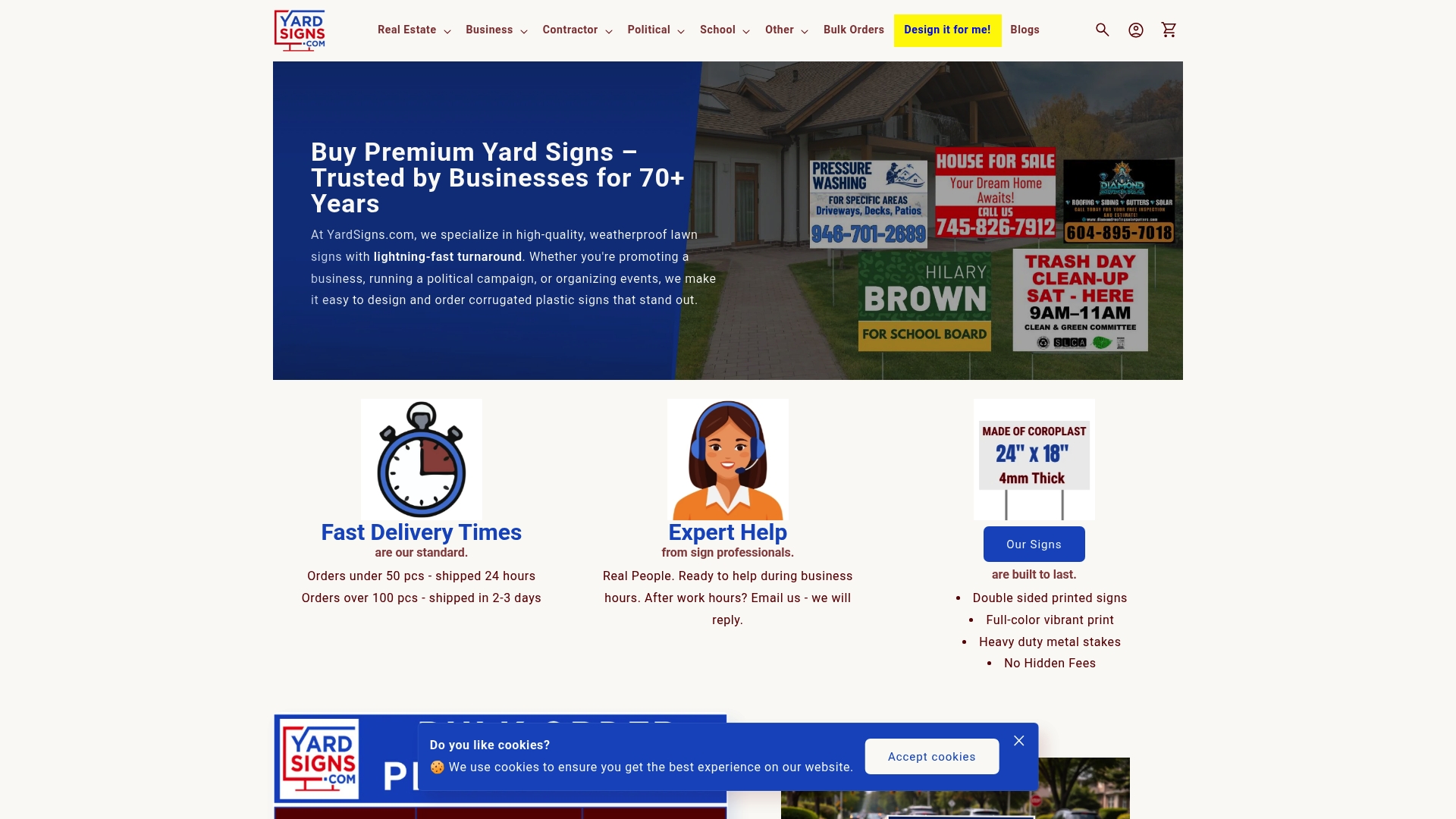
Yardsigns prints weatherproof, vibrant yard signs with orders under 50 pieces shipped within 24 hours. That turnaround means you can place signs near a job you finished this week, not next month. Whether you need a handyman home repair sign for your service business or a realtor yard sign with your logo and directional arrow, Yardsigns offers ready-to-customize designs built for small business marketing. Browse the full catalog at Yardsigns.com and get your first batch ordered before the week is out.
FAQ
Why do small businesses choose lawn signs over digital ads?
Lawn signs deliver persistent local impressions at a fraction of the cost of digital advertising, with no recurring fees after the initial print order. A single sign can generate 3–5 qualified leads over its lifetime at a cost of $2–$10 per unit.
How many leads can a yard sign realistically generate?
A strategically placed yard sign generates 3–5 qualified leads over its usable life, with signs placed near completed job sites performing at four times the conversion rate of cold placements.
What is the best size and material for a small business lawn sign?
The industry standard is an 18x24 inch corrugated plastic (coroplast) sign for short-term campaigns, priced at $3–$8 in bulk. Aluminum signs at $30–$45 each are the better choice for permanent or high-traffic placements requiring greater durability.
How do you track whether lawn signs are generating leads?
Use a unique tracking phone number or QR code on each sign location. Tracking numbers cost $2–$5 per month and let you log call volume by placement, giving you clear data on which signs are performing.
How long does it take for lawn signs to show results?
Lawn signs are a brand-building tool with a compounding effect over 6–18 months. Expect gradual increases in brand recognition and inbound calls rather than immediate direct-response results in the first few weeks.
