


Why Signs Work for New Business Launches
Signage is the single most cost-effective marketing tool available to a new business, delivering continuous customer exposure from day one without recurring ad spend. Understanding why signs work for new business launches means recognizing that physical signage operates as a permanent, on-site sales presence that no social media post or paid ad can replicate. The industry term for this discipline is retail signage strategy, and it covers everything from permanent architectural signs to flexible formats like yard signs, banners, and car magnets. Getting your signage right before you open your doors sets the tone for every customer interaction that follows.
Why signs work for new business launches: the customer acquisition case
Physical signage drives customer behavior in ways that most entrepreneurs underestimate before launch. 76% of consumers have walked into a business they had never visited before based solely on the appeal of its sign. That single statistic reframes signage from a decorative expense into a direct revenue driver.
“A well-placed, well-designed sign is often the first conversation a business has with a potential customer. That conversation happens before any employee says a word.”
The trust factor is equally significant. Professional signage signals that a business is established, legitimate, and worth entering. Customers make that judgment in seconds, and a clean, readable sign tips the decision in your favor. On the flip side, 66% of potential customers say they are less likely to enter a business if its signage looks poor or unprofessional. That means a faded, crooked, or generic sign actively turns away two out of every three people who might have become paying customers.
Signage also builds your visible identity before any other marketing channel gets traction. Your Google Business profile takes weeks to accumulate reviews. Your social media pages need consistent posting to gain followers. Your sign, however, works the moment it goes up. For a startup with limited time and budget, that immediate presence is a real competitive advantage.
Referrals follow visibility. 75% of consumers say they have recommended a business to someone else based on its signage. Word-of-mouth marketing starts with a sign that people remember and can describe to others.
What types of signs should a new business use?
Signage for new businesses falls into two broad categories: permanent architectural signs and flexible promotional signs. Each plays a distinct role, and the most effective launch strategies use both.
Permanent signage includes channel letters, monument signs, and illuminated fascia signs mounted on your building or property. These establish long-term brand identity and signal that your business is here to stay. The tradeoff is time. Permanent signs often require permits and can take weeks or months to approve and install. You cannot rely on them alone for a launch.
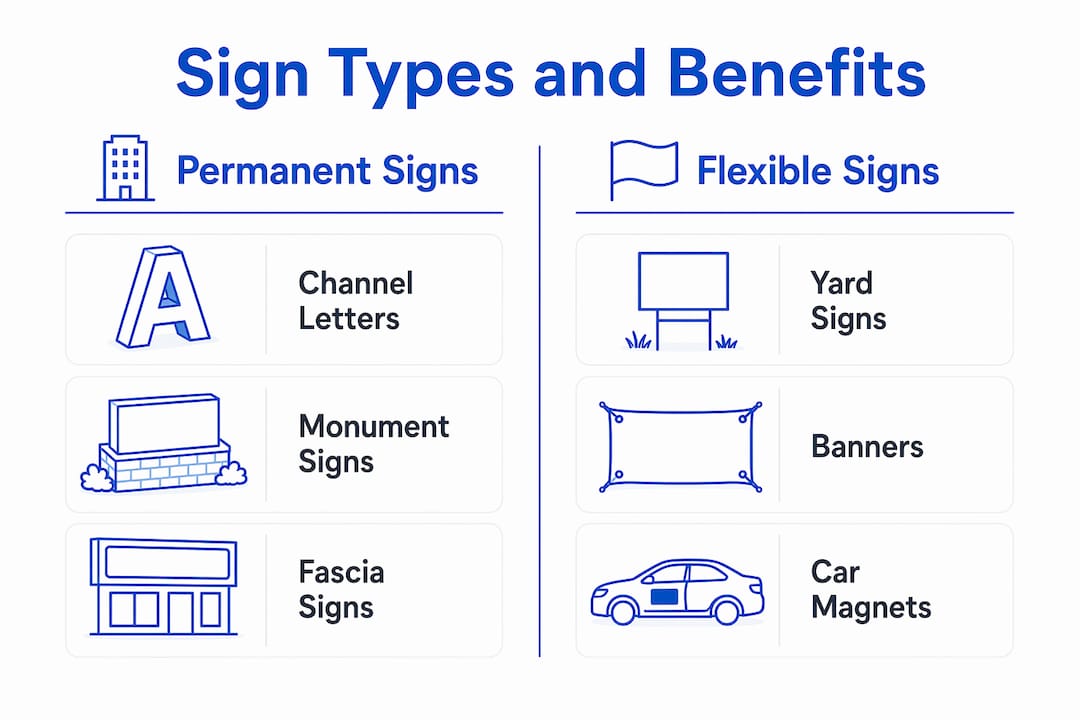
Flexible signage fills that gap. Yard signs, banners, feather flags, and car magnets can be deployed within days, require no permits in most jurisdictions, and cost a fraction of permanent options. They are the right tool for generating immediate awareness during your launch window. Flexible formats like yard signs and banners allow quick messaging changes, so you can promote a grand opening offer one week and a seasonal special the next.
The right mix depends on your business type:
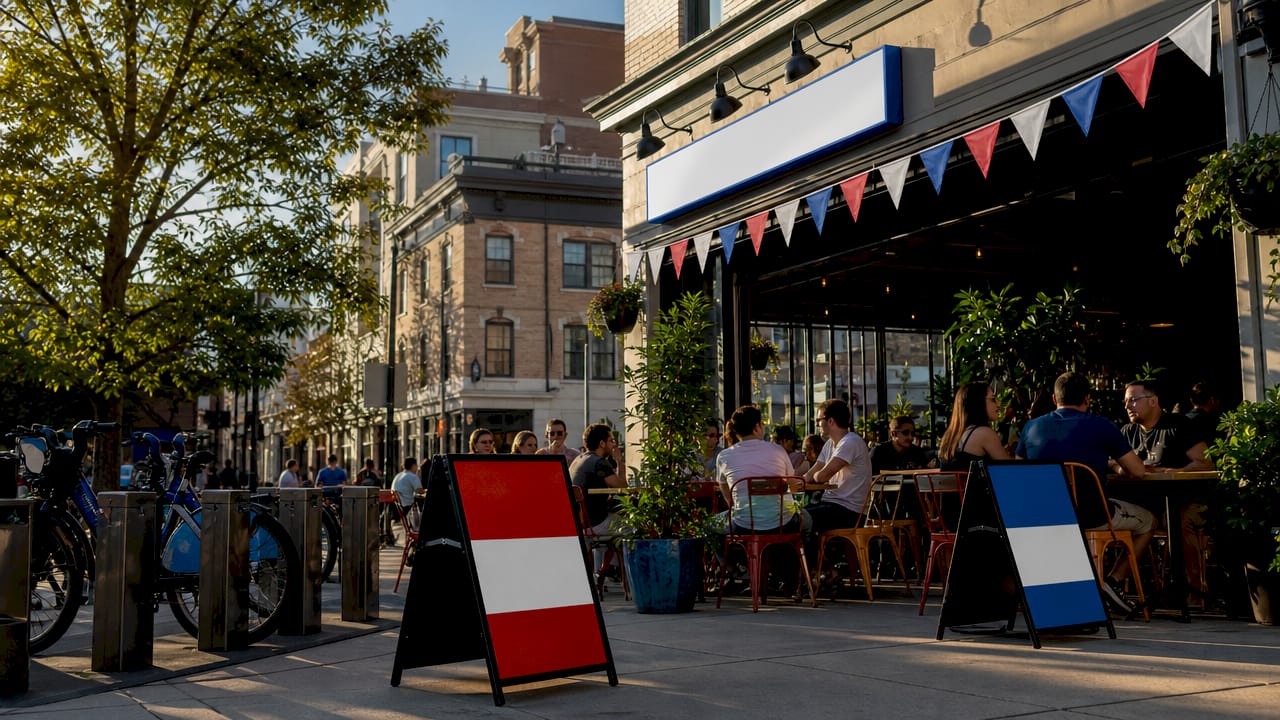
- Retail stores and restaurants need high-visibility outdoor signage to pull foot traffic from passersby. Feather flags near the entrance, window graphics, and A-frame sidewalk signs all work well at street level.
- Service businesses (plumbers, landscapers, cleaning companies) benefit most from vehicle magnets and job-site yard signs. Every service call becomes a neighborhood advertisement.
- Professional offices (accountants, attorneys, consultants) need strong exterior identification plus interior branding that reassures clients once they arrive. Lobby signs and framed certificates matter here.
- Home-based businesses can use yard signs for local visibility in their neighborhood without a storefront.
Pro Tip: Order your flexible signage at least two weeks before your launch date. Use yard signs and banners to build neighborhood awareness before your doors even open. The pre-launch buzz they generate is free marketing.
A layered approach, combining permanent signs for identity with flexible signs for promotion, gives you both long-term credibility and short-term agility. That combination is what separates businesses that open with momentum from those that open quietly.
How does signage compare to digital advertising on cost?
Signs deliver a lower cost per impression than virtually any digital advertising channel available to a small business. A set of two car door magnets costing under $100 can generate tens of thousands of impressions annually just from your normal driving routes. No click-through rate, no algorithm, no monthly subscription required.
Digital ads stop the moment your budget runs out. Signage does not work that way. A yard sign planted near a busy intersection keeps working through weekends, evenings, and holidays without any additional spend. Signage functions as a 24/7 marketing employee that never calls in sick and never asks for a raise. For a startup watching every dollar, that ongoing return on a one-time investment is hard to beat.
Placement determines how much of that value you actually capture. The best sign in the world underperforms if it faces the wrong direction or sits behind a tree. Follow these placement priorities:
- Perpendicular to traffic flow. Signs facing oncoming traffic get read. Signs parallel to the road get ignored.
- At eye level for your audience. Drivers read signs differently than pedestrians. Know which one you are targeting.
- Near decision points. Place signs where people are slowing down or choosing a direction, such as intersections, parking lot entrances, and crosswalks.
- Clustered for repetition. Multiple signs along a route reinforce your message. One sign is a whisper. Three signs in sequence are a conversation.
Pro Tip: Use outdoor sign placement strategies to test locations before committing. Move a yard sign to a new spot each week for a month and track whether foot traffic or call volume changes. The data will tell you where your best placement is.
The cost advantage of signage over digital ads is not just about price. It is about reach within your actual local market. A Facebook ad can target your zip code, but a yard sign at the corner of your street reaches every neighbor who drives by, including people who have never seen your social media page.
How to keep your signs working after launch day
Signs require maintenance to stay effective. Signage quality and upkeep directly affect customer perception and willingness to engage with a business. A sign that looked sharp on opening day but now shows fading, peeling, or damage sends the wrong message about how you run your business.
Build a simple maintenance routine:
- Inspect signs monthly. Check for fading, cracks, bent frames, and illegible text. Replace anything that looks worn.
- Clean regularly. Dirt and grime dull colors and reduce readability. A clean sign looks newer longer.
- Rotate flexible signs seasonally. Update messaging to reflect current offers, hours, or promotions. Flexible signage allows fast updates without permits or long lead times.
- Check placement after storms. Yard signs and banners shift in wind. Reposition them promptly after bad weather.
- Audit consistency. All your signs, from your storefront to your vehicle magnets to your yard signs, should use the same colors, fonts, and logo. Inconsistency weakens brand recognition.
Neglecting signage maintenance is one of the most common and costly mistakes new business owners make. The sign that attracted your first customers will repel future ones if it looks abandoned. Treat your signs the way you treat your storefront: clean, current, and professional.
Signage strategies by business type at launch
The right signage strategy at launch depends on what you sell and where your customers come from. Retail and restaurant businesses should prioritize outdoor visibility to capture passersby, while professional service firms focus more on interior signs that build trust after clients arrive.
Here is how that plays out in practice:
- Retail stores: Lead with a bold exterior sign, window graphics announcing your opening, and A-frame signs on the sidewalk. Add storefront signage ideas that highlight your key product or offer. Yard signs in nearby neighborhoods drive awareness before people reach your block.
- Restaurants: Feature your signature dish or a grand opening special on a banner or feather flag visible from the street. Interior menu boards and table signs reinforce the brand experience once customers are inside.
- Service businesses: Vehicle magnets turn every job into a neighborhood advertisement. Yard signs at active job sites tell neighbors exactly who is doing the work and how to reach you.
- Professional offices: Exterior identification signs handle wayfinding. Interior lobby signs, framed credentials, and branded reception areas build the confidence clients need before they sign a contract.
Pro Tip: Layer your signage types for launch day. Use yard signs and banners for pre-launch buzz, a grand opening banner for the event itself, and permanent signage for the long term. Each format does a different job, and together they cover the full customer journey from awareness to arrival.
A grand reopening or launch sign strategy that combines multiple formats consistently outperforms a single-format approach. The goal is to make your business impossible to miss, regardless of which direction a potential customer approaches from.
Key Takeaways
Signs are the most cost-effective, continuous marketing tool available to new businesses, directly driving customer visits, building credibility, and generating local awareness from the first day of operation.
| Point | Details |
|---|---|
| Signage drives first visits | 76% of consumers have entered a new business based solely on its sign. |
| Poor signs cost you customers | 66% of potential customers avoid businesses with unprofessional signage. |
| Flexible signs win at launch | Yard signs, banners, and car magnets deploy fast, require no permits, and cost far less than permanent options. |
| Placement multiplies impact | Signs perpendicular to traffic at decision points generate significantly more impressions than poorly placed alternatives. |
| Maintenance protects your investment | Faded or damaged signs hurt credibility; monthly inspections and seasonal updates keep signs working. |
Signs as your silent business partner
I have watched entrepreneurs spend thousands on a website and social media ads before their first customer ever walks through the door, then wonder why foot traffic is slow. The answer is almost always visible from the street. Their signage is an afterthought.
The uncomfortable truth is that most new business owners treat signage as a one-time checkbox rather than an ongoing marketing asset. They order a sign, put it up, and forget about it. Meanwhile, that sign is either working hard for them or quietly driving customers away, depending on its condition and placement.
What I have found actually works is treating your sign budget the way you treat your ad budget: with intention and regular review. Start with flexible formats because they give you speed and the ability to test messaging. Add permanent signage once you know what resonates with your local market. Never let a sign go stale. A business that keeps its signage fresh signals to the neighborhood that it is active, healthy, and worth visiting.
Signage is not glamorous. It does not trend on social media. But it is the one marketing channel that works around the clock, in every weather condition, without a single dollar of ongoing spend. That makes it the most underrated tool in a startup’s marketing kit.
— YardSignGuy
Yardsigns has the signs your launch needs
Launching a new business means moving fast. Yardsigns offers customizable yard signs, banners, and car magnets built for exactly that pace, with orders under 50 pieces shipped within 24 hours so your signage is ready when your doors open.
Every sign is printed on weatherproof materials with vibrant, fade-resistant colors that hold up through rain, wind, and sun. Whether you need restaurant signs that highlight your signature dish or yard signs to blanket your neighborhood before launch day, Yardsigns makes the design process straightforward and the pricing accessible for new business budgets. Visit yardsigns.com to build your launch signage package today.
FAQ
Why do signs work better than digital ads for local businesses?
Signs deliver continuous local impressions at a one-time cost, while digital ads stop the moment your budget runs out. A single car magnet under $100 can generate tens of thousands of local impressions annually.
How many signs does a new business need at launch?
Most new businesses benefit from at least three sign types: an exterior identification sign, flexible promotional signs like yard signs or banners for the surrounding area, and vehicle magnets if you operate a service business.
What makes a business sign look unprofessional?
Fading, illegible fonts, inconsistent branding, and physical damage are the top credibility killers. Research shows 66% of potential customers avoid businesses with poor signage, making maintenance as important as the initial design.
How soon should I order signs before my launch date?
Order flexible signage at least two weeks before your opening date. Permanent architectural signs often require permit approval that can take weeks or months, so plan those even earlier.
Do yard signs actually bring in customers?
Yes. Yard signs placed near intersections and high-traffic areas build neighborhood awareness before a business even opens. Combined with a grand opening banner, they create the pre-launch buzz that turns curious neighbors into first-day customers.
